

Piano foot controls transform ordinary keystrokes into expressive musical phrases by regulating string vibration, resonance, and acoustic timbre. Mastering these foot-operated mechanisms enables pianists to shape note duration, control dynamic volume, and produce smooth legato phrasing across the keyboard.
For students seeking premier private piano nyc instruction, faculty at PrivatePianoLessons provide personalized coaching in acoustic footwork and pedal mechanics to develop nuanced technical proficiency.
What Do the Pedals on a Piano Do?
Piano pedals mechanically alter the acoustic output of the instrument by manipulating damper contact, hammer strike distance, and harmonic resonance. Each pedal controls a specific mechanical linkage inside the piano that changes how strings vibrate or how hammers strike them.
The primary functions include:
- Sustaining sound duration beyond physical finger release
- Attenuating dynamic volume and modifying harmonic timbre
- Sustaining selected notes while keeping other registers cleanly articulated
- Connecting harmonies seamlessly during legato passage work
Pedal control allows musicians to shape dynamic shading and polyphonic voicing. Footwork coordination is particularly vital when practicing fundamental drills like piano scales and arpeggios, ensuring acoustic continuity across multi-octave keyboard registers.
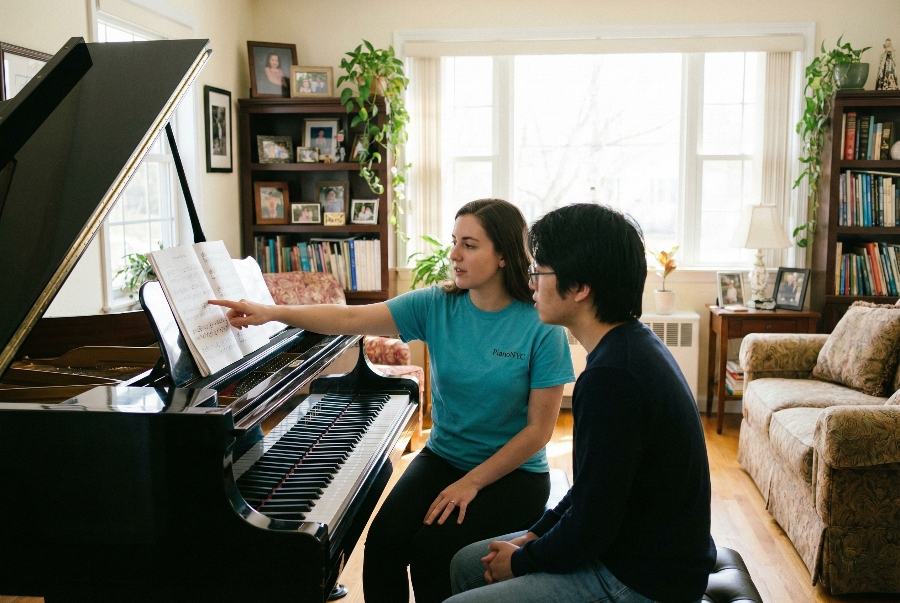
The Three Main Types of Piano Foot Controls
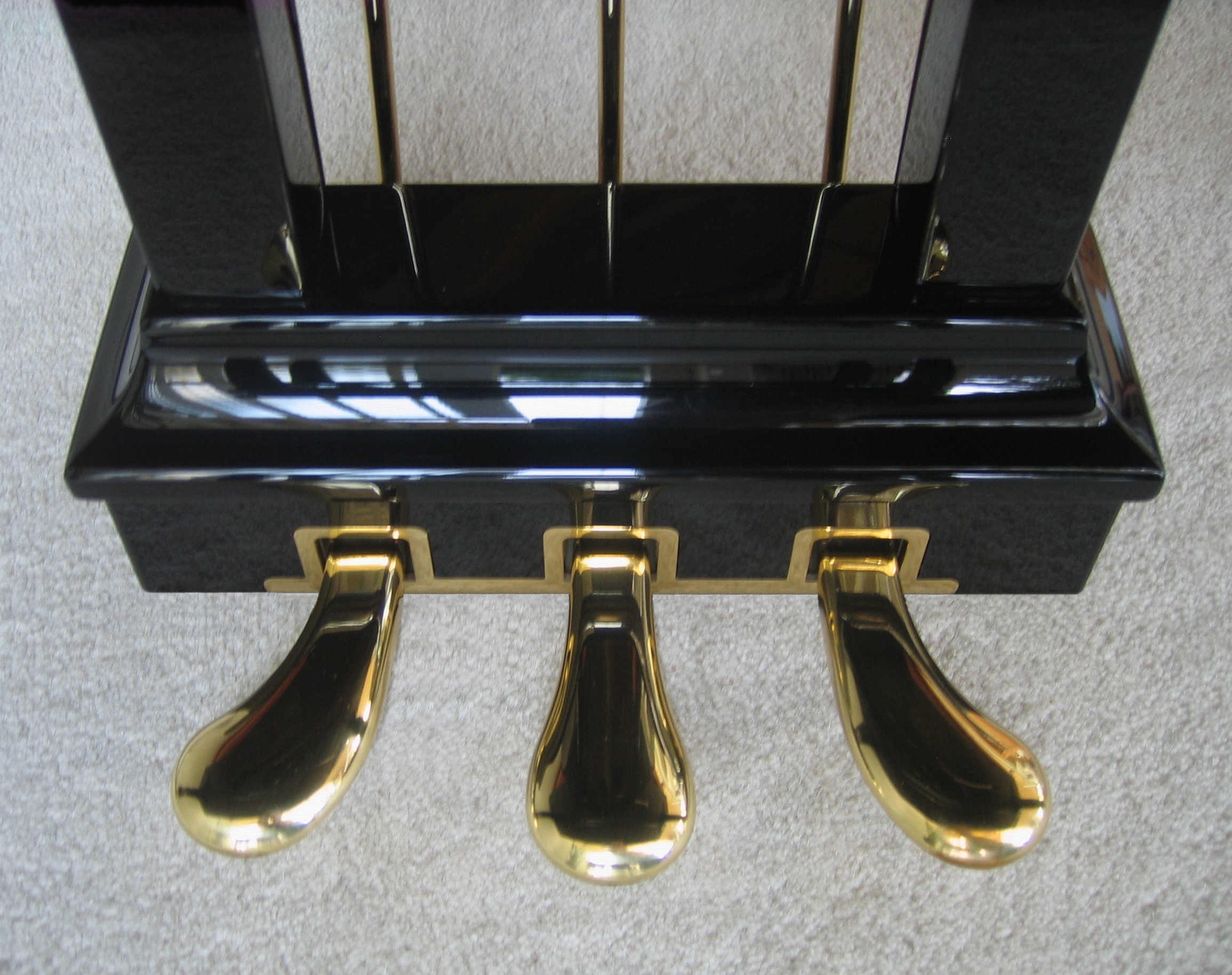
Modern acoustic pianos feature three standard foot levers arranged from left to right: the soft pedal (una corda), the sostenuto or practice pedal, and the sustain pedal (damper). Each mechanism serves an essential acoustic role in performance and interpretation.
The Sustain Mechanism (Damper Lever)
The sustain pedal, positioned on the far right, lifts all dampers simultaneously off the strings to allow continuous sympathetic resonance. This mechanical action lets played notes ring freely after key release and enables rich harmonic overtones across unstruck strings.
Key benefits include:
- Connecting harmonies and melodic phrases smoothly
- Enriching timbre through sympathetic string resonance
- Supporting wide-interval bass accompaniment patterns
- Creating expansive acoustic textures across musical periods
Pianists depress the sustain pedal for approximately 70% of standard classical and romantic repertoire, making it the most essential mechanism for musical expression.
The Soft Control (Una Corda)
The soft pedal, located on the far left, reduces sound volume and alters tonal color through precise mechanical adjustment. On a grand piano, pressing the una corda pedal shifts the entire keybed and action frame 2 to 3 millimeters (0.08 to 0.12 inches) to the right, causing hammers to strike fewer strings per unison tri-chord group. This subtle shift in timbre was frequently employed by famous jazz pianists NYC has produced to establish an intimate, velvety atmosphere during quiet ballad performances.
Musical applications:
- Creating intimate, delicate dynamic passages
- Producing a softer, veiled timbral quality
- Altering attack transients for quiet melodic lines
- Supporting expressive contrast in impressionist and romantic works
The Italian term “una corda” translates literally to “one string,” originating from early eighteenth-century fortepianos where the shifting action allowed hammers to strike a single string.
The Sostenuto Mechanism (Middle Control)
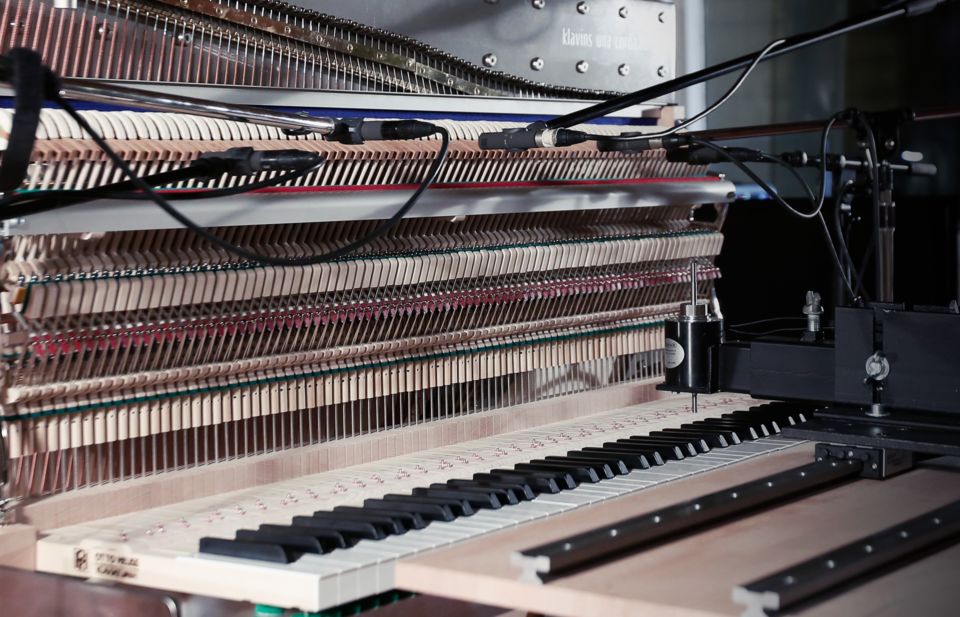
The sostenuto pedal, positioned in the center on grand pianos, sustains exclusively the specific notes whose keys are held down at the exact moment of pedal depression. This selective mechanism keeps those chosen dampers raised while all subsequently played notes remain cleanly damped and articulated.
Advanced techniques include:
- Sustaining low pedal points while articulating rapid upper-register counterpoint
- Maintaining complex chordal harmonies without muddying melodic passages
- Rendering intricate contemporary and late-romantic compositions accurately
- Executing multi-layered polyphonic textures cleanly
Approximately 85% of grand pianos manufactured after 1950 include sostenuto mechanisms. Audiences regularly observe this sophisticated technique during professional classical piano concerts NYC venues host.
Differences Between Grand and Upright Piano Controls
Grand and upright pianos feature distinct pedal mechanisms due to their contrasting horizontal and vertical action designs. Understanding these mechanical variations is also a crucial factor when debating digital vs acoustic piano options for home practice.
The Function of the Middle Control on Upright Pianos
The middle pedal on vertical upright pianos typically activates a practice mute rather than a true sostenuto mechanism. Common upright middle pedal designs include:
- Practice device: Drops a felt muffler strip between hammers and strings, reducing acoustic volume by approximately 50% for quiet apartment practicing
- Bass sustain: Lifts dampers exclusively on lower register strings (the lowest two octaves) while leaving treble dampers unaffected
- Silent mechanism: Engages a digital stop rail to mute acoustic sound entirely for headphone playback
These utilitarian functions differ significantly from grand piano sostenuto capabilities, requiring technique adaptation between instrument types.
The Una Corda Mechanism on Grand Pianos
The grand piano soft pedal shifts the complete keyboard and action frame laterally by 2 to 3 millimeters (0.08 to 0.12 inches). This horizontal movement redirects hammer strike points away from deeply grooved felt, altering both tone color and dynamic projection.
The mechanism produces:
- A volume reduction of 15% to 25%
- A rounder, warmer, and more subdued tone color
- Reduced string contact across unison choirs
- Enhanced dynamic nuance unobtainable on upright damping rails
Upright soft pedals merely push hammer resting rails closer to strings to shorten hammer travel distance, making grand una corda mechanisms distinctly superior in expressive color.
Essential Footwork Techniques for Beginners
Accurate piano pedaling requires proper foot positioning, auditory awareness, and precise coordination between fingers and feet. Beginners should rest the right heel firmly on the floor directly aligned with the sustain pedal, pressing down with the ball of the foot without lifting the heel.
Legato Footwork
Legato pedaling, also termed syncopated pedaling, blends sequential harmonies smoothly without gaps or harmonic dissonance. The technique involves:
- Finger preparation: Strike the new key or chord clearly with fingers alone.
- Pedal release: Lift the sustain pedal immediately as the new note sounds to drop dampers and clear previous resonance.
- Pedal depression: Press the sustain pedal back down while holding keys before finger release.
- Harmonic overlap: Retain pedal depression to sustain sound smoothly into the next harmony transition.
Practicing this technique with simple cadences ensures no unwanted gaps or muddy overlapping sounds occur between harmonies.
Half-Lever Application Techniques
Half-pedaling involves partial pedal depression, creating controlled damping without completely cutting off resonance. This advanced technique requires:
- Precise foot control: Maintaining consistent partial pressure on the pedal lever
- Auditory monitoring: Listening carefully to resonance decay and clarity
- Musical judgment: Applying partial dampening appropriately to classical and impressionist styles
- Regular practice: Developing muscle memory for varying pedal resistances
Concert pianists use half-pedaling and flutter pedaling to clarify dense textures without losing warmth and acoustic body.
Common Technique Mistakes to Avoid
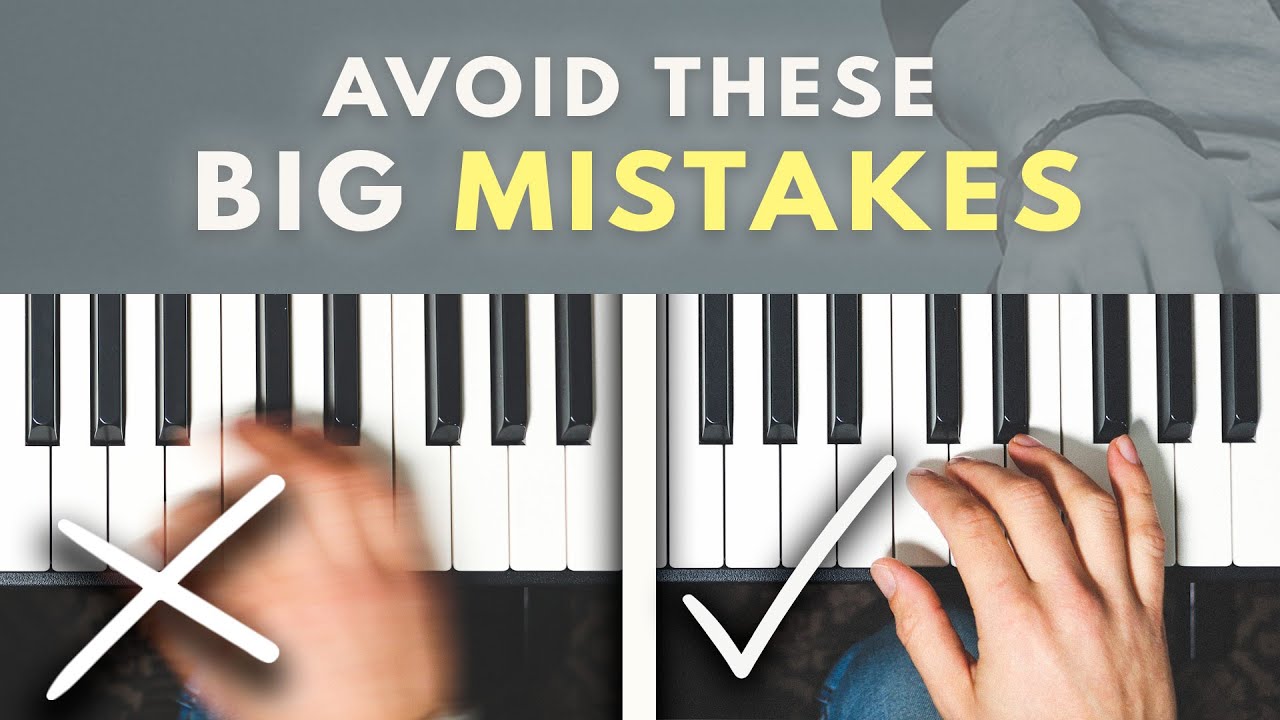
Beginning pianists frequently encounter footwork habits that compromise rhythmic clarity and dynamic balance:
- Over-application: Holding the sustain pedal continuously, creating harmonic clutter and dissonance
- Rhythmic pedaling: Pressing the pedal simultaneously with keys instead of slightly after, cutting off smooth connections
- Heel lifting: Raising the entire foot off the floor rather than pivoting on the heel, causing muscle fatigue and pedal noise
- Ignoring notation: Disregarding composer pedal markings and release indications in sheet music
Addressing these issues early prevents persistent bad habits and accelerates musical progress.
How to Read Piano Control Notation
Sheet music uses standardized symbols and Italian terminology to indicate exact pedal engagement and release points. Understanding these markings ensures authentic interpretation and stylistic accuracy. Even simplified anthologies like easy piano books for seniors include clear pedal signs to build proper footwork habits early.
Sustain control notation:
- “Ped.”: Depress sustain pedal down
- “*” or “△”: Release sustain pedal completely
- Bracket notation: Horizontal lines under the staff showing exact sustain duration with notches for pedal changes
Soft control indications:
- “una corda”: Engage soft pedal
- “tre corde”: Release soft pedal
Sostenuto markings:
- “Sost. Ped.”: Engage middle sostenuto pedal for selected notes
- “*”: Release sostenuto pedal
Composers like Chopin, Debussy, and Rachmaninoff provide detailed pedal markings that are essential for stylistically authentic interpretation.
Piano Foot Controls on Electronic Keyboards
Electronic keyboards and digital pianos replicate acoustic footwork through standard 1/4-inch (6.35 mm) jack inputs located on the rear connection panel. While basic keyboards utilize simple on-off sustain switches, advanced digital instruments support multi-pedal boards with continuous resistance sensors.
Digital control features:
- Polarity switching: Adjusting pedal switch polarity for compatibility across different keyboard manufacturers
- Half-damper support: Detecting continuous MIDI values (CC64) for authentic half-pedaling response
- Multiple control inputs: Supporting three-pedal units configured for sustain, sostenuto, and soft pedal functions
- Acoustic resonance modeling: Simulating damper noise and sympathetic string vibration through digital sound engines
An 88-key weighted digital piano equipped with a continuous damper pedal provides an effective practice platform for foundational footwork.
Mastering Foot Control Usage with Private Piano Lessons in New York City
PrivatePianoLessons provides personalized 1-on-1 in-home piano instruction across all five NYC boroughs: Manhattan, Brooklyn, Queens, Staten Island, and The Bronx. Our degreed faculty travels directly to your home with zero travel fees, coaching proper footwork technique on your own instrument. Whether you need foundational guidance in Manhattan or piano lessons Bronx residents schedule with ease, lessons are tailored to your musical goals.
Coordinated from 817 W End Ave, New York, NY 10025, our team matches students with vetted instructors from top conservatories. Contact PrivatePianoLessons to book your free 30-minute in-home assessment.
FAQ
What is the most important piano pedal for beginners to learn?
The sustain pedal (far-right lever) is the most essential pedal for beginning pianists. It creates smooth musical connections, enriches harmonic resonance, and supports expressive phrasing across nearly all musical styles.
Can I learn piano footwork techniques on a digital piano?
Yes, beginners can master fundamental footwork on an 88-key weighted digital piano equipped with a sustain pedal. Mastering advanced techniques like half-pedaling requires an instrument supporting continuous half-damper detection or an acoustic piano.
How do I know when to use the soft control during piano performance?
Engage the soft pedal during passages marked “una corda” in sheet music, or when seeking a delicate dynamic volume and mellow timbre. It serves to alter tonal color rather than compensate for underdeveloped finger control.
Why does my piano only have two foot controls instead of three?
Many vertical upright pianos and vintage instruments feature only sustain and soft pedals, omitting the sostenuto mechanism. This configuration provides essential expressive functions while reducing manufacturing complexity and cost.
What’s the difference between piano levers and organ pedalboards?
Piano pedals modify the duration, volume, and timbre of notes struck by the fingers. In contrast, an organ pedalboard is an independent chromatic keyboard played with the feet to produce distinct bass pitches and melodies.
How long does it take to master piano footwork techniques?
Basic legato pedaling coordination develops within 3 to 6 months of regular practice. Advanced skills like half-pedaling, flutter pedaling, and precise sostenuto usage typically require 1 to 2 years of structured instruction.
