

Piano warm-ups are foundational preparation routines that increase finger dexterity, enhance mental concentration, and prevent musculoskeletal strain during practice sessions. Professional pianists dedicate 10 to 15 minutes to deliberate physical and technical warm-ups prior to intensive practice, establishing neuro-muscular readiness and keyboard fluidity.
Why Warm-ups Are Crucial for Private Piano Lessons in New York City
Piano warm-ups are crucial for private piano lessons in New York City because structured preparation prevents repetitive strain injuries, focuses mental clarity, and maximizes limited rehearsal time between demanding urban schedules.
Physical conditioning lowers the risk of repetitive strain injuries (RSI) like tendinitis, which frequently impacts pianists who begin sessions without warming up. Mental preparation establishes the cognitive focus required for intricate counterpoint, complex rhythmic meters, and sight-reading. Technical conditioning refines independent finger articulation and bilateral hand coordination across all dynamic registers.
Instructors at PrivatePianoLessons prioritize efficient 10 to 15-minute warm-up routines for students taking piano lessons NYC, optimizing every minute of in-home practice. Renowned virtuosos such as Vladimir Horowitz, who famously performed on custom Steinway & Sons NYC instruments, practiced daily scale and arpeggio routines throughout their careers, proving that warm-ups remain indispensable across all skill levels.
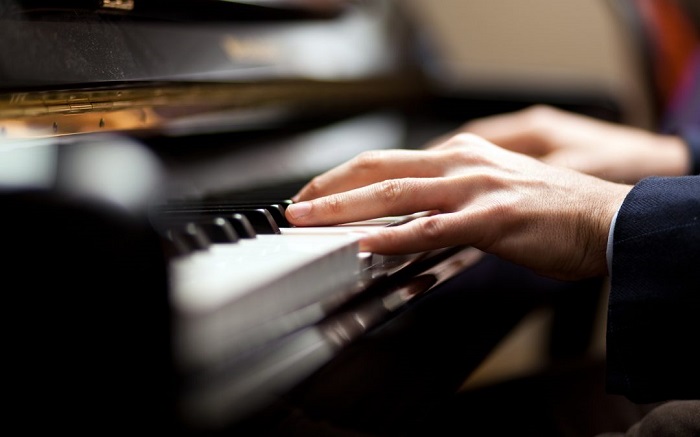
Physical Warm-ups Before Touching the Keys
Physical warm-ups before touching the keys activate major muscle groups, release postural tension, and increase blood circulation to the hands and forearms.
Off-bench physical conditioning requires 3 to 5 minutes and prepares upper-body anatomy for repetitive keyboard articulation without inducing fatigue.
Relaxing Shoulders, then Arms
Relaxing the shoulders and arms eliminates upper-body stiffness that restricts natural arm weight and induces forearm fatigue.
Roll shoulders backward 8 times in wide, controlled circular rotations to release accumulated upper-trapezius tension. Next, elevate shoulders toward the ears, hold for 3 seconds, and drop them completely to engage deep muscular relaxation. Swing both arms gently across the torso for 30 seconds to stimulate circulation and loosen the shoulder girdles.
Wrist Shakes, followed by Finger Stretches
Wrist shakes followed by finger stretches lubricate synovial joints and condition flexor tendons for responsive keyboard action.
Shake wrists gently for 15 seconds with hands hanging completely loose to facilitate blood flow and relieve tension in carpal pathways. Extend fingers outward for 5 seconds, and close hands into soft, unforced fists to activate opposing extensor and flexor muscles. Perform individual finger lifts while resting palms on a flat surface to develop isolated digit control.
Moving Your Head, focusing on the Neck
Moving your head with a focus on cervical neck muscles preserves proper spinal alignment and diaphragmatic breathing at the piano bench.
Turn your head gently toward the left shoulder, pause for 3 seconds, and rotate toward the right shoulder to stretch the cervical muscles. Complete 3 slow, smooth neck rolls in each direction to counteract forward-head posture common during music reading. Maintain an upright, balanced spine to prevent chronic lower-back and neck fatigue.
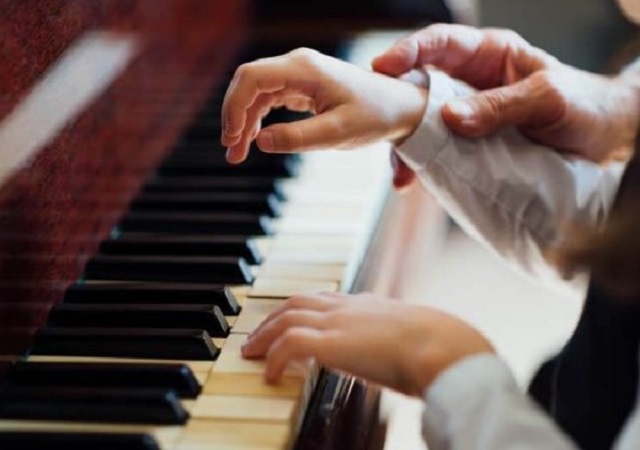
Essential Technical Piano Practice Warm-up Routines
Essential technical piano practice warm-up routines build finger independence, rhythmic precision, and spatial familiarity across the 88-key keyboard.
These technical exercises develop muscle memory, tactile sensitivity, and dynamic control required for classical, jazz, and contemporary repertoire.
Five-Finger Patterns and Scales
Five-finger patterns and scales establish balanced hand posture, arched finger curvature, and fluid thumb crossings.
Practice five-finger patterns in C major hands separately at moderate tempos (60 to 72 BPM on a metronome), focusing on even tone production and relaxed wrist buoyancy.
Major and minor scales systematically reinforce digital autonomy across traditional pedagogy. Exploring Suzuki vs traditional piano methods highlights differences in ear-training versus reading approaches, yet both methodologies consider regular scale mastery essential. Progress through the circle of fifths to strengthen fingering habits, sight-reading fluency, and tonal balance across octaves.

Arpeggios and Chords to Boost Flexibility
Arpeggios and chords boost hand flexibility by expanding lateral reach and conditioning hand bridges for harmonic keyboard execution.
Practice broken chords and major triads in root position across 2 octaves, executing smooth lateral wrist rotation as the thumb crosses under the hand. Keep the wrist supple and flexible rather than rigid during horizontal movement. Play blocked triads and four-note seventh chords through all inversions to strengthen finger arches and ensure uniform key depression.
Hanon or Czerny Exercises to Gain Finger Independence
Hanon and Czerny exercises build digital independence, velocity, and endurance by strengthening weaker fourth and fifth fingers.
Disciplined study of Hanon piano exercises isolates individual finger strokes while keeping wrists and forearms unstrained. Begin with Exercise No. 1 at 60 BPM, articulating each key deliberately with curved fingertips before increasing speed. Czerny studies unite technical agility with melodic phrasing, training rapid finger articulation alongside rhythmic stability.
Octaves or Hand Extensions
Octaves and hand extension exercises broaden the span between thumb and fifth finger while maintaining a supportive palm arch.
Execute single octaves in C major with flexible wrist rebounds, releasing forearm tension immediately upon key impact. Practice gentle extension arpeggios spanning tenths or wide broken intervals gradually to avoid tendon strain. Pianists with smaller hands should employ modified fingerings or gentle rocking motions rather than forcing rigid finger spans.
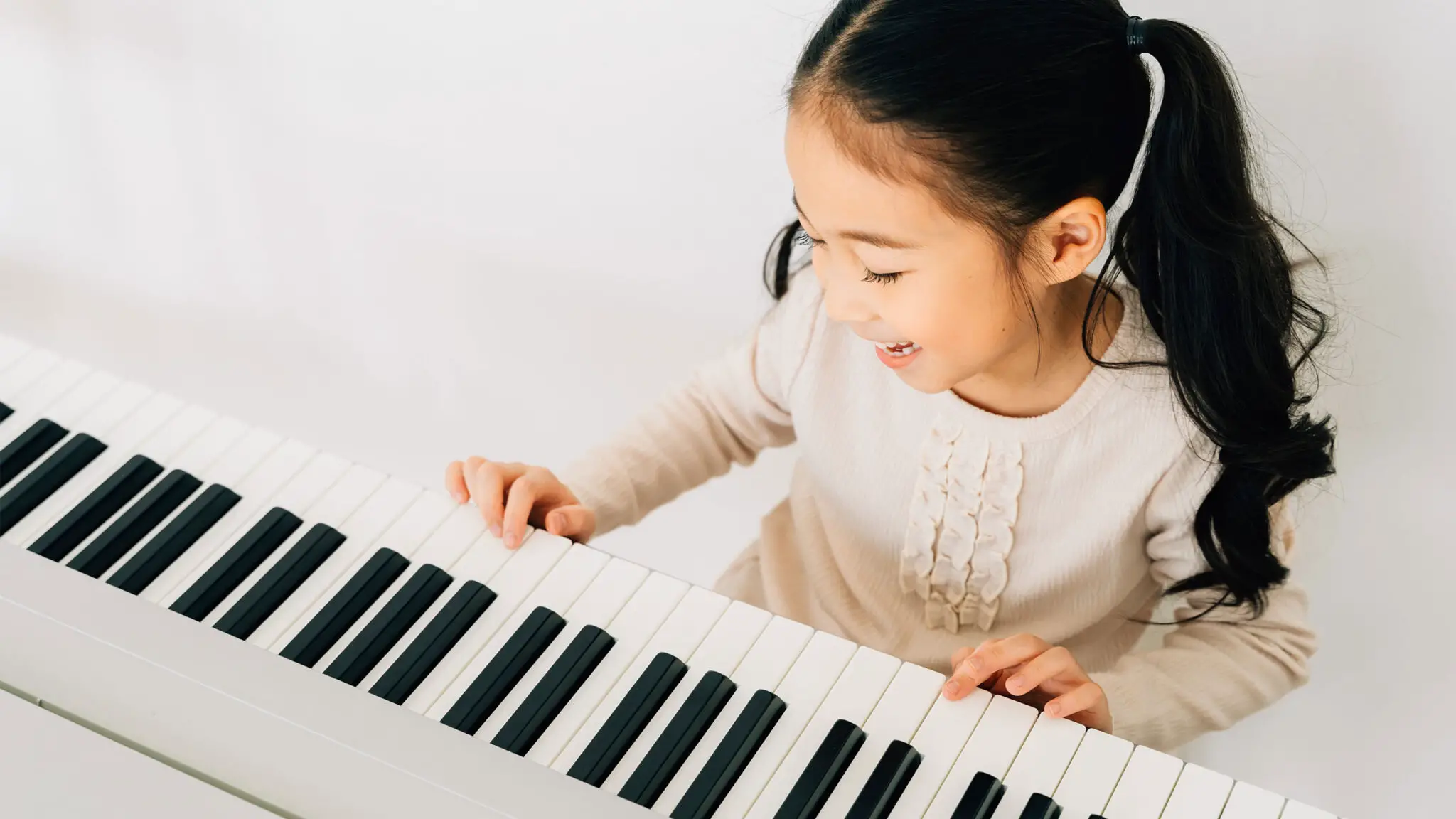
Musical or Mental Warm-up Strategies
Musical and mental warm-up strategies integrate expressive listening, analytical thinking, and mental visualization before physical execution.
Cognitive preparation engages auditory anticipation and interpretive awareness, transforming routine finger mechanics into expressive musicianship.
Sight-reading a New Piece
Sight-reading a new piece enhances real-time pattern recognition, rhythmic stability, and harmonic decoding at first glance.
Select short etudes, chorales, or method pieces 2 levels below your current repertoire grade to prioritize reading fluency over mechanical strain. Dedicate 5 to 10 minutes to playing continuously without stopping to correct pitch slips, building confident musical decision-making and spatial keyboard awareness.
Improvisation and Creativity
Improvisation and creative exploration unlock spontaneous musical expression and relieve performance anxiety at the keyboard.
Begin with pentatonic or blues patterns over simple left-hand ostinatos to cultivate intuitive phrasing and harmonic comprehension. Engaging pedagogical strategies designed to make piano fun for kids also benefit adult learners by reducing performance inhibition and encouraging creative expression. Experiment freely with classical variations, jazz standards, and modal chord progressions to stimulate musical imagination.
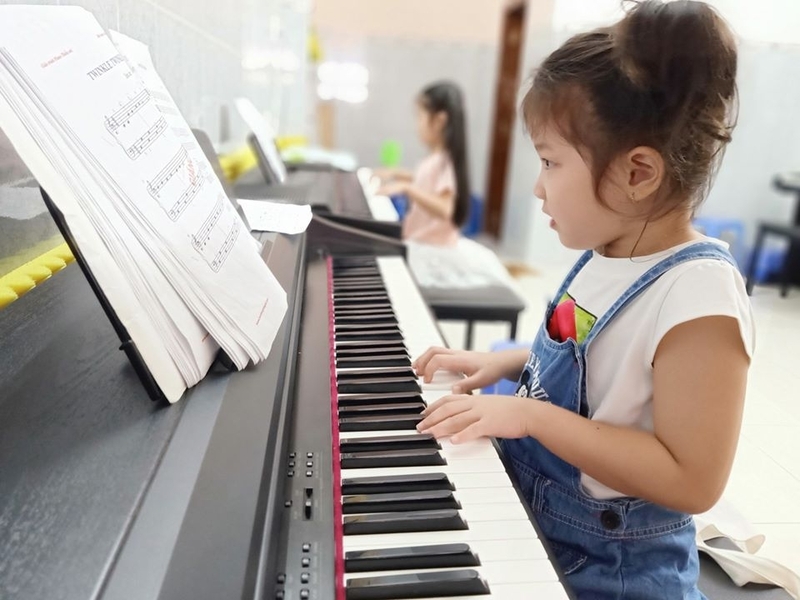
Playing at Half Speed or Full Speed
Playing at half speed followed by incremental tempo progression clarifies rhythmic articulation and strengthens muscle memory for demanding passages.
Rehearse intricate technical passages at 50% of performance tempo with deliberate finger clarity before attempting full tempo execution. Alternate between slow, moderate, and performance tempos to isolate technical discrepancies and maintain relaxed biomechanics. Integrate mental practice between repetitions by mentally visualizing finger patterns and hearing ideal tone production.
Building a Consistent Routine with PrivatePianoLessons
PrivatePianoLessons provides personalized, 1-on-1 private piano instruction directly in students’ homes across Manhattan, Brooklyn, Queens, The Bronx, and Staten Island. Professional instructors design customized warm-up routines tailored to each student’s goals, hand anatomy, and practice schedule.
Whether you arrange in-home piano lessons Bronx sessions or lessons in Manhattan, our certified faculty travel directly to your piano with 0 USD travel fees. Instruction aligns with an 8-level curriculum referenced to RCM and ABRSM standards. Contact our coordination headquarters at 817 W End Ave, New York, NY 10025 at +1 (917) 903-2146 to schedule a complimentary 30-minute in-home assessment.
How long should piano warm-ups take?
Piano warm-ups should take 10 to 15 minutes for standard daily practice, extending to 20 minutes for advanced conservatory rehearsals. This timeframe allocates 3 to 5 minutes to physical joint activation, 5 to 10 minutes to technical drills, and 5 minutes to musical sight-reading or improvisation.
What warm-up exercises prevent piano injuries?
The warm-up exercises that prevent piano injuries are backward shoulder rolls, gentle wrist rotations, and forearm extensor stretches. These physical conditioning drills stimulate blood circulation, relieve muscular tension, and protect against repetitive strain injuries like carpal tunnel syndrome and tendinitis.
Should beginners practice scales during warm-ups?
Beginners should practice scales during warm-ups by starting with one-octave five-finger patterns and major scales at 60 BPM. This foundational practice develops curved finger shape, uniform key pressure, and fluid thumb-under crossings before advancing to multi-octave technical exercises.
How do warm-ups improve piano technique?
Warm-ups improve piano technique by developing independent finger articulation, hand coordination, and rhythmic precision. Consistent conditioning builds enduring muscle memory, relaxes upper-body tension, and prepares muscles for intricate dynamic control across challenging repertoire.
What is the best warm-up routine for advanced players?
The best warm-up routine for advanced players is a 20-minute regimen combining four-octave scales, arpeggios, Hanon exercises, and Czerny velocity studies. Advanced pianists calibrate this routine with octave extensions and brief sight-reading to target specific technical demands in their current repertoire.
