
Piano memorisation transforms musical performance from reading notes to expressing artistry. Students seeking private piano lessons in NYC at PrivatePianoLessons develop this skill through systematic approaches that build confidence, technical mastery, and performance security.
Memorising piano music requires deliberate practice beyond simple repetition. The process integrates four primary recall systems: kinesthetic (muscle), visual, auditory, and analytical memory. Balancing these complementary pathways creates stable, resilient performance retention on stage and in the studio.
Proven Strategies for Memorizing Piano Music Efficiently
Efficient piano memorisation begins with structured multi-sensory encoding rather than mechanical repetition. Engaging analytical, auditory, visual, and tactile systems simultaneously establishes redundant cognitive pathways that withstand performance anxiety.
Pianists who rely exclusively on physical finger habits encounter memory lapses when adrenaline alters tactile perception. Cultivating multi-layered access points guarantees reliable recovery during live performance.
Breaking Down the Piece into Manageable Chunks
Breaking down a musical score into short sections of 2 to 4 measures (roughly 10 to 20 cm or 4 to 8 inches of sheet music) accelerates cognitive encoding. Isolating micro-sections prevents mental fatigue and clarifies complex phrase contours.
Master each isolated unit completely before connecting adjacent phrases. Structural milestones provide natural division points for systematic study:
- Formal cadence points and phrase boundaries
- Key modulations, tonic shifts, and harmonic transitions
- Dynamic shifts, pedal releases, and textural changes
Mark clear section boundaries directly on your sheet music. Practice individual sections in non-linear sequences to verify independent recall.
The Value of Slow Practice and Repetition
Practicing at half tempo ensures accurate neural encoding by giving the brain sufficient processing time to execute fingering, pitch, and rhythmic patterns without errors. High-speed practice often encodes motor mistakes that surface under pressure.
Set a metronome to 50% of the target performance tempo. This deliberate speed allows fingers to locate key centres accurately while your analytical memory tracks harmonic patterns.
Engage in focused, purposeful repetitions by varying your analytical perspective across consecutive iterations:
- Isolate pitch accuracy and key spatial awareness
- Reinforce consistent fingering choices and hand alignment
- Shape melodic phrasing, breath points, and dynamic gradients
- Execute precise articulation, balance, and pedaling depths
Applying Music Theory to Analyze and Memorize Structure
Harmonic analysis accelerates piano memorisation by condensing dozens of individual notes into logical chord progressions and structural blueprints. Recognizing underlying music theory transforms isolated notes into predictable patterns.
Identify primary architectural regions throughout your score:
- Tonic, subdominant, and dominant chord functions
- Circle of fifths sequences and secondary dominants
- Cadential formulas, deceptive resolutions, and formal modulations
Label Roman numeral chord functions directly above or below the score. This analytical framework simplifies complex repertoire, including the subtle modal shifts in impressionist piano music, where non-traditional progressions require deep structural awareness.
Utilizing Hands Separate Practice for Coordination
Practicing hands separately clarifies polyphonic textures and independent motor demands before combining voices. The left hand provides harmonic architecture, while the right hand articulates melodic expression.
Master the left hand alone first. Bass lines and chord roots define the structural foundation of classical and contemporary repertoire. Securing the left hand creates a dependable harmonic anchor during performance.
Analyze right-hand melodic lines for interval leaps, contour direction, and finger transitions. Combine hands at reduced tempos only after individual parts achieve automated recall.
Developing Different Types of Memory for Solid Performance
Complete memorisation requires coordinating four independent memory faculties: kinesthetic, auditory, visual, and analytical. Developing all four ensures that if one pathway falters under performance stress, alternative systems instantly sustain continuity.
Building Reliable Hand Memory and Muscle Memory
Muscle memory develops through consistent, deliberate physical repetition at slow tempos. Hand topography, finger curvature, and tactile sensation automate physical keyboard execution.
Ensure reliable keyboard action by maintaining proper humidity control for piano, which prevents sluggish keys from disrupting physical tactile feedback. Build kinesthetic security through systematic daily routines:
- Execute technical scales, arpeggios, and Hanon exercises daily
- Repeat demanding measures 5 to 10 times slowly before tempo increases
- Maintain identical fingering choices during every practice session
Rely on tactile memory as one supportive layer rather than your sole foundation, as physical automaticity remains vulnerable to stage anxiety.
Enhancing Aural Memory to Hear the Music Internally
Auditory memory allows you to hear pitch sequences, harmonic colors, and rhythmic cadences internally before striking the keys. This internal audiation guides finger placement and flags pitch inaccuracies immediately.
Strengthen auditory memory through targeted exercises:
- Sing melodic phrases away from the piano score
- Play on a muted keyboard or closed key cover while hearing sound internally
- Transcribe and reproduce simple melodies and chord progressions by ear
- Listen actively to reference recordings while following your score
Record your practice sessions on high-fidelity audio equipment, then evaluate tonal balance, voicing, and phrase trajectory to clarify your internal sound concept.
Using Visual Memory to Picture the Sheet Music or Keys
Visual memory creates mental photographs of the printed score, dynamic markings, and physical key topography. Strong visual recall allows instant navigation to any measure across a piece.
Develop visual retention through methodical score study:
- Study scores away from the keyboard to internalize measure layouts
- Write short musical phrases onto blank manuscript paper from memory
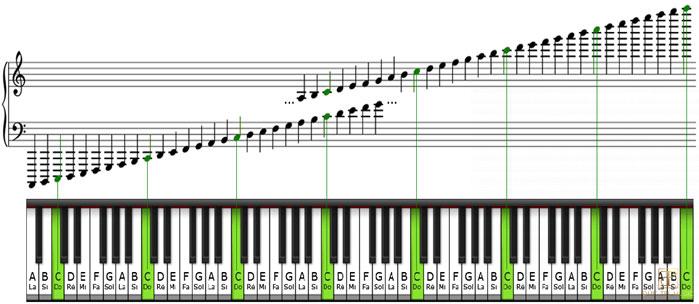
- Visualize chord shapes and finger groupings across the 88 keys
- Look away from hands periodically to verify spatial keyboard awareness
Mental Play and Practicing Away from the Keyboard
Mental practice strengthens neural memory pathways without requiring physical contact with an instrument. Concert artists use silent rehearsal to verify conceptual mastery and prevent mechanical fatigue.
Incorporate daily mental practice routines:
- Visualize finger choreographies and arm weight shifts in real tempo
- Trace chord progressions, modulations, and phrase structures mentally
- Rehearse stage entrances, physical posture, and expressive focus
Dedicate 10 to 15 minutes daily to mental study. Any passage that feels uncertain in mental rehearsal requires immediate analytical clarification at the keyboard.
Advanced Tips to Memorize a Song on Piano Faster
Advanced memorisation relies on pattern recognition, non-linear practice, and spaced retrieval schedules. These strategies reduce practice time while elevating performance reliability.
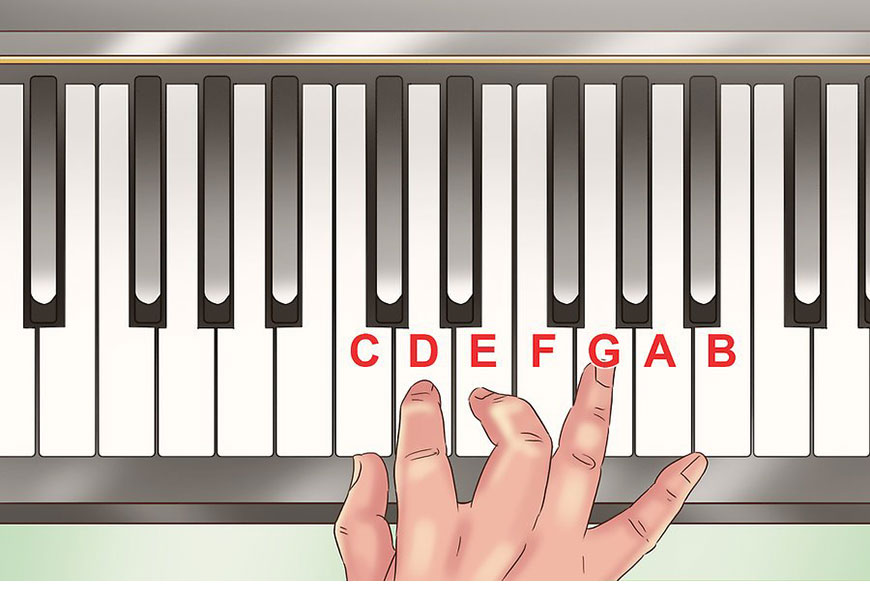
Starting the Memorizing Process from Different Sections
Begin memorisation from varied starting points within a piece rather than exclusively playing from measure one. Non-linear entry points eliminate sequential dependence and prevent performance breakdown if an unexpected error occurs.
Establish secure recovery landmarks across your score:
- The onset of secondary themes, development sections, and recapitulations
- Key modulation arrivals and double barline transitions
- Climactic dynamic peaks, cadenzas, and codas
- Technically complex passages, polyrhythms, and countermelodies
Practice starting from each milestone and playing continuously to the final barline.
Establishing Permanent Memory for Long-Term Repertoire
Permanent repertoire retention requires systematic spaced review. Without regular retrieval cycles, memorized compositions fade from active memory within weeks.
Implement a structured repertoire maintenance schedule:
- Weekly: Perform complete memorized works in single runs
- Monthly: Isolate intricate passages and verify score markings
- Seasonally: Restore past repertoire to performance standard
- Annually: Re-examine formal analysis, voicing, and stylistic interpretation
Maintain an organized practice journal documenting fingering choices, harmonic analyses, and expressive markings to accelerate review after extended breaks.
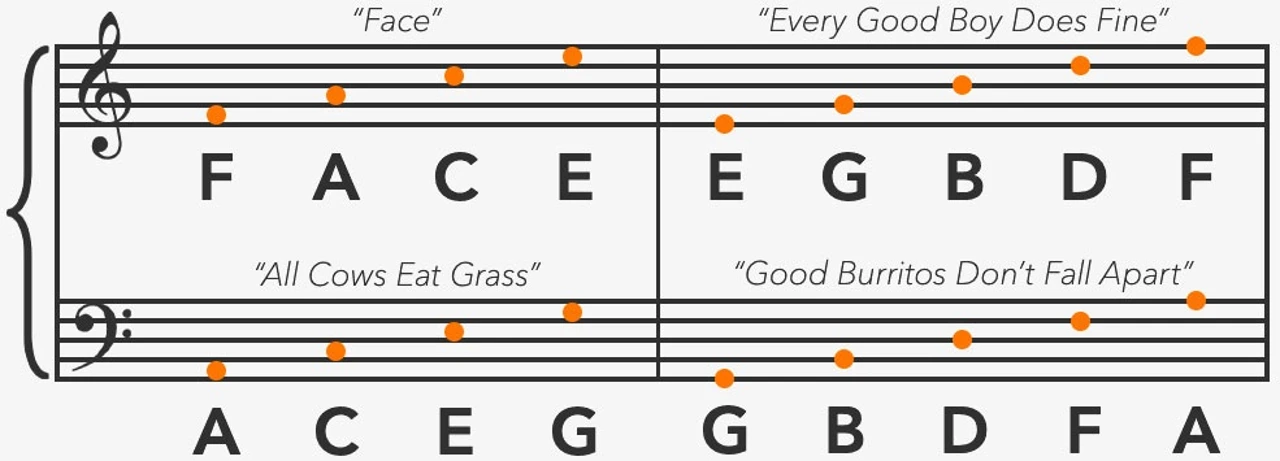
Improving Retention with PrivatePianoLessons Methodologies
PrivatePianoLessons integrates multi-sensory memory training into 1-on-1 in-home instruction. Faculty members evaluate individual learning preferences—auditory, visual, kinesthetic, or analytical—and tailor structured practice plans accordingly.
Instructors utilize 12-week progress assessments to identify technical roadblocks early. For young beginners, teachers incorporate piano learning games to build note recognition and make foundational repetition engaging.
The Advantage of Private Piano Lessons at New York City for Memory Training
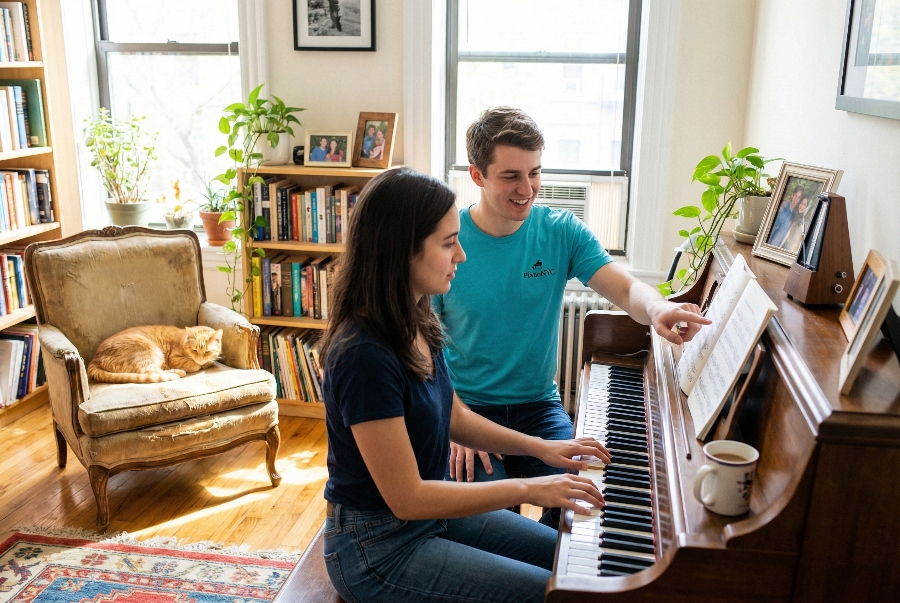
Private in-home piano lessons provide individualized memory training tailored to your goals and personal instrument across New York City. Learning on your home piano establishes consistent acoustic awareness and tactile familiarity that studio commutes cannot replicate.
PrivatePianoLessons operates coordination headquarters at 817 W End Ave, New York, NY 10025 (Upper West Side, Manhattan), dispatching 48 vetted piano instructors directly to homes across Manhattan, Brooklyn, Queens, The Bronx, and Staten Island with $0 travel fees. All instructors hold a Bachelor of Music degree or higher from institutions such as The Juilliard School, Manhattan School of Music, Mannes School of Music, and NYU Steinhardt.
Our faculty guides students through classical masterworks, contemporary compositions, and easy jazz standards to learn. Lessons run from 07:00 to 21:00, Monday through Sunday, providing flexible scheduling that supports regular, focused memory training.
How does muscle retention work in piano playing?
Muscle retention in piano playing works through procedural motor memory, where repetitive physical motions create automated neural pathways in the brain and spinal cord. Consistent practice at deliberate tempos allows fingers and arms to execute complex technical patterns with minimal conscious effort.
What should I do if I have a recall slip during performance?
If you experience a recall slip during a performance, jump immediately to the nearest predetermined structural checkpoint rather than stopping or restarting from measure one. Establishing multiple starting points throughout your piece and practicing mental recovery ensures seamless continuity under pressure.
How long does it typically take to memorise a piano piece?
Memorizing a piano piece typically takes 2 to 4 weeks for short intermediate pieces, while complex multi-movement works require 2 to 3 months of systematic practice. Timeframes vary based on harmonic complexity, daily practice consistency, and individual analytical ability.
Can I memorise piano music without understanding music theory?
You can memorise piano music without music theory by relying on muscle and auditory memory, though understanding harmonic structure significantly accelerates the process. Music theory reveals chord progressions, formal designs, and modulatory logic, creating mental shortcuts that prevent performance slips.
Is it better to memorise one hand at a time or both hands together?
It is better to begin memorizing hands separately to secure independent voices before coordinating both hands at slow tempos. Separating hands isolates harmonic bass lines and melodic phrasing, preventing reliance on mechanical finger habits.
Mastering piano memorisation transforms mechanical note-reading into expressive musical art. Through structured practice that unites kinesthetic, auditory, visual, and analytical recall, pianists build unshakeable confidence on stage. PrivatePianoLessons delivers the professional guidance and personalized in-home instruction necessary to cultivate lifelong musical mastery.
