

Rhythm forms the foundation of musical expression and technical fluency on the piano. For students in New York City, deliberate rhythm training transforms pulse stability from an obstacle into an artistic asset. This guide demonstrates how PrivatePianoLessons instructors use systematic metronome training to cultivate reliable timing for students across Manhattan, Brooklyn, Queens, The Bronx, and Staten Island.
What Is a Metronome and Why It Matters for PrivatePianoLessons
A metronome is an auditory practice device that establishes steady tempo through regular acoustic clicks. For PrivatePianoLessons students learning on their own pianos at home, metronome practice provides an objective standard of pulse, builds internal subdivision, and prevents involuntary rushing during technical passages.
Step 1: What Is This Timing Tool?
A metronome is an acoustic or digital pulse generator that delivers regular rhythmic beats across a standard range of 40 to 208 beats per minute (BPM). Much like a resting heartbeat stabilizes physical exertion, a metronome regulates musical pacing to eliminate the common tendency to rush simple bars or drag through complex fingerings. Determining the best age to start piano helps teachers introduce pulse awareness when fine motor skills and auditory tracking first align.
Modern musicians utilize three primary metronome varieties: traditional mechanical pendulum units, dedicated electronic devices, and mobile smartphone applications. Each format produces a distinct audible click or woodblock sound that anchors the tempo foundation of a composition.
Step 2: What Is Tempo?
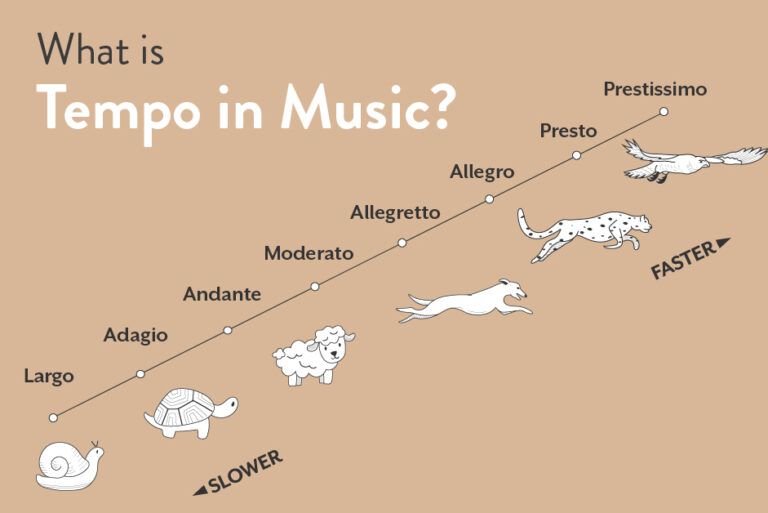
Tempo defines the performance speed of a musical work, measured numerically in beats per minute (BPM). Composers indicate pacing using standardized Italian tempo markings: Allegro represents lively speeds between 120 and 168 BPM, Andante denotes a walking pace of 76 to 108 BPM, and Largo indicates a solemn pace of 40 to 60 BPM.
Time signatures govern the organization of these beats within individual measures. Displayed as stacked numbers at the beginning of a score, the upper numeral defines the number of beats per measure, while the lower numeral identifies the note value receiving one beat. Common examples include 4/4 time (four quarter-note beats per measure) and 3/4 time (three quarter-note beats per measure).
Getting Started: How to Play Songs on the Piano With the Metronome
Playing repertoire with a metronome requires a gradual transition from slow technical alignment to performance velocity. Integrating counting with mechanical clicks builds reliable muscle memory before expressive nuances are applied.
Start Where You’re At
Effective metronome training begins at a tempo substantially below target performance speed, frequently at 50% to 60% of marked velocity. Starting slowly allows the neuromuscular system to program accurate fingerings, hand shifts, and key releases without tension.
Count aloud in synchronization with the audible clicks while your fingers execute the passage. Vocalizing numbers such as “one, two, three, four” in 4/4 meter links auditory listening, physical motion, and internal pulse recognition into a unified motor habit.
How to Make Your Timing Tool Work for You
Configure the metronome tempo before placing your hands on the piano keys. Initiate practice sessions with isolated technical fundamentals, such as playing a one-octave C major scale at 80 BPM with one note per click, before advancing to complex repertoire.
Isolate challenging repertoire into brief segments of two to four measures. Repeat these isolated measures with the metronome until you achieve three consecutive error-free repetitions before connecting them to adjacent musical phrases.
Trust Your Timing Even More
Developing rhythmic autonomy requires reducing metronome frequency so your internal pulse sustains the tempo. Program your metronome application to sound beats only on the downbeat of the first two measures, followed by two measures of complete silence. This gap forces your internal clock to maintain exact metric subdivision without external cues.
Jazz and contemporary pianists set the metronome click exclusively on beats two and four in 4/4 meter. This technique develops backbeat awareness, rhythmic independence, and natural groove across diverse musical styles.
5 Beginner Exercises for Playing with a Metronome
Mastering rhythmic subdivision requires targeted drills that progress from basic quarter pulses to complex sixteenth-note divisions. Practice each exercise daily to develop consistent finger articulation.
Playing with a Metronome: Exercise no. 1: 8th notes
Exercise 1 establishes precise binary subdivision by playing eighth notes at 60 BPM. Execute a one-octave C major scale with two equal notes per metronome click, counting “one-and-two-and-three-and-four-and” continuously. The numbers coincide with the metronome clicks, while the “and” syllables mark the subdivision midpoints.
Practice this exercise hands separately before attempting hands-together coordination. Ensure both notes within each beat retain identical duration, volume, and articulation.
Exercise no. 2: Whole, half and quarter notes
Exercise 2 develops proportional note-value relationships and sustained key control at a baseline tempo of 60 BPM. Hold each note value for its full duration before releasing on the subsequent downbeat:
- Whole notes: Sustain the key for four complete metronome clicks.
- Half notes: Sustain the key for two complete metronome clicks.
- Quarter notes: Sustain the key for one complete metronome click.
This exercise stabilizes rhythmic release timing and prevents releasing long values prematurely.
Exercise no. 3: 3/4 time signature
Exercise 3 trains simple triple meter by applying metric accents within a 3/4 time signature. Set the metronome to 72 BPM and apply a natural metric accent to beat one, followed by lighter releases on beats two and three to produce the characteristic waltz inflection.
Play a C major triad (C-E-G) in the left hand on beat one, followed by single melodic quarter notes in the right hand on beats two and three. This pattern establishes bilateral rhythmic independence across triple meter measures.

Exercise no. 4: 16th notes
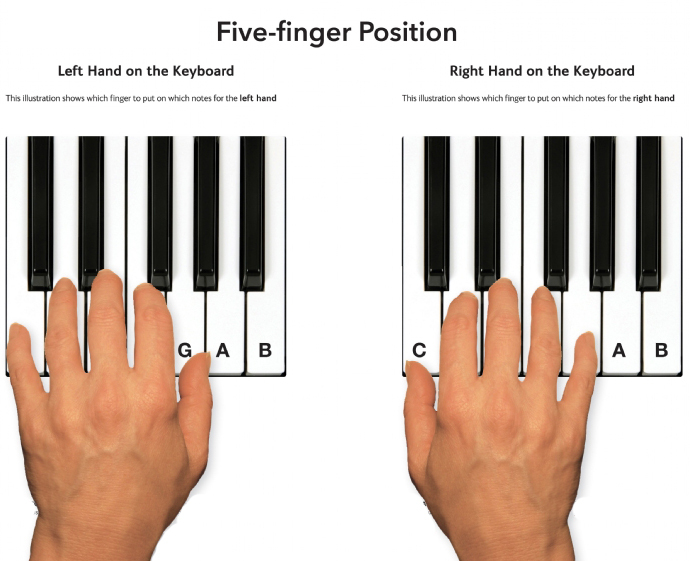
Exercise 4 develops rapid quadruple subdivision by executing sixteenth-note groupings at 80 BPM. Count “one-e-and-a-two-e-and-a” aloud, playing four equal notes per metronome click. Begin with a five-finger pattern (1-2-3-4-5-4-3-2-1) before progressing to full octave scales.
Maintain loose, supple wrists throughout sixteenth-note runs. Sustaining proper piano posture eliminates forearm tension, preserves tendon health, and maximizes rhythmic clarity during fast passages.
Exercise no. 5: Putting it all together
Exercise 5 consolidates all fundamental note values into a continuous four-measure rhythmic sequence at 60 BPM:
- Measure 1: Play four quarter notes on beats one, two, three, and four.
- Measure 2: Play two half notes, holding each note for two complete beats.
- Measure 3: Play eight eighth notes, sounding two notes per metronome click.
- Measure 4: Play one whole note, sustaining the tone through all four beats.
Repeat this four-measure cycle across various keys, incrementally increasing the metronome tempo from 60 to 100 BPM as coordination solidifies.
Creative Ways to Practice with a Metronome
Varying metronome placement keeps daily routines engaging while challenging auditory perception. These creative techniques build internal tempo stability beyond standard click-matching.
What’s the Tempo?
Auditory tempo memorization develops by internalizing clicks and testing your inner pulse without mechanical assistance. Listen to a designated tempo for four measures, stop the metronome, and count aloud for 8 to 16 beats at the identical pace. Reactivate the device on the final downbeat to verify whether your internal clock rushed, dragged, or remained accurate.
Practice identifying tempos by ear with your instructor or practice partner. Estimating whether an unfamiliar tempo is 72, 96, or 120 BPM strengthens metric recall for live performance situations.
Less Is More
Diminished metronome practice reduces external auditory guidance by sounding clicks only on structural metric anchors. Set the metronome to pulse exclusively on beat one of each measure, requiring you to pace beats two, three, and four independently.
Gradually widen the distance between clicks from every measure to every two measures, and finally to once per four-measure phrase. This systematic reduction reinforces personal tempo responsibility while preventing mechanical reliance.
Take It Up a Notch
Metronome displacement challenges rhythmic stability by shifting the click from on-beats to off-beats. Configure the metronome to click on beats two and four while your fingers articulate beats one and three. This metric displacement sharpens rhythmic independence whether you are a young beginner or relearning piano as an adult.
Apply displacement techniques to compound meters such as 6/8 or 9/8 time. Setting the metronome to sound dotted-quarter beats rather than individual eighth notes teaches the body to feel broader metric pulses.
Counting and Subdivisions
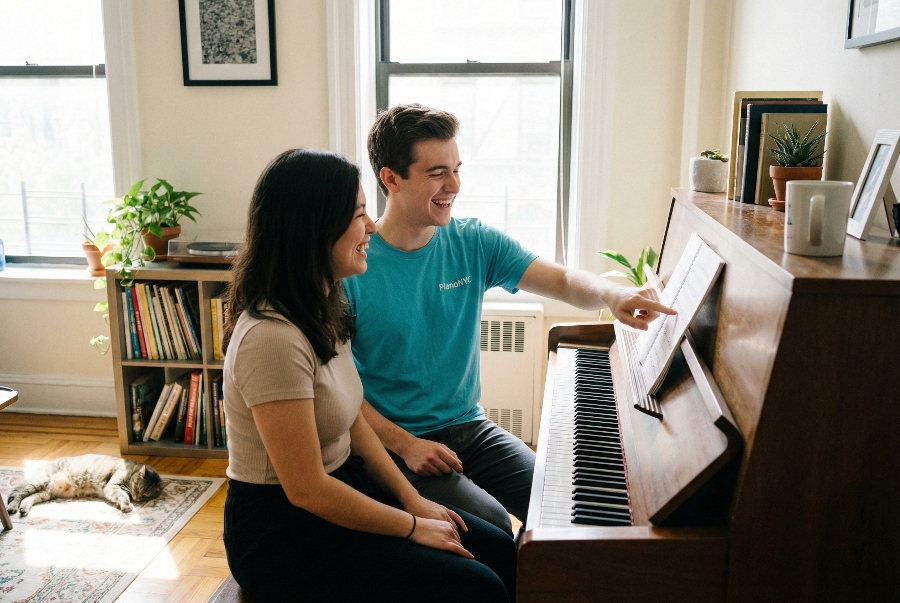
Mental subdivision maintains absolute tempo stability by actively measuring smaller rhythmic units during long sustained values. When executing half notes at 60 BPM, internally subdivide each beat into quarter notes (“one-two-three-four”) to ensure the key release occurs on the exact subsequent pulse. Mastering metric subdivision also provides the timing control required when learning how to improvise on piano.
Adopt pedagogical rhythm syllables for complex patterns: recite “ta” for quarter notes, “ti-ti” for eighth notes, and “ti-ri-ti-ri” for sixteenth notes. Vocalizing rhythmic syllables clarifies syncopation and polyrhythmic structures before physical execution on the keyboard.
Addressing Common Arguments Against the Practice Aid (FAQ)
Many students encounter initial frustration when introducing a metronome into their daily practice. Addressing these common concerns clarifies how timing aids support long-term musicality.
1. Does the rhythm aid make my playing sound robotic?
No, practicing with a metronome does not make your playing sound robotic when used correctly. Mechanical playing occurs when students practice at tempos exceeding their physical comfort level or play without dynamic shaping. Professional pianists utilize metronomes to establish metric precision first, allowing expressive rubato and musical interpretation to build upon a stable structural foundation.
2. Why is the practice aid hindering my playing?
A metronome hinders playing when students introduce the device before learning the notes and rhythm independently. Attempting to read unfamiliar pitches while matching an uncompromising beat creates cognitive overload. Resolve this challenge by tapping the rhythmic values on a closed piano fallboard while counting aloud, adding the metronome only after the metric structure is thoroughly understood.
3. Can I make the click sound quieter or change it?
Yes, modern digital metronomes and mobile applications feature adjustable volume controls, visual flash cues, and diverse audio timbres. You can select subtle woodblock clicks, gentle beeps, or digital drum sounds to avoid auditory fatigue. For silent practice, choose models with visual pulsing LEDs or smartphone applications that transmit haptic vibration pulses directly to your wrist or mobile device.
Applying Metronome Practice to Pieces for Private Piano Lessons at New York City
Applying metronome practice to repertoire bridges technical drills and artistic performance. PrivatePianoLessons instructors guide students through systematic tempo staging directly on their home pianos across New York City, ensuring intricate classical and jazz passages achieve metric stability before recital preparation.
Slowly Increase the Pace
A structured 5-week incremental tempo ladder ensures secure technical progress when building repertoire velocity:
- Week 1: Rehearse the passage at 50% of the final target tempo until fingerings feel effortless.
- Week 2: Elevate the pace to 60% of target tempo, emphasizing clear articulation.
- Week 3: Advance the speed to 70% of target tempo, maintaining wrist and shoulder relaxation.
- Week 4: Increase velocity to 80% of target tempo, introducing dynamic contrasts.
- Week 5: Achieve 100% of the performance tempo with full musical expression.
Never accelerate the metronome until the current setting is executed with complete physical ease and zero rhythmic hesitation. Complex polyphonic passages often require several additional days at earlier stages to solidify finger memory.
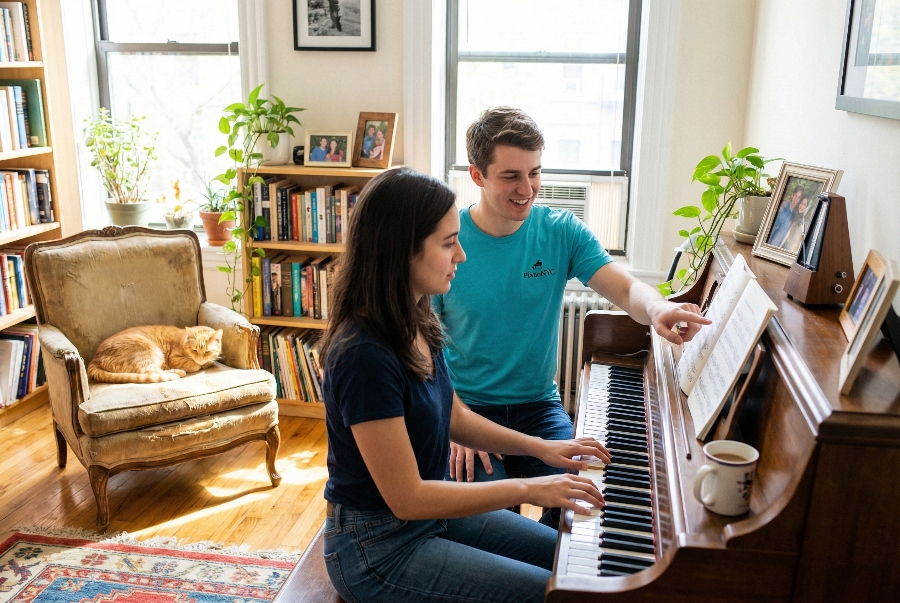
How do you count rhythm and play note lengths properly?
Accurate note durations depend on understanding mathematical proportional relationships relative to the metronome pulse. At a baseline tempo of 60 BPM, each beat lasts exactly 1.0 second; consequently, a quarter note sustains for 1.0 second, a half note sounds for 2.0 seconds, and an eighth note lasts 0.5 seconds.
Employ the “lift and drop” technique for crisp articulation: release the preceding key at the exact moment the subsequent downbeat drops. This mechanical discipline governs three core articulations:
- Legato: Connect successive notes seamlessly without auditory gaps.
- Staccato: Release the key immediately for a crisp, detached duration equaling approximately half the written value.
- Tenuto: Sustain the key for its full metric duration with subtle expressive weight.
Make Practice Time Easier By Planning Ahead!
Structured weekly planning maximizes metronome efficiency and accelerates repertoire readiness. Organize your weekly practice routine with clear daily objectives:
- Monday, Wednesday, Friday: Technical drills with metronome (scales, arpeggios, Hanon exercises).
- Tuesday, Thursday: Slow sectional repertoire practice at 50% to 70% target tempo.
- Saturday: Incremental tempo-building sessions toward performance speed.
- Sunday: Unmetered expressive runs to test internal pulse autonomy.
Maintain a practice journal to document specific baseline tempos, achieved speeds, and challenging bars requiring further slow subdivision. PrivatePianoLessons instructors across New York City utilize this methodical approach for students from beginner through advanced levels. Whether you are learning fundamental keyboard skills in your Manhattan home or preparing for conservatory auditions in Brooklyn, Queens, The Bronx, or Staten Island, disciplined metronome training builds enduring musical confidence. Exploring piano studies offers profound lifelong rewards, including the documented benefits of music for elderly individuals.
Contact PrivatePianoLessons
- Address: 817 W End Ave, New York, NY 10025, USA
- Phone: +1 (917) 903-2146
- Email: [email protected]
- Website: https://privatepianonyc.com
- Hours: 07:00 – 21:00, Monday – Sunday
PrivatePianoLessons provides premium 1-on-1 private piano lessons in the comfort of your home across all five New York City boroughs: Manhattan, Brooklyn, Queens, The Bronx, and Staten Island. With 48 degreed instructors, an 8-level curriculum aligned with RCM and ABRSM standards, and zero travel fees, we help students of all ages master timing, technique, and musical expression.
