

Daily piano rehearsal duration directly governs neuromuscular development, tactile memory, and musical proficiency. Effective daily practice ranges from 15 to 30 minutes for beginners to 4 to 8 hours for concert pianists. Focused deliberate practice yields greater skill progression than mindless hours at the keyboard.
The Short Answer: How Much Time Should You Spend Rehearsing Piano Daily?
Most piano students make optimal technical and musical progress with 30 to 60 minutes of daily rehearsal. This duration provides sufficient repetition to consolidate fine motor skills without inducing cognitive fatigue or muscle strain. Daily deliberate sessions consistently outperform irregular, marathon practice blocks.
Cognitive neuroscience demonstrates that distributed practice enhances procedural memory consolidation and neural plasticity. Daily sleep intervals between focused sessions allow the motor cortex to encode intricate finger movements and polyphonic patterns more securely.
Recommended Rehearsal Duration by Skill Level
Daily piano practice requirements depend on current technical proficiency, repertoire difficulty, and performance objectives. Structuring session length according to developmental stages establishes realistic musical benchmarks and prevents physical injury.
How long should beginners rehearse to improve?
Beginners should rehearse 15 to 20 minutes daily, gradually progressing to 30 minutes over 12 weeks. Brief practice blocks preserve mental stamina and reinforce biomechanical habits without fatiguing small intrinsic hand muscles.
Key focus areas for beginner piano rehearsal include:
- Developing seated posture, neutral wrist alignment, and curved finger shape
- Practicing five-finger patterns, pentascales, and fundamental rhythm exercises
- Reading treble and bass clef notation, rhythmic values, and interval relationships
Applying newly acquired techniques to easy classical piano songs reinforces musical literacy and keyboard geography. Concentrated, daily 20-minute sessions build foundational neural pathways while cultivating sustainable study discipline.
Rehearsal schedules for intermediate students
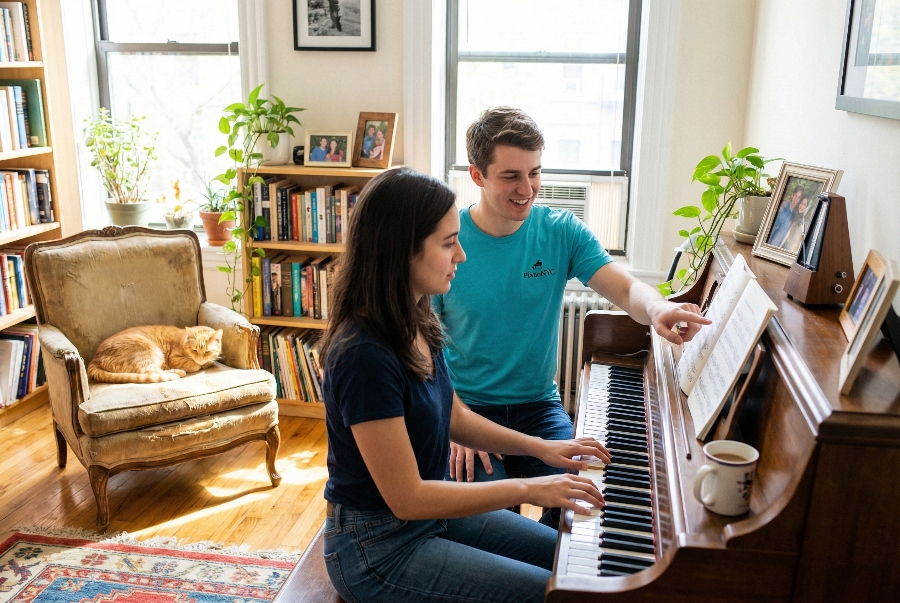
Intermediate pianists require 45 to 60 minutes of daily practice to navigate increasing technical demands and repertoire complexity. Students with backgrounds in Suzuki vs traditional piano methods may balance ear training and notation reading differently, yet both require balanced daily allocation across technical components.
An effective 60-minute intermediate rehearsal schedule includes:
- Executing two-octave scales, arpeggios, and Hanon exercises (15 minutes)
- Deconstructing complex phrases, fingering choices, and dynamics in assigned pieces (30 minutes)
- Developing sight-reading fluency, score analysis, and cadence recognition (15 minutes)
Segmenting practice into distinct 15-to-30-minute intervals sustains cognitive alertness and allows targeted refinement across polyphonic articulation, pedal coordination, and expressive interpretation.
How much do professional pianists rehearse a day?
Professional pianists typically rehearse 4 to 8 hours daily, divided into multiple 90-minute or 2-hour segments. Concert performers increase practice volume toward 6 to 8 hours daily during recital tours, concerto debuts, or recording sessions.
Professional rehearsal sessions focus on:
- Maintaining four-octave scales, double thirds, octave passagework, and virtuosic etudes
- Refining tonal balance, polyphonic voicing, rubato, and stylistic ornamentation
- Solidifying visual, auditory, kinesthetic, and structural memory for stage performance
Professional pianists prioritize mental clarity over mechanical repetition. Dividing long rehearsals into morning and afternoon blocks prevents repetitive strain injuries, including carpal tunnel syndrome and tendonitis.
Quality vs. Quantity in Private Piano Lessons at New York City
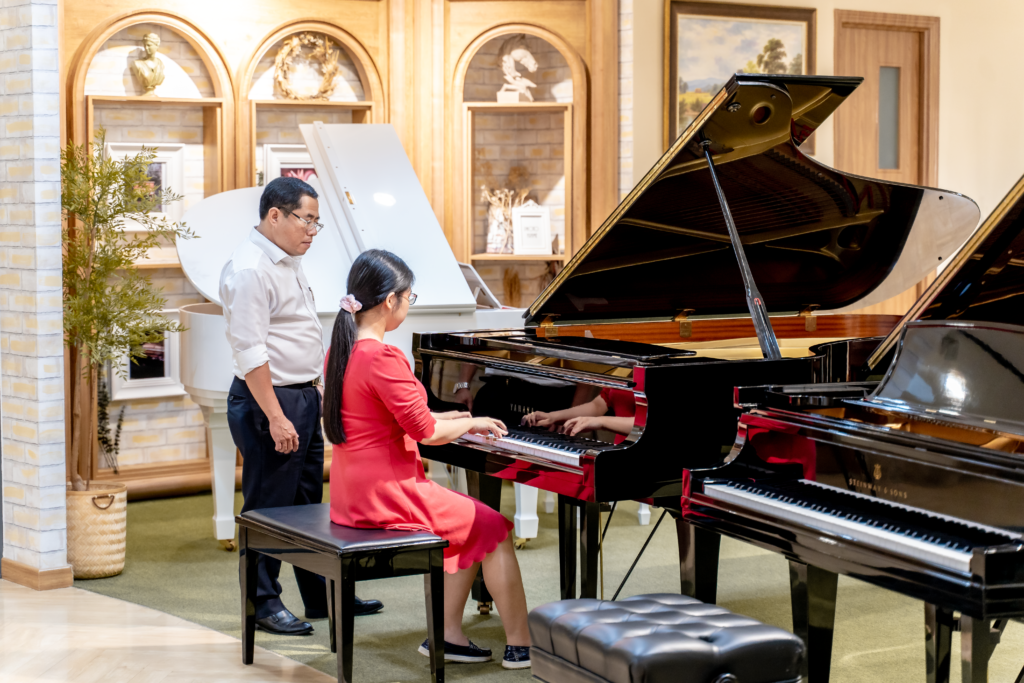
Top-tier private piano nyc educators prioritize deliberate, goal-driven practice over passive clock-watching. Thirty minutes of focused, analytical study accelerates musical mastery faster than two hours of unfocused repetition.
Structured study vs. mindless repetition
Structured study applies deliberate problem-solving to specific technical challenges, whereas mindless repetition merely runs through repertoire from beginning to end. Deliberate practice isolates flawed measures, analyzes fingering mechanics, and embeds accurate motor patterns.
Effective structured study includes:
- Isolating awkward fingering shifts, uneven articulation, and rhythm inconsistencies
- Practicing difficult measures hands-separately at reduced tempos with a metronome
- Applying rhythmic variations, such as dotted rhythms and accents, to secure finger independence
Mindless run-throughs repeatedly reinforce errors, creating involuntary muscle memory for incorrect notes. Focused practice ensures every repetition reinforces musical precision, clean pedaling, and expressive tone control.
The importance of mental focus, as well as rest
High mental focus is essential for establishing stable synaptic connections during piano practice. When cognitive alertness wanes, the brain loses the ability to detect minor micro-timing errors and tonal discrepancies.
Structured rest intervals preserve mental and physical performance:
- Taking 5-to-10-minute rest intervals every 25 to 30 minutes of rehearsal
- Stretching the neck, shoulders, forearms, and wrists away from the keyboard
- Switching repertoire genres after rest breaks to engage fresh auditory processing
Cognitive studies show that practice intervals of 25 to 45 minutes optimize memory retention. Short, restorative breaks prevent mental exhaustion and protect against tendon strain.
Setting specific goals for every session
Every piano rehearsal session must target clear, measurable musical objectives rather than arbitrary time quotas. Micro-goals transform large, intimidating scores into manageable technical milestones.
Effective daily rehearsal goals include:
- Mastering four difficult measures at 60 beats per minute hands-together
- Executing smooth thumb crossings during four-octave major and harmonic minor scales
- Balancing right-hand cantabile melody lines above quiet left-hand Alberti bass accompaniments
Goal-directed practice enables students to measure daily technical gains objectively. This systematic approach preserves musical motivation and prevents aimless meandering at the instrument.
How to Structure Your Rehearsal Session Effectively
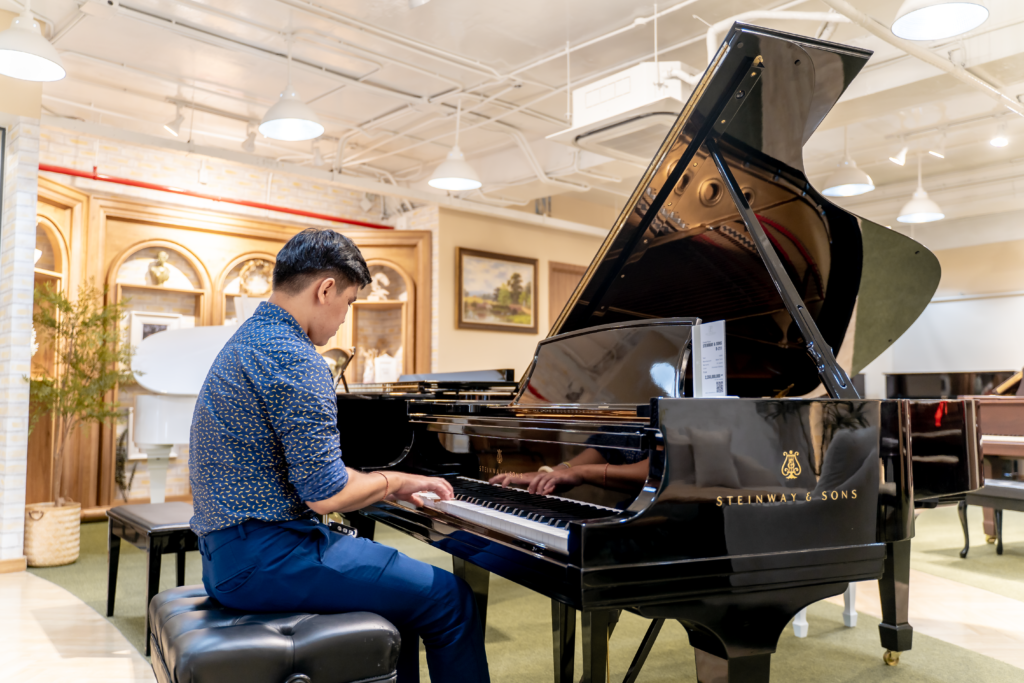
A balanced piano practice routine organizes time into warm-ups, repertoire development, and sight-reading review. This systematic architecture prepares neuromuscular pathways, optimizes mental focus, and prevents repetitive physical stress.
Warm-ups, as well as technical exercises
Initiating practice with 5 to 10 minutes of technical warm-ups promotes synovial fluid circulation in finger joints and activates forearm muscles. Dedicated technical drills establish physiological agility before tackling demanding repertoire.
Essential warm-up components include:
- Executing Hanon exercises or Czerny etudes for finger independence and knuckle bridge stability
- Playing major and minor scales, arpeggios, and four-note broken chords across multiple octaves
- Performing wrist drop-and-roll exercises and forearm rotations to release upper-body tension
Consistent technical conditioning establishes clean articulation and steady pulse control across all keys. Warming up systematically prevents tendonitis and prepares fingers for complex polyphonic textures.
Repertoire, plus learning new pieces
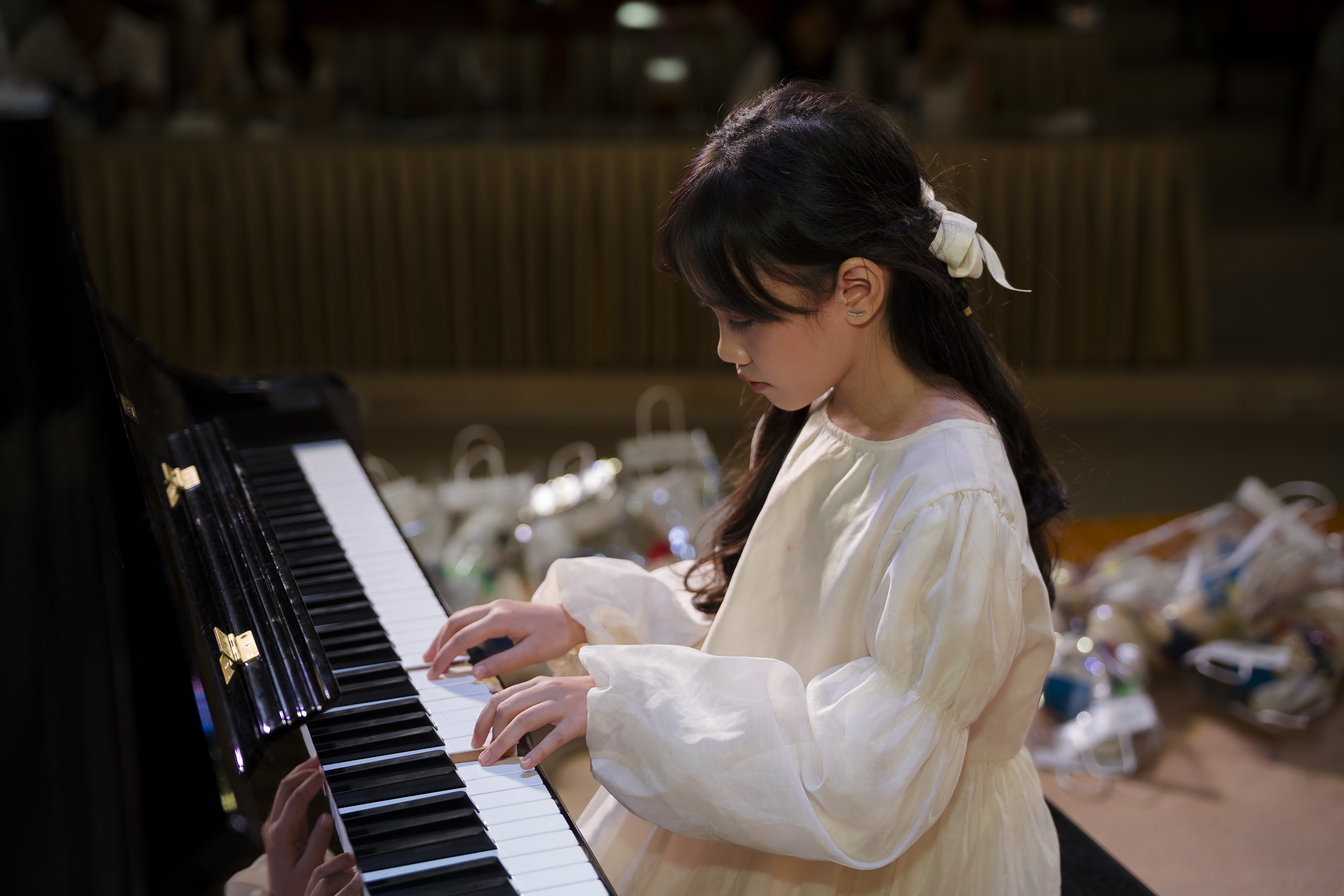
Dedicating 60% to 70% of rehearsal time to core repertoire ensures steady progress on complex musical pieces. This core segment focuses on problem-solving unfamiliar passages and polishing performance nuance.
Strategic repertoire practice involves:
- Deconstructing challenging measures hands-separately at under-tempo metronome settings
- Refining musical phrasing, voice leading, dynamic contrasts, and pedaling resonance
- Simulating stage performance with complete run-throughs without stopping for minor mistakes
Analyzing the musical score away from the keyboard reveals formal structure, harmonic progressions, and recurring motifs. Combining hands only after mastering individual voice lines guarantees secure technical execution.
Sight-reading and review
Allocating 10 to 15 minutes at the conclusion of practice to sight-reading and repertoire review maintains visual-tactile fluency. Reviewing previously mastered pieces reinforces technical confidence and preserves long-term repertoire.
Daily sight-reading and repertoire review provides three distinct benefits:
- Accelerating score reading fluency and rhythmic accuracy through unfamiliar musical excerpts
- Sharpening instant recognition of cadences, key signatures, and chord inversions
- Deepening interpretive maturity on mastered pieces without the distraction of technical mechanics
Ending sessions with fluent, expressive playing provides psychological satisfaction and solidifies musical enjoyment. Consistent score reading builds lifetime musical self-sufficiency.
Consistency is Key with PrivatePianoLessons
Daily consistency anchors long-term piano progress. PrivatePianoLessons structures personalized in-home practice plans that transform short, daily rehearsals into sustained artistic advancement.
Short chunks vs. one long session once a week
A daily 30-minute practice session develops far superior technical fluency compared to a single 3-hour weekend cram session. Distributed learning allows the nervous system to consolidate complex motor skills during sleep.
Advantages of short daily rehearsal blocks include:
- Minimizing physical strain and reducing tendon inflammation risks
- Maintaining peak cognitive attention and critical self-listening
- Securing reliable motor memory retention across consecutive days
Infrequent weekend marathons cause forearm fatigue and cognitive overload, leading to sloppy technique and lost momentum during inactive weekdays.
How to rehearse for hours without going crazy
Sustaining multi-hour practice sessions without mental burnout requires alternating technical tasks and taking disciplined physical breaks. Advanced pianists structure extended sessions into distinct mental compartments.
Strategies for productive extended rehearsal include:
- Rotating between technical drills, memory work, and slow expressive phrasing
- Interspersing 10-minute rest breaks every 45 minutes to stretch and reset mental focus
- Alternating contrasting musical periods, such as Bach polyphony and Chopin romanticism
Varying cognitive demands keeps the ear engaged and prevents physical tension during extended hours at the instrument.
Maintaining motivation for daily study
Maintaining daily practice motivation requires clear short-term benchmarks, varied repertoire, and systematic progress tracking. Connecting routine drills to beloved musical pieces transforms practice from a chore into a rewarding creative habit.
Practical techniques for sustaining daily motivation include:
- Setting concrete weekly goals and acknowledging completed technical milestones
- Balancing rigorous method books with personally chosen popular, classical, or jazz pieces
- Using a practice log to document practice tempo increases and finished repertoire
PrivatePianoLessons faculty support student motivation by providing structured 12-week progress reports and biannual recital performance opportunities.
Signs You Are Rehearsing Too Much or Incorrectly
Excessive practice duration or flawed biomechanics produces physical strain and mental burnout. Recognizing physiological and cognitive warning signs early prevents chronic injuries and technical plateaus.
Key indicators of over-practicing and flawed rehearsal habits include:
- Experiencing persistent tension or sharp ache in the wrists, forearms, or shoulders
- Repeating musical errors mechanically without analyzing fingering or rhythmic roots
- Practicing continuously at performance tempo while glossing over uneven passage work
Pianists feeling persistent pain must stop playing immediately to avoid tendonitis. PrivatePianoLessons instructors analyze seated height, arm weight transfer, and wrist flexibility to correct harmful habits before injuries develop.
Maximizing Progress with Private Piano Lessons at New York City
PrivatePianoLessons maximizes rehearsal efficiency through tailored 1-on-1 in-home piano instruction across all five New York City boroughs: Manhattan, Brooklyn, Queens, The Bronx, and Staten Island. Coordinated from 817 W End Ave in Manhattan with zero travel fees, 48 university-trained instructors deliver expert coaching directly on students’ home pianos.
Personalized instruction aligns with an 8-level curriculum referenced to RCM and ABRSM standards, featuring 12-week progress reports and biannual recitals. Whether arranging beginner foundations or advanced repertoire, such as piano lessons Bronx families trust, dedicated home coaching eliminates travel stress and accelerates musical progress.
Frequently Asked Questions
How many hours a day should I rehearse piano as a beginner?
Beginners should rehearse 15 to 30 minutes daily. Starting with 15 to 20 minutes daily for the first two months prevents physical fatigue and establishes solid finger dexterity. Gradually extending sessions to 30 minutes supports steady note-reading and repertoire development without mental overwhelm.
Is rehearsing piano 2 hours a day too much?
Rehearsing piano for 2 hours a day is too much for beginners, but suitable for advanced and pre-professional students. Advanced pianists preparing conservatory auditions or senior RCM and ABRSM exams thrive with 2 hours daily when split into two 60-minute blocks. For beginners and recreational players, exceeding 60 minutes often causes muscular fatigue, loss of focus, and diminished returns.
What happens if I skip piano study for a week?
Skipping piano practice for an entire week leads to reduced finger dexterity, faded tactile memory, and slower piece recall. Neural pathways for recently learned repertoire begin to degrade after three days of inactivity. Pianists typically require two to three days of focused technical warm-ups to recover their baseline speed and accuracy.
Should I rehearse piano every day or take rest days?
You should rehearse piano five to six days per week while taking one scheduled rest day. Practicing five or six days weekly maintains muscle memory and cognitive momentum, while a dedicated rest day allows neuromuscular recovery and prevents mental burnout. Short daily sessions consistently outperform sporadic marathon rehearsals.
