

Music reading skills for piano players require systematic training that transforms hesitant note-by-note deciphering into fluent musical interpretation. Professional pianists master score reading through targeted techniques that cultivate pattern recognition, tactile keyboard topography, and harmonic anticipation. These essential skills enable musicians to perform unfamiliar compositions immediately, expanding both their performance repertoire and professional playing opportunities.
Essential Techniques to Improve Music Reading Mastery
Mastering fundamental score-reading techniques requires developing visual anticipation, tactile keyboard navigation, and mental audiation. These core strategies establish the neurological and physical coordination required for effortless music interpretation.
Train Your Eyes to Look Ahead in the Sheet Music
Training your eyes to scan 1 to 2 measures ahead allows your brain to decode notation before your fingers depress the keys. Expert sight-readers maintain consistent visual focus 4 to 8 beats in advance of their physical hand execution.
Key eye-training exercises include:
- Scan 2 measures ahead continuously without playing the keyboard to build mental buffer capacity.
- Follow notation with your eyes at 60 BPM while using a metronome to establish a steady visual scan.
- Cover completed measures with an index card to prevent regressive backward glances.
This technique develops anticipatory reading habits, enabling your brain to analyze pitch, rhythm, and fingering patterns before physical execution. Consistent forward visual focus minimizes pauses and ensures seamless musical momentum.
Avoid Looking Down at Your Hands While Playing
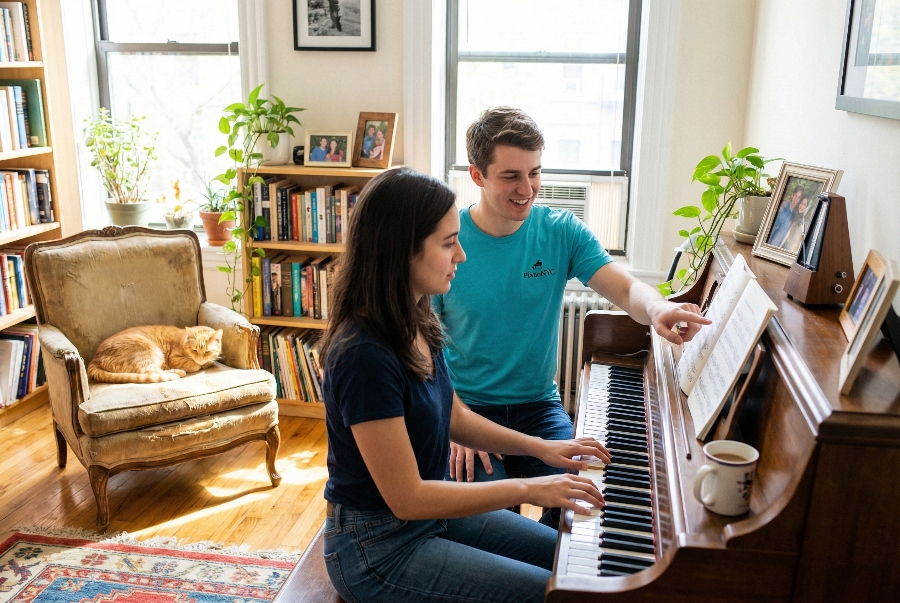
Avoiding visual confirmation of your hands strengthens spatial awareness and tactile orientation across the 88 piano keys. Professional pianists maintain sheet music contact over 90% of the time during unfamiliar score execution.
Essential hand-positioning strategies include:
- Practice 2-octave scales and arpeggios daily without looking down at the keyboard.
- Locate tactile keyboard landmarks by feeling the 2-black-key and 3-black-key patterns with your fingertips.
- Execute 5-finger melodic exercises in standard positions relying exclusively on touch feedback.
Tactile keyboard familiarity eliminates visual dependency on your hands. This physical independence directs your full cognitive attention toward reading notation, markedly increasing note accuracy and tempo stability.
Hear the Music in Your Head Before You Start
Audiating sheet music before physical execution prepares your brain to recognize melodic contours, intervals, and harmonic progressions. This cognitive skill involves previewing phrasing, rhythmic cadence, and musical color through internal hearing.
Audiation development techniques include:
- Analyze key signatures, time signatures, and rhythmic motifs silently for 2 minutes before playing.
- Hum or sing primary melodic lines while following the written notation.
- Identify primary cadences and harmonic shifts across the score prior to sounding the first measure.
Proficient score readers utilize audiation to anticipate musical structure and phrasing nuance. Reviewing memorizing music tips enhances audiation recall and minimizes performance errors during real-time score reading.
Prioritize Rhythm and Musical Flow Over Note Accuracy
Maintaining strict rhythmic continuity preserves musical integrity far more effectively than stopping to correct pitch inaccuracies. Professional musicians prioritize steady meter and phrasing over isolated note perfection during sight-reading drills.
Effective rhythm-first strategies include:
- Set a metronome to a manageable tempo between 60 BPM and 80 BPM.
- Keep playing through incorrect pitches without pausing, stuttering, or repeating beats.
- Subdivide complex measures into eighth notes or sixteenth notes to sustain an unbroken pulse.
Preserving musical momentum builds performance confidence and rapid error-recovery reflexes. This disciplined approach builds reading stamina and eliminates performance anxiety during unfamiliar score navigation.
Structuring an Effective Unfamiliar Music Practice Routine
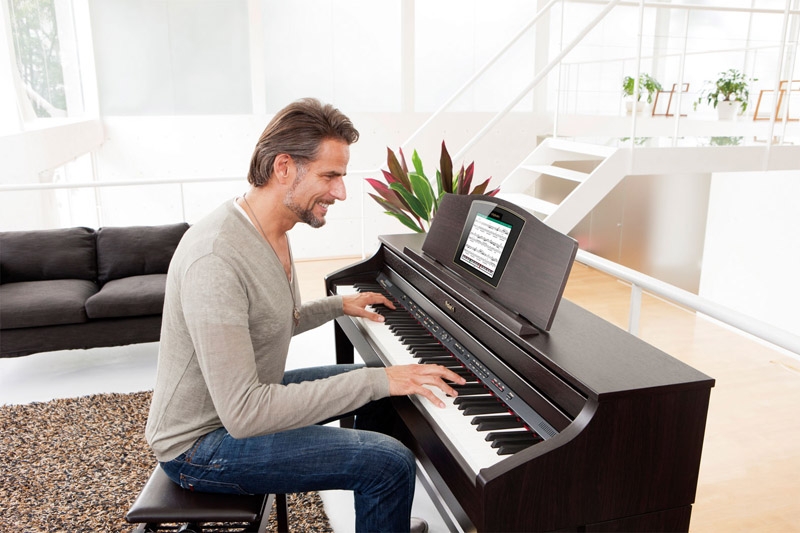
Structuring an effective sight-reading routine requires progressive repertoire selection, fixed daily practice windows, and structured skill tracking. Systematic practice routines balance technical mechanics with musical expressiveness.
Choosing the Right Difficulty Level for Practice Material
Selecting practice scores rated 1 to 2 grade levels below your current repertoire ensures fluent execution without cognitive fatigue. Reading material at roughly 70% of your technical performance threshold optimizes real-time processing speed.
Difficulty assessment criteria include:
- Select pieces with a maximum of 2 or 3 accidentals in the key signature.
- Choose standard time signatures such as 2/4, 3/4, and 4/4.
- Select transparent musical textures featuring clear single-line melodies and simple chord accompaniments.
Advance repertoire difficulty incrementally every 2 to 3 weeks as reading fluency improves. You can alternate between classical sonatinas and easy jazz standards to learn syncopated swing rhythms and harmonic flexibility.
The Importance of Consistency Over Practice Duration
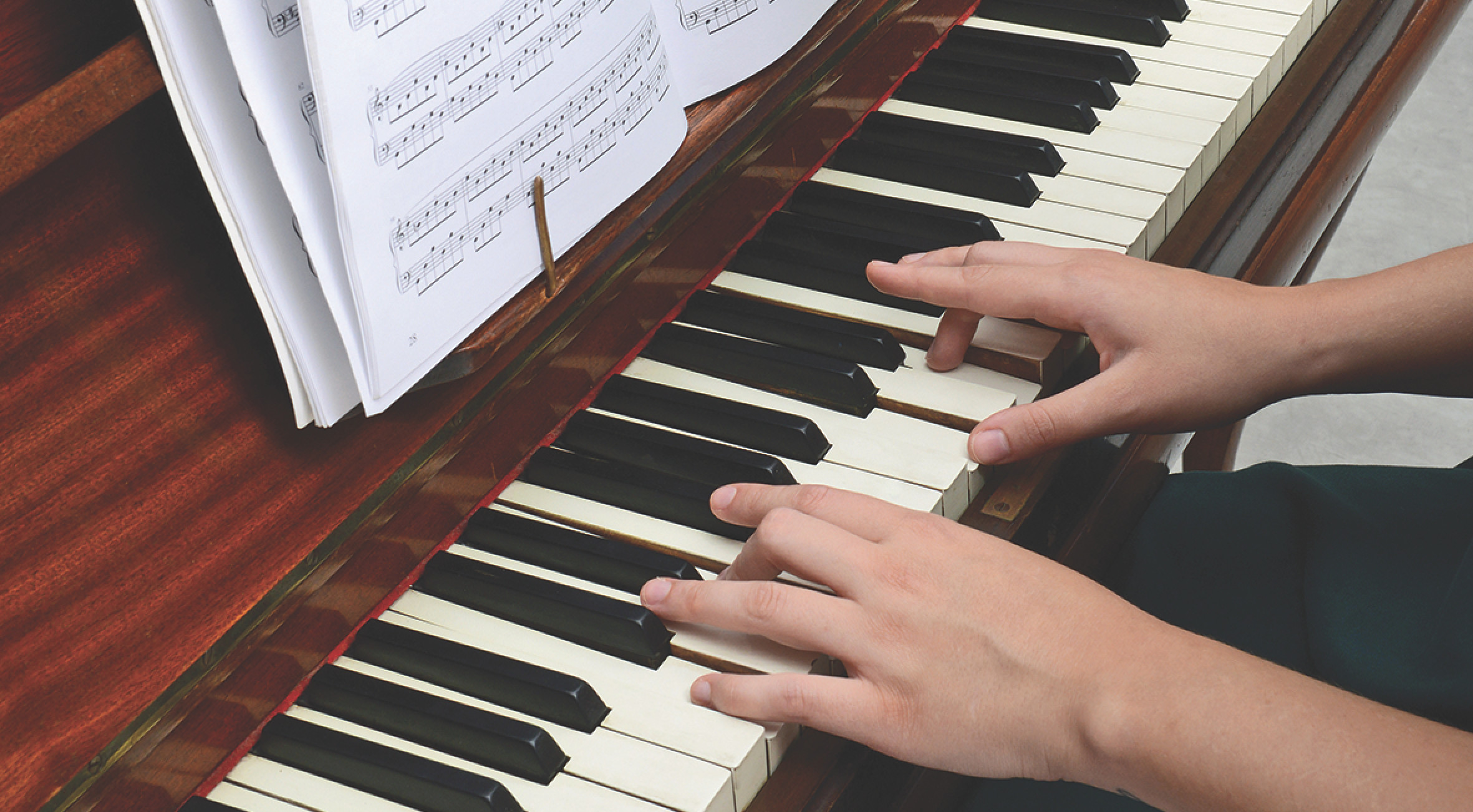
Practicing sight-reading for 15 to 20 minutes every day builds neural pathways far more effectively than sporadic weekly marathons. Daily engagement strengthens rapid visual decoding and automates motor reflexes on the piano.
Optimal practice scheduling guidelines include:
- Complete reading drills in the morning when mental focus and visual processing peak.
- Rotate through 3 to 5 fresh, unfamiliar pieces each session to prevent unintended memorization.
- Review weekly reading progress to adjust tempo targets and score complexity.
Daily micro-sessions maintain cognitive momentum and prevent skill regression. Short, focused practice blocks integrate sight-reading proficiency seamlessly into comprehensive musical development.
Applying the PrivatePianoLessons Method for Daily Practice
The PrivatePianoLessons method accelerates score reading through personalized daily routines and an 8-level syllabus referenced against RCM and ABRSM standards. Expert instructors delivering 1-on-1 in-home piano lessons NYC integrate sight-reading drills directly onto your own home instrument.
Core methodology components include:
- Establish baseline reading proficiency through a complimentary 30-minute in-home assessment.
- Follow customized exercise sequences tailored to your specific technical and rhythmic weaknesses.
- Track score-reading milestones with comprehensive progress evaluations delivered every 12 weeks.
Targeted 1-on-1 guidance prevents harmful reading habits and reinforces proper visual scanning mechanics. Professional instruction ensures each practice session delivers measurable technical advancement.
Overcoming Common Challenges in Sight-Reading
Overcoming standard sight-reading hurdles requires systematic solutions for hands-together processing, panic recovery, and rapid chord recognition. Structured drills transform cognitive hesitation into automatic physical responses.
Strategies for Reading Both Hands Together Fluently
Reading both hands simultaneously requires vertical score scanning and tactile hand independence across the grand staff. Coordinated execution develops when you process harmony from the bass foundation upward.
Effective coordination strategies include:
- Scan the bass clef harmony first to identify the foundational root notes before reading treble melodies.
- Count subdivisions aloud using rhythmic syllabic systems such as 1-and-2-and or 1-e-and-a.
- Recognize recurring harmonic intervals, including thirds, fifths, and octaves, between the hands.
Hand independence advances through structured exercises that gradually increase contrapuntal complexity. This bilateral coordination transfers directly to classical polyphony, jazz lead sheets, and collaborative chamber playing.
How to Keep Going Without Stopping to Fix Mistakes
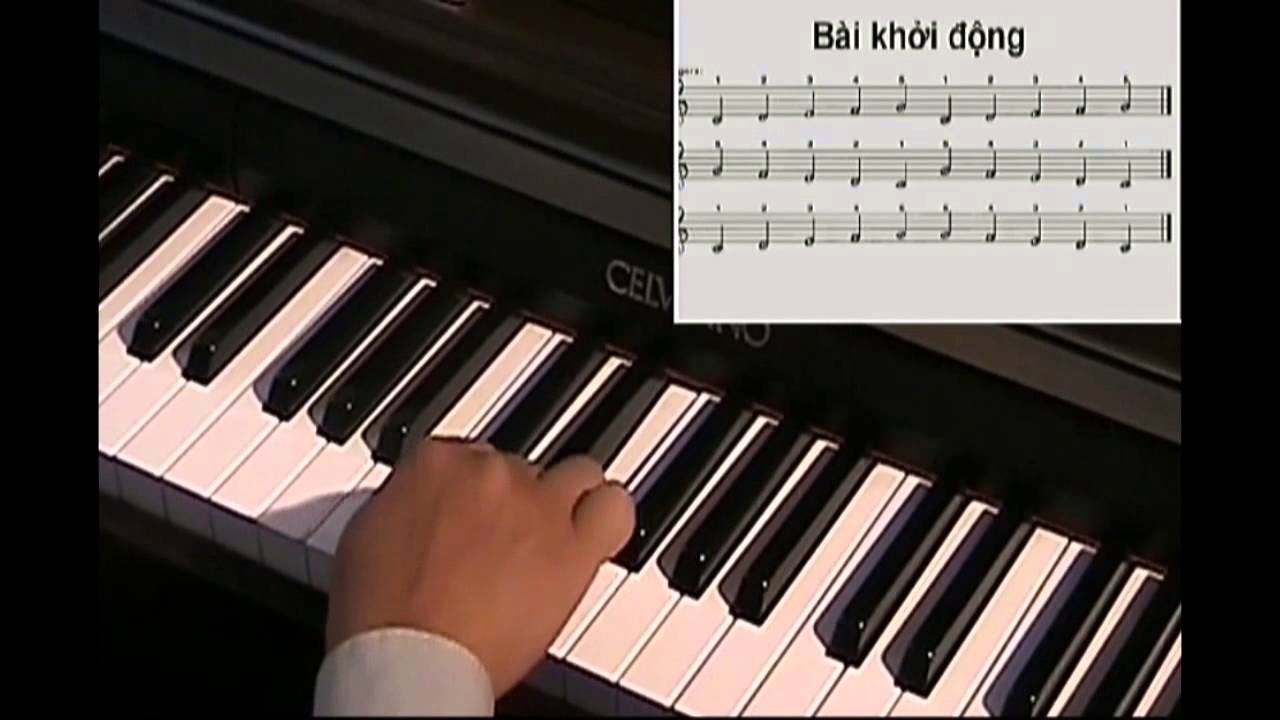
Maintaining forward momentum requires developing intentional error resilience and auditory discipline during first-time read-throughs. Halting to correct missed notes disrupts rhythmic continuity and hinders recovery reflexes.
Momentum preservation techniques include:
- Commit to playing through incorrect notes while preserving the metronomic beat.
- Drop non-essential inner voices in complex chords if finger placement falls behind.
- Keep your eyes focused on the upcoming measure rather than dwelling on past mistakes.
Embracing minor inaccuracies during sight-reading drills builds performance stamina and musical composure. This resilience equips pianists to navigate live performance and ensemble environments where tempo cannot stop.
Recognizing Patterns and Chords Instantly
Instant pattern recognition enables pianists to process clusters of notes as cohesive harmonic and melodic units rather than individual pitches. Visual chunking reduces cognitive processing demands and enhances reading speed.
Pattern recognition development strategies include:
- Memorize major and minor triad inversions across all 12 keys.
- Identify common harmonic sequences, including the I–IV–V, I–V–vi–IV, and ii–V–I progressions.
- Recognize scalar runs, broken arpeggios, and neighboring chromatic tones instantly.
Harmonic familiarity replaces note-by-note deciphering with instantaneous comprehension. This visual and tactile fluency substantially increases reading tempo across baroque, classical, romantic, and modern repertoire.
Accelerate Your Progress with PrivatePianoLessons
Accelerating your piano progress requires structured mentorship, customized feedback, and private lessons tailored to your learning pace. PrivatePianoLessons provides personalized 1-on-1 in-home instruction designed to develop fluent music reading.
Why Private Piano Lessons at New York City Enhance Sight-Reading Faster
Private 1-on-1 in-home piano instruction in New York City accelerates sight-reading by eliminating transit stress and utilizing your personal home instrument. Founded on May 12, 2010, by classical pianist and educator James Harrison, PrivatePianoLessons operates coordination headquarters at 817 W End Ave, New York, NY 10025, serving students across Manhattan, Brooklyn, Queens, The Bronx, and Staten Island with 0 USD travel fees.
Key instructional advantages include:
- Receive personalized instruction from a faculty of 48 degreed teachers holding a Bachelor of Music degree or higher, including 19 holding master’s or doctoral degrees.
- Follow a structured 8-level syllabus referencing RCM Certificate Program and ABRSM benchmarks.
- Schedule flexible weekly sessions between 07:00 and 21:00, Monday through Sunday.
Whether you study with an Upper West Side specialist or a piano teacher Bronx families trust, personalized instruction ensures steady sight-reading mastery.
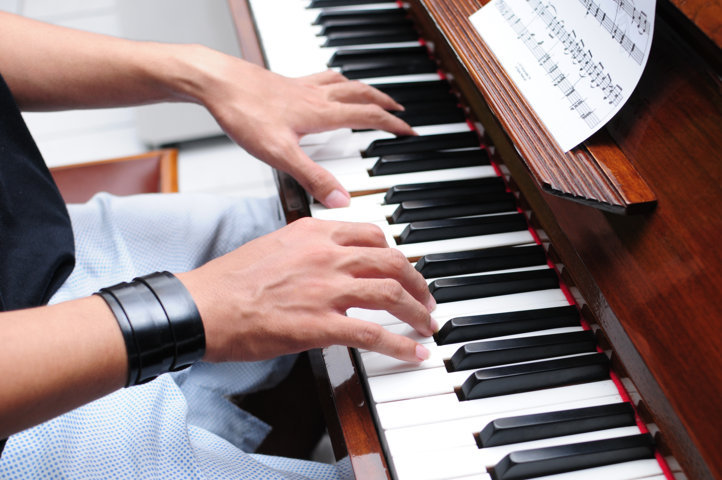
Personalized Sight-Reading Feedback from PrivatePianoLessons Experts
Personalized feedback from PrivatePianoLessons instructors isolates specific reading hurdles, correcting tactile habits and visual tracking errors in real time. Faculty mentors tailor pedagogical strategies to each student’s technical level and musical goals.
Core feedback elements include:
- Diagnose eye movement efficiency and hand positioning during your complimentary 30-minute in-home assessment.
- Receive targeted reading drills addressing specific pitch decoding and rhythm challenges.
- Review tangible skill milestones through structured progress reports delivered every 12 weeks.
Individualized mentoring accelerates technical mastery while fostering confident musical expression across all repertoire styles.
Recommended Resources for Sight-Reading Development
High-quality supplementary materials, digital software, and public score archives reinforce daily reading drills between weekly piano lessons. Utilizing diverse practice tools ensures consistent exposure to unfamiliar musical notation.
Best Websites and Apps for Generating Exercises
Digital score generators provide limitless sight-reading drills with customizable difficulty parameters and automated rhythm tracking. Incorporating modern applications maintains engagement and builds rapid score-reading versatility.
Recommended digital resources include:
- Sight Reading Factory: Generates customized sight-reading exercises across variable key signatures, time signatures, and difficulty levels.
- Flowkey: Delivers interactive score-reading practice featuring contemporary songs and real-time acoustic pitch detection.
- MuseScore: Provides an open-source notation library with thousands of community-uploaded arrangements and classical scores.
For younger learners, pairing practice with engaging piano learning games reinforces note identification through enjoyable daily routines.
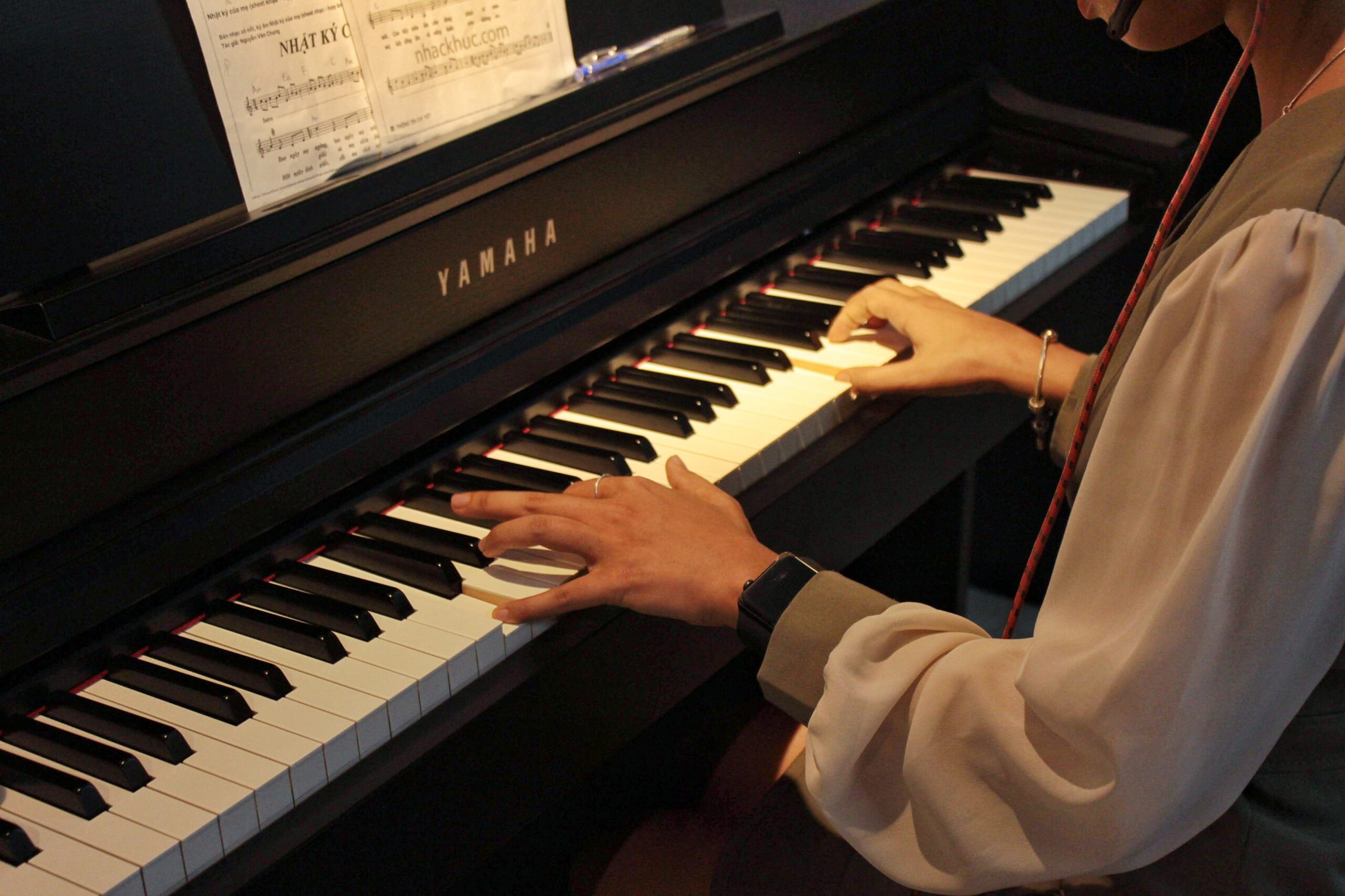
Where to Find Free Sheet Music Suitable for Sight-Reading
Public domain archives provide thousands of royalty-free scores across diverse historical periods for exploratory sight-reading practice. Accessing standard repertoire exposes pianists to varied compositional textures and rhythmic vocabularies.
Recommended public score repositories include:
- IMSLP (International Music Score Library Project): Houses over 500,000 public domain classical scores, from Baroque inventions to Romantic sonatas.
- Musopen: Supplies copyright-free sheet music, recordings, and pedagogical method books filtered by difficulty and instrument.
- CPDL (Choral Public Domain Library): Offers thousands of choral and vocal scores ideal for practicing multi-part score reading.
Exploring these digital archives allows you to sight-read diverse repertoire, ranging from Bach polyphony to the impressionistic Debussy piano style.
Frequently Asked Questions About Piano Sight-Reading
How Long Does It Take to Get Really Good at Sight-Reading?
Achieving proficient piano sight-reading ability typically takes 6 to 12 months of consistent daily practice for intermediate pianists, while reaching advanced sight-reading fluency requires 2 to 3 years of structured study. Progress depends on foundational music theory knowledge, consistent 15-to-20-minute daily practice sessions, and professional 1-on-1 guidance that systematically introduces diverse musical styles.
Should Beginners Start Sight-Reading Immediately?
No, beginning pianists should not start immediate sight-reading drills until establishing foundational hand posture, keyboard geography, and basic note recognition, which typically takes 3 to 6 months of instruction. Once students read basic grand staff notation and navigate keys without visual confirmation, teachers introduce simple single-line melodies in familiar keys such as C major and G major.
