

Piano mastery requires systematic technical discipline alongside artistic expression. The foundation of fluent technique, analytical understanding, and dynamic expression lies in the deliberate practice of scales and arpeggios. These fundamental drills develop finger independence, strengthen intrinsic hand muscles, and accelerate pattern recognition across complex repertoire.
Professional instructors at PrivatePianoLessons consistently emphasize that scales and arpeggios form the cornerstone of keyboard fluency. Whether you are preparing for conservatory auditions or welcoming an instrument delivered by piano movers NYC, committing to regular technical practice produces superior tone production, rhythmic precision, and musical endurance.
Why Are Scales or Arpeggios Necessary for Pianists?
Technical exercises provide cognitive, biomechanical, and neurological benefits that extend far beyond mechanical finger movement. Systematic scale practice accelerates score reading, builds tactile keyboard familiarity, and reinforces intuitive understanding of musical structures across all 24 major and minor keys.
Developing Finger Strength, Dexterity, plus Velocity
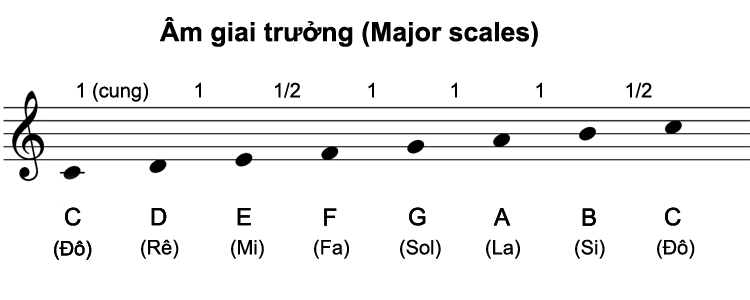
Scale practice specifically targets individual finger independence and strength across all ten digits. Regular scalar drills strengthen the smaller lumbrical and interosseous hand muscles, which regulate tactile articulation and dynamic control at rapid tempi.
Practicing major and minor scales for 15 minutes daily develops measurable finger velocity within 4 to 6 weeks. This repetitive motor training conditions the flexor and extensor tendons, creating the physical stability needed for technical masterworks, such as Johann Sebastian Bach’s inventions, Carl Czerny’s velocity studies, and Frédéric Chopin’s concert études. You can readily acquire authoritative editions of these works at local sheet music stores NYC.
Professional instructors observe that students who maintain structured scale practice demonstrate clear performance improvements:
- Enhanced coordination between weaker digits (fingers 4 and 5) and stronger digits (fingers 1, 2, and 3)
- Stable tone production across dynamic gradations from pianissimo to fortissimo
- Reduced physical tension in the wrists, forearms, and shoulders during extended playing
- Greater muscular endurance required for advanced recital and concert literature
Improving Hand Independence or Coordination
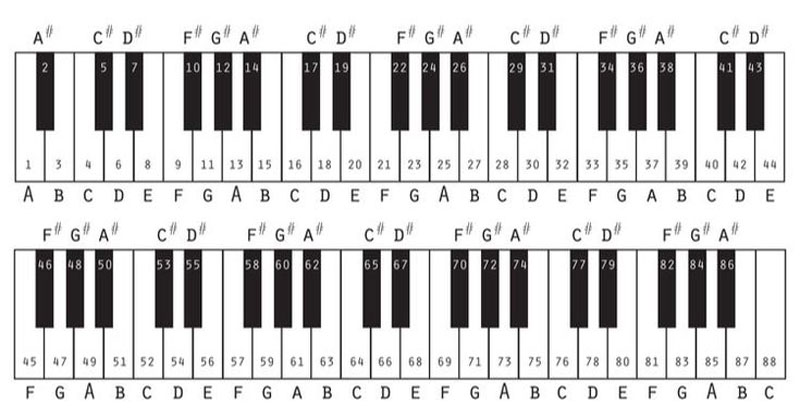
Arpeggio exercises develop bilateral hand coordination and lateral wrist flexibility across the full 88-key keyboard. Executing broken chords demands precise thumb crossings (passaggio) and smooth forearm shifts that mirror standard figurations in Classical and Romantic repertoire.
Hand independence develops through practicing contrary motion scales, chromatic patterns, and polyrhythmic subdivisions. These exercises train the nervous system to govern each hand’s dynamics, timing, and articulation independently while maintaining unified musical balance.
Advanced students preparing for conservatory entrance auditions benefit substantially from daily arpeggio study. Scalar sweeps and chordal extensions occur consistently throughout keyboard sonatas by Wolfgang Amadeus Mozart, Ludwig van Beethoven, and Franz Schubert.
Recognizing Patterns in Music to Learn Pieces Faster
Scale knowledge accelerates score reading, analytical comprehension, and memorization speed. Students familiar with key structures instantly decode key signatures, identify tonal centers, and anticipate harmonic cadences before playing.
Pattern recognition enables pianists to learn new repertoire up to three times faster than students without systematic technical training. When encountering rapid scalar passages in Chopin nocturnes, Mozart sonatas, or Bach preludes, trained musicians execute familiar finger groupings automatically rather than deciphering isolated notes.
Structured scale study provides four primary learning advantages:
- Immediate recognition of key centers and modulating harmonic areas
- Accurate anticipation of standard cadential chord progressions (such as ii–V–I and I–IV–V–I)
- Automated execution of established fingering formulas across all 24 keys
- Reduced rehearsal time when memorizing complex polyphonic textures
Building a Strong Foundation in Music Theory with Improvisation
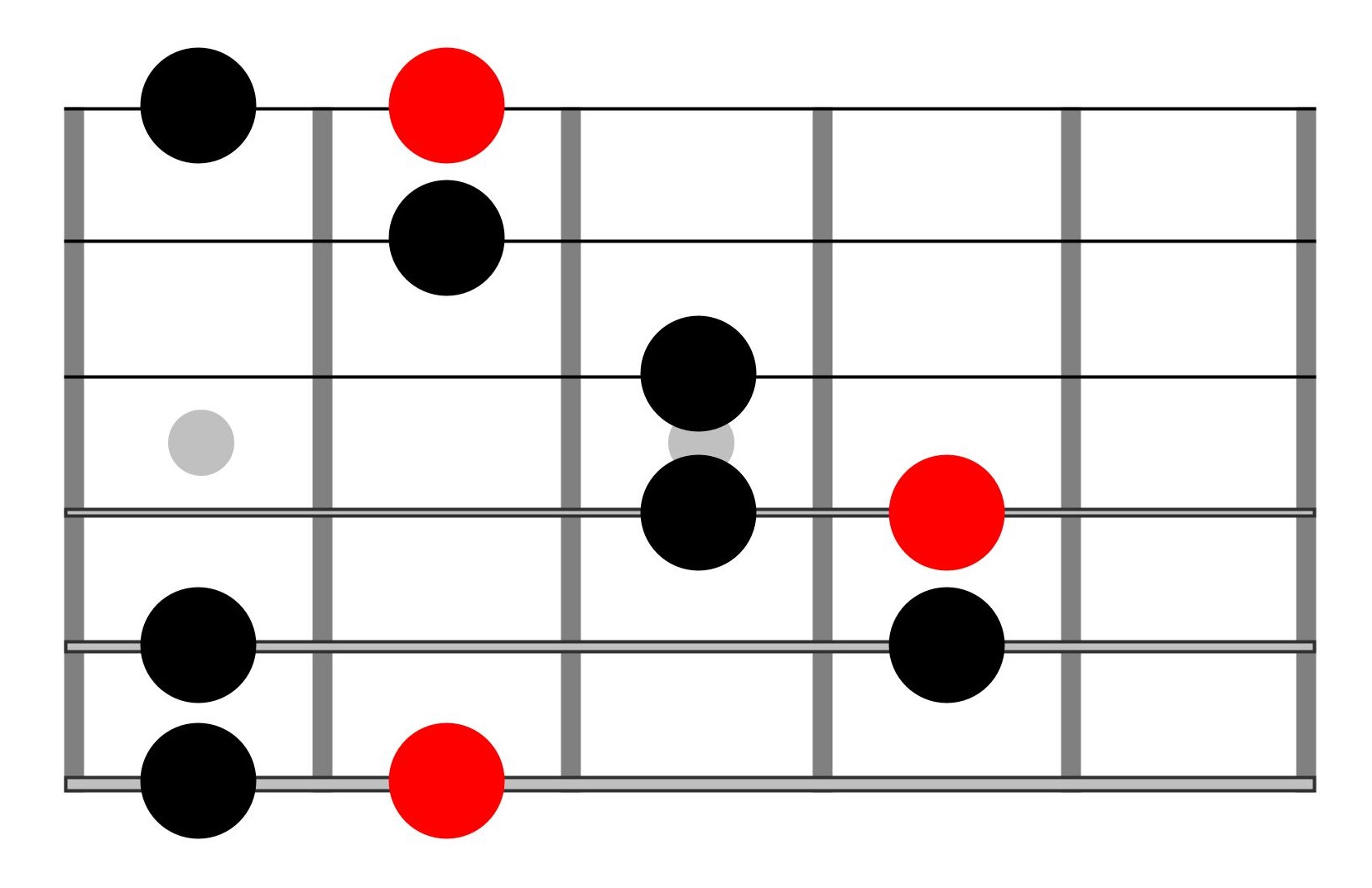
Technical keyboard drills provide direct tactile realization of theoretical concepts, including the circle of fifths, interval construction, and relative key relationships. Practicing all 24 keys bridges the gap between abstract harmonic theory and physical performance.
Jazz improvisation relies directly on comprehensive scalar fluency. Pianists proficient in major, natural minor, harmonic minor, melodic minor, and modal frameworks possess the vocabulary necessary to construct spontaneous melodies over chord substitutions, a vital prerequisite when discovering how to read lead sheets.
Classical interpretation equally requires scale-based analytical understanding. Recognizing that E minor is the relative minor of G major clarifies structural development, voice leading, and phrase architecture from Baroque counterpoint through 20th-century compositions.
Understanding the Basics with PrivatePianoLessons
Technical foundation development requires a systematic pedagogical framework combined with expert guidance. PrivatePianoLessons delivers 1-on-1 in-home piano instruction across New York City, establishing proper ergonomics from the beginning to prevent limiting physical habits.
Essential Scales and Arpeggios Beginners Should Learn First
Beginning students progress most effectively through a sequence organized by hand ergonomics rather than alphabetical order:
Level 1 (Weeks 1–4):
- C major scale and arpeggio (natural white-key topography without accidentals)
- G major scale and arpeggio (introducing F-sharp in the key signature)
- F major scale and arpeggio (introducing B-flat and standard fourth-finger placement)
Level 2 (Weeks 5–12):
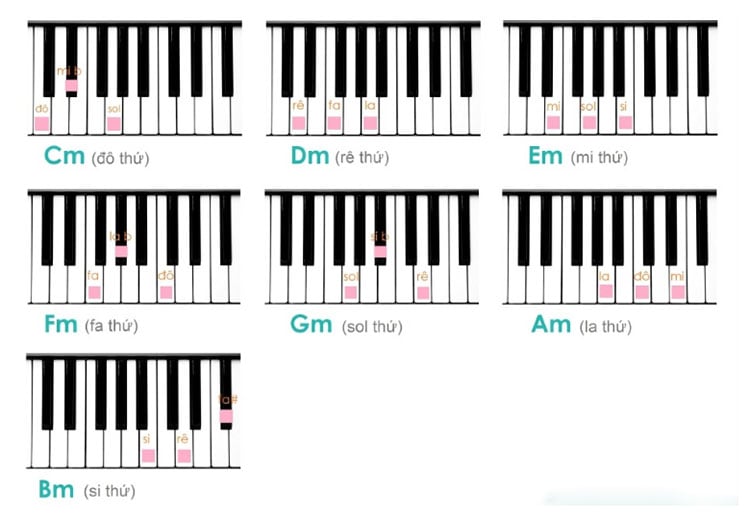
- A natural and harmonic minor scales and arpeggios (relative minor to C major)
- E minor scale and arpeggio (relative minor to G major)
- D minor scale and arpeggio (relative minor to F major)
Level 3 (Months 4–6):
- D major, A major, and E major scales and arpeggios (sharp keys)
- B-flat major, E-flat major, and A-flat major scales and arpeggios (flat keys)
- Corresponding harmonic and melodic minor relatives for each key
This sequence aligns with the PrivatePianoLessons 8-level curriculum, benchmarked against RCM Certificate Program and ABRSM examination standards.
How to Practice Scales and Arpeggios Effectively
Effective technical practice requires deliberate methodology rather than repetitive drill work. Professional pianists apply targeted practice structures that maximize neurological retention while minimizing physical strain.
Proper Fingering Rules and Hand Posture
Standard fingering patterns ensure seamless continuity and eliminate awkward rearrangements across multi-octave runs. Major scale fingering follows classical keyboard traditions designed to optimize leverage:
Right-hand standard scale fingering:
- Fingers 1-2-3-1-2-3-4-5 for C, G, D, A, and E major
- Fingers 1-2-3-4-1-2-3-4 for F major (thumb turns under finger 4 on B-flat)
- Thumb passes under the palm cleanly without dipping the wrist
Left-hand standard scale fingering:
- Fingers 5-4-3-2-1-3-2-1 for C, G, D, A, and E major
- Ergonomic adaptations for flat keys to place longer digits (2, 3, and 4) on black keys
Proper posture and hand positioning prevent repetitive strain injuries and foster tonal clarity:
- Maintain naturally curved fingers forming a relaxed, dome-like hand shape
- Keep wrists level with the keyboard, avoiding rigid dropping or excessive elevation
- Release tension in the neck and shoulders to allow natural arm weight transfer
- Position forearms parallel to the floor with an appropriately adjusted bench height
Improper postural habits developed during scalar practice transfer directly into repertoire, impeding velocity and increasing fatigue.
Incorporating Technical Exercises into Your Daily Routine
Daily focused practice of 15 to 20 minutes yields greater neuromuscular adaptation than irregular, prolonged sessions. Consistent technical work establishes permanent motor memory and reinforces hand independence.
A balanced 20-minute daily technical routine includes:
- 5 minutes: Slow two-octave scales with a metronome, focusing on rhythmic evenness and arm weight
- 5 minutes: Two-octave arpeggios, emphasizing supple thumb transitions and quiet wrist shifts
- 5 minutes: Chromatic scales and contrary motion drills for bilateral coordination
- 5 minutes: Cadential chord progressions (I–IV–I–V7–I) reinforcing key signatures and voice leading
Advanced students preparing for conservatory auditions benefit from extended 30- to 45-minute technical regimens, pairing Hanon and Czerny studies alongside Bach inventions.
Changing Articulations and Rhythms to Master Control
Varying articulation develops precise tactile nuance and motor agility beyond basic legato touch. Mastery requires executing diverse touch variations within scalar frameworks:
Essential articulation variations:
- Legato: seamless, connected touch promoting continuous weight transfer between fingertips
- Staccato: crisp, spring-like detachment strengthening intrinsic fingertip flexors
- Tenuto: full-value duration with measured keybed depression
- Two-note slurs: alternating drop-roll wrist motions combining weight and release
Rhythmic variations eliminate subconscious finger rushing and sharpen timing accuracy. Once note accuracy is established, students should understand how to use piano pedals to enhance acoustic resonance without blurring articulation.
Pianists practice scales using structured rhythmic permutations:
- Dotted rhythms (long-short and short-long patterns) to isolate rapid finger transitions
- Triplet subdivisions within duple meter contexts to challenge rhythmic subdivision
- Syncopated accents displacing natural metrical weight across the bar
- Contrasting dynamics between hands (forte in right hand, piano in left hand)
Tips to Make Practicing Scales and Technique Fun
Technical practice stays engaging when approached with creative musical variation. Structured challenges maintain focus while achieving pedagogical objectives:
Creative practice approaches include:
- Metronome speed ladders: increasing tempi incrementally by 2 to 4 beats per minute upon clean execution
- Dynamic contrast drills: performing ascending scales pianissimo and descending scales fortissimo
- Expressive phrasing: shaping scale runs into melodic sentences with natural contour and direction
- Improvisational vamps: soloing over left-hand scalar chord progressions in modal and jazz contexts
Integrating metronome apps and practice journals provides objective progress tracking across 12-week cycles, helping students monitor technical velocity and consistency.
Elevate Your Skills with Private Piano Lessons in New York City
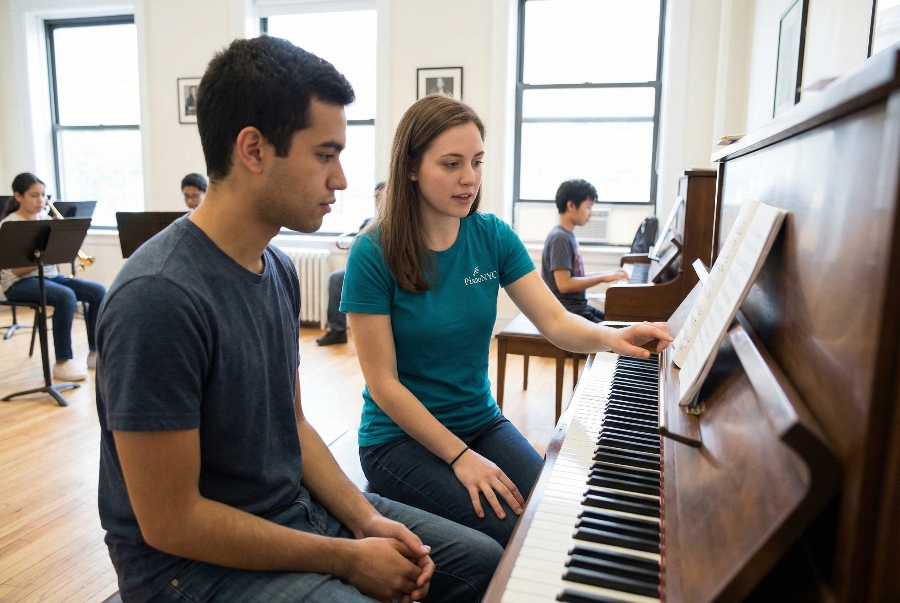
Professional instruction accelerates technical development through real-time feedback and biomechanical correction. Experienced mentors diagnose physical tension immediately, preventing bad habits and ensuring rapid musical progress.
Founded on May 12, 2010, by classical pianist and pedagogue James Harrison, PrivatePianoLessons provides 1-on-1 private piano lessons directly in students’ homes across all five New York City boroughs: Manhattan, Brooklyn, Queens, The Bronx, and Staten Island, with $0 travel fees. Whether you reside in Manhattan or seek dedicated piano lessons Bronx, our faculty of 48 degreed concert pianists brings conservatory excellence directly to your living room.
Key benefits of learning with PrivatePianoLessons:
- 100% degreed faculty holding Bachelor of Music degrees or higher (including 19 Master’s and Doctoral graduates)
- 4-criteria Teacher Match system based on musical goals, style, personality, and home borough
- Structured 8-level curriculum benchmarked against RCM and ABRSM international standards
- Flexible scheduling from 07:00 to 21:00, Monday through Sunday
- Complimentary 24-hour rescheduling policy with zero travel fees across all five boroughs
- Written progress evaluations every 12 weeks and two annual recitals in Manhattan
Our seven specialized programs include Piano Lessons for Kids, Adult Piano Lessons, Piano Lessons for Seniors, Beginner Piano Lessons, Classical Piano Lessons, Jazz Piano Lessons, and Professional Coaching Lessons.
Contact PrivatePianoLessons today to schedule your complimentary 30-minute in-home trial assessment. Start building flawless piano technique on your own instrument with New York City’s premier in-home piano instructors.
Frequently Asked Questions (FAQs) about Piano Technique
What is the fundamental difference between a piano Scale and an Arpeggio?
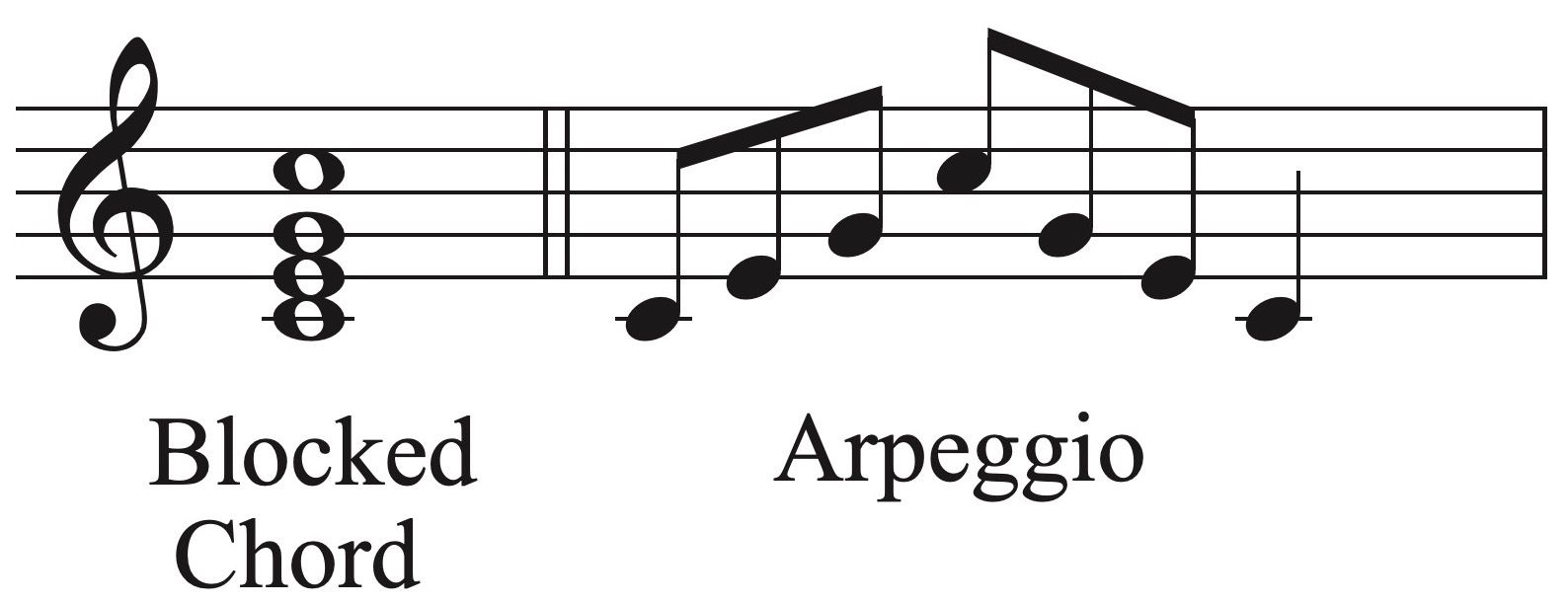
A piano scale is a stepwise sequence of consecutive notes arranged in whole- and half-step intervals across one or more octaves, whereas an arpeggio is a broken chord where the constituent chord tones (root, third, fifth, and octave) are played sequentially rather than simultaneously. Scales develop horizontal finger velocity and standard scalar finger turns, while arpeggios build lateral wrist flexibility, broader finger extension, and smooth thumb-under transitions across wider keyboard intervals.
How much daily practice time should I dedicate to scales and arpeggios?
You should dedicate 15 to 20 minutes of focused technical practice daily to scales and arpeggios. Consistent daily practice establishes permanent neuromuscular pathways far more effectively than sporadic weekly sessions. Structure this time into 5 minutes of slow scale execution, 5 minutes of arpeggio coordination, 5 minutes of chromatic or contrary motion drills, and 5 minutes of cadence and chord progression studies.
