

Scientific research demonstrates that piano lessons brain benefits fundamentally transform a child’s developing brain through measurable structural and cognitive adaptations. Rigorous neurological studies confirm that instrumental music training produces permanent neural changes that enhance academic achievement, emotional regulation, and executive function.
The Neuroscience of Music: Structural Changes in the Brain
Musical training produces profound physical modifications in children’s brains, establishing structural adaptations that extend far beyond acoustic interpretation.
Increasing Gray Matter and Neuroplasticity
Piano lessons directly increase gray matter volume in cerebral areas governing sensory processing, motor planning, and executive control. Research published in Frontiers in Neuroscience confirms that early instrumental training optimizes synaptic plasticity, creating denser neural arborization across cortical networks. These structural enhancements support four essential cognitive domains:
- High-capacity memory retention and retrieval
- Abstract problem-solving capabilities
- Bimanual sensorimotor coordination
- Simultaneous multi-tasking efficiency
Children completing 3 to 5 years of consistent piano instruction exhibit up to a 20% gain in auditory working memory and selective attention relative to non-musical cohorts.
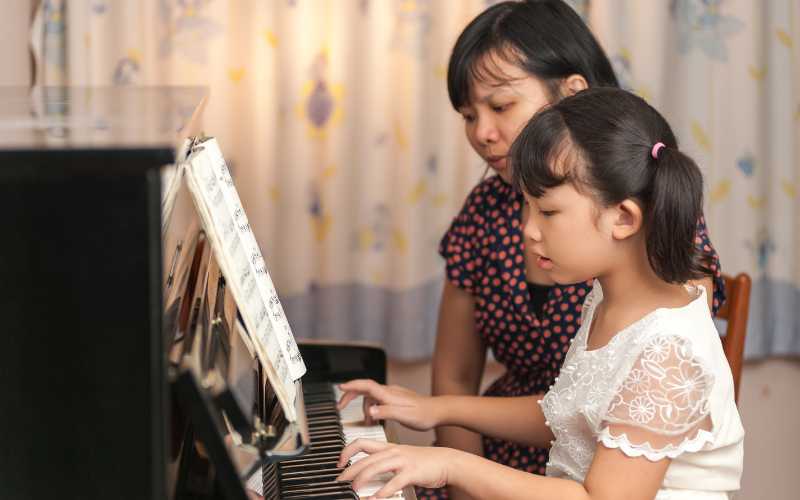
Strengthening the Bridge Between Brain Hemispheres
Piano performance provides an intensive workout for the corpus callosum, the dense white-matter tract connecting the left and right cerebral hemispheres. Neuroimaging reveals that young musicians develop a significantly thicker, more heavily myelinated corpus callosum. This heightened interhemispheric transfer speed facilitates intricate bilateral tasks, such as articulating complex left hand jazz patterns while executing expressive right-hand melodies.
This bilateral synchronization provides four distinct cognitive advantages:
- Rapid integration between logical analysis and creative synthesis
- Accelerated communication speeds across cerebral hemispheres
- Refined bimanual motor independence and coordination
- Superior creative problem-solving combining divergent and convergent thought
Creating Rapid Neural Pathways for Memory and Retention
Instrumental music training constructs highly efficient neural networks optimized for encoding, storing, and retrieving complex sequential patterns. Piano students develop specialized sensorimotor circuits that enable rapid memorization of extensive musical scores, producing transferable advantages across scholastic disciplines.
These specialized memory pathways yield four primary cognitive dividends:
- Expanded working memory capacity for real-time information processing
- Reinforced long-term memory consolidation and recall
- Sharpened pattern recognition across visual, auditory, and kinesthetic inputs
- Elevated central processing velocity during analytical tasks
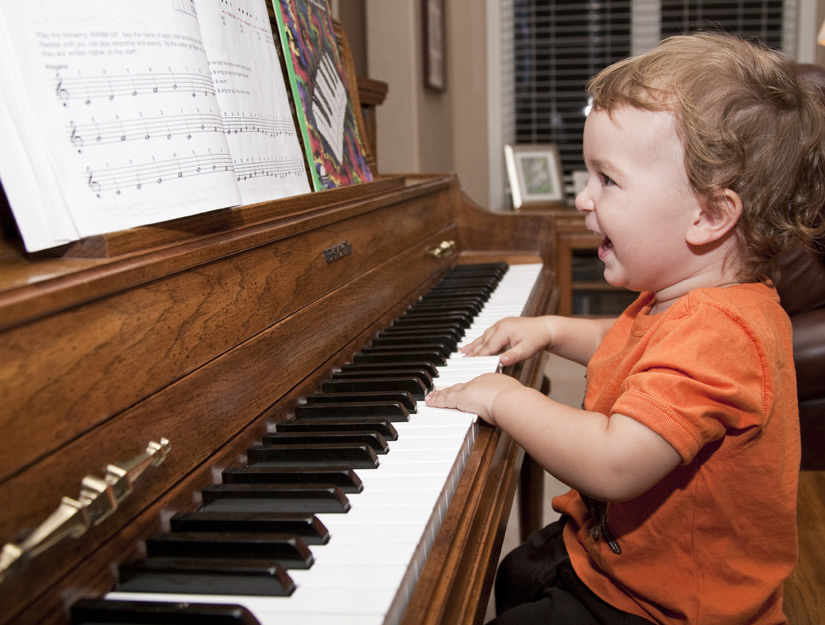
Cognitive Improvements and Academic Achievement
Piano education generates quantifiable scholastic benefits by reinforcing core cognitive mechanisms that support classroom performance.
Enhancing Spatial-Temporal and Mathematical Skills
Piano training strengthens spatial-temporal reasoning, which is the mental ability to visualize, manipulate, and transform spatial configurations through sequential time. By translating two-dimensional musical notation into precise physical finger patterns across an 88-key keyboard, children cultivate spatial competencies vital for STEM disciplines.
Empirical assessments demonstrate that young pianists outperform non-musical peers across four core metrics:
- Complex mathematical calculations and fractions
- Geometric transformations and spatial visualization
- Scientific hypothesis formulation and reasoning
- Logical engineering and structural design exercises
Boosting Linguistic Skills, Boosting Reading Comprehension
Reading musical notation recruits neural circuits parallel to those required for linguistic literacy, notably phonological decoding and visual-verbal translation. Longitudinal studies identify a strong correlation between early piano instruction and accelerated language acquisition, revealing four measurable improvements:
- A 15% increase in phonological awareness and syllable discrimination
- Accelerated receptive and expressive vocabulary acquisition
- Higher reading comprehension assessment scores
- Enhanced syntactic decoding and grammatical structure recognition
Rhythmic entrainment directly aids speech segmentation, allowing children to decode complex sentence syntax and develop clear verbal communication skills.
Improving General IQ and Academic Performance
Longitudinal cognitive research confirms that multi-year piano training produces statistically significant improvements in general intelligence quotients (IQ). Consistent practice across 2 to 3 years correlates with standardized IQ gains of 10 to 15 points. Scholastic dividends include:
- Higher scores on standardized examinations across literacy and numeracy
- Refined critical reasoning and evaluative capabilities
- Stronger analytical and deductive problem-solving skills
- Sustained academic endurance and classroom engagement
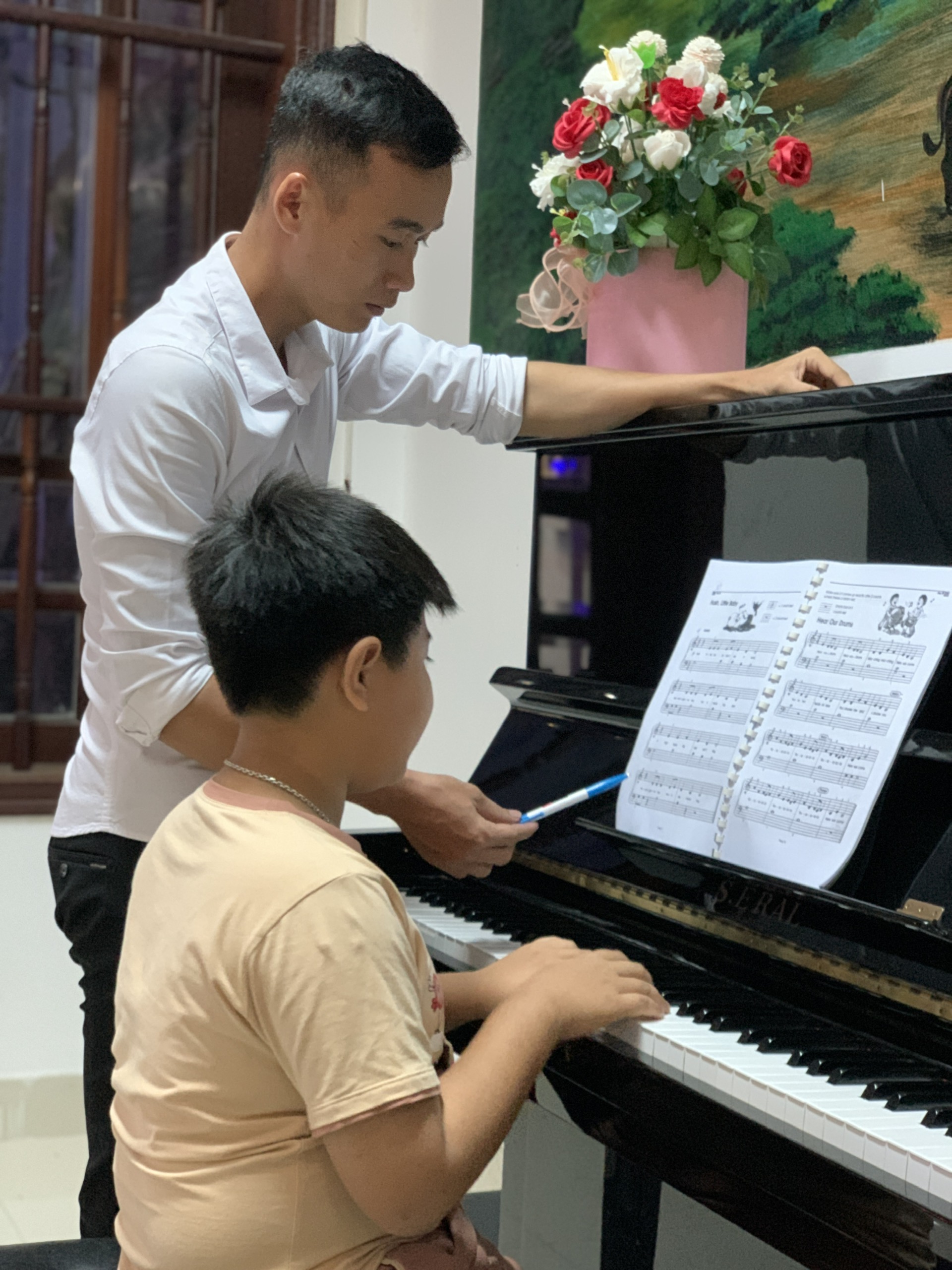
Developing Executive Function and Discipline
Piano training exercises the prefrontal cortex, strengthening executive function processes that govern goal pursuit and behavioral self-regulation.
Sharpening Concentration and Attention Span
Piano practice demands uninterrupted multi-channel focus: decoding dual staves, coordinating ten fingers, regulating pedal pressure, maintaining tempo, and monitoring acoustic tone simultaneously. This multi-sensory feedback loop strengthens selective and sustained attention.
Young pianists routinely cultivate four distinct attentional strengths:
- Up to 25% longer periods of sustained attention during demanding tasks
- Enhanced selective attention that filters extraneous ambient distractions
- Reliable cognitive composure under evaluative pressure
- Superior task-switching agility between divergent analytical demands
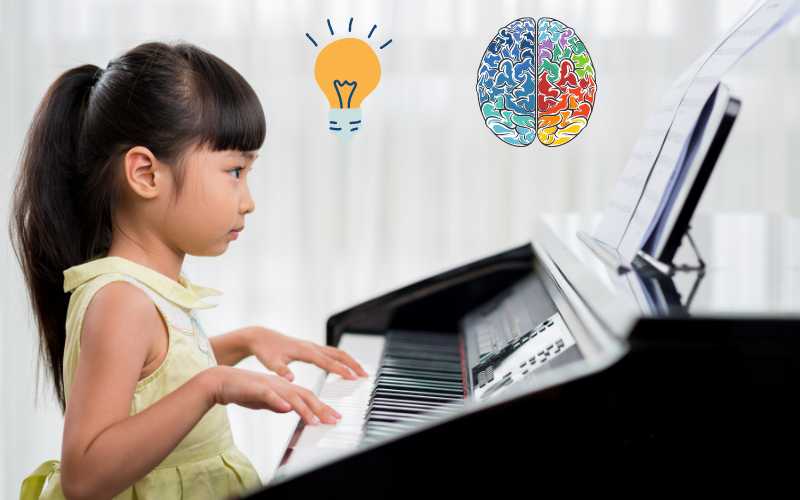
Developing Work Ethic as well as Time Management
Structured piano practice instills disciplined routines, accountability, and goal-directed persistence. Because consistent mastery demands systematic repetition, learning how to motivate child to practice piano establishes four foundational habits:
- Setting deliberate, incremental practice goals and tracking outcomes
- Allocating practice blocks efficiently within daily homework schedules
- Maintaining cognitive resilience when working through technically demanding passages
- Recognizing that sustained, focused effort yields compounding technical progress
These behavioral competencies transfer directly to academic projects, equipping students to approach complex assignments with self-driven diligence.
Enhancing Executive Function for Problem Solving
Formal piano study develops metacognition, enabling students to evaluate their own performance in real time. Pianists continually audit tempo, detect pitch inaccuracies, analyze finger movement errors, and implement corrective measures.
This iterative evaluative cycle refines four core executive skills:
- Strategic planning and forward-looking error prevention
- Objective self-monitoring during complex sensory executions
- Adaptive cognitive flexibility when encountering challenging passages
- Systematic problem decomposition and targeted resolution
Emotional and Social Benefits of Piano Training
Instrumental training engages the limbic system, supporting psychological equilibrium, emotional expression, and social maturation.
Rewiring the Brain for Emotional Intelligence and Resilience
Playing the piano engages the amygdala and hippocampus, fostering robust communication between emotional centers and the rational prefrontal cortex. Structured musical training develops four emotional competencies:
- Mature emotional regulation and affective control
- Heightened interpersonal empathy cultivated through expressive dynamic nuances
- Effective somatic stress-reduction capabilities
- Subtle emotional self-awareness and introspective clarity
Clinical studies indicate that 11 weeks of structured piano instruction significantly decreases depressive symptoms, anxiety, and physiological stress markers in children, building durable psychological resilience.
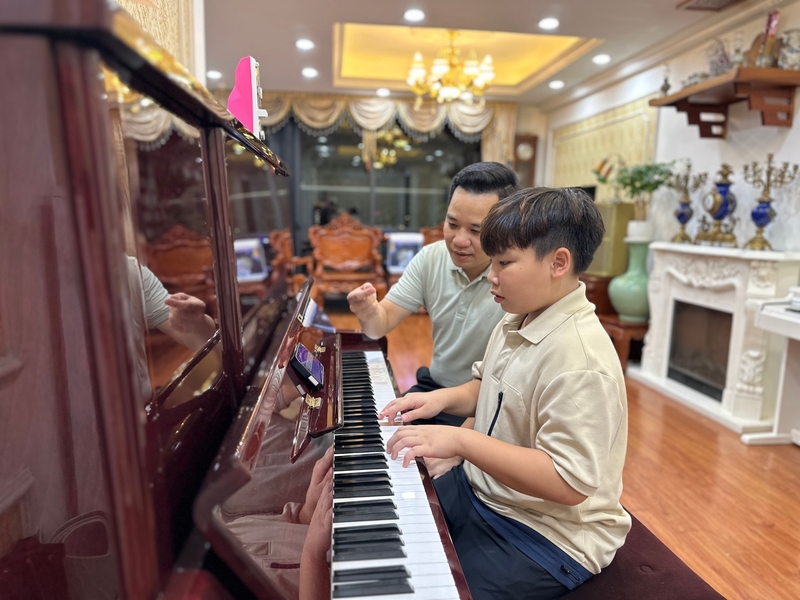
Boosting Self-Esteem and Confidence through Achievement
Piano progression delivers visible, objective benchmarks of personal improvement, instilling genuine confidence anchored in demonstrable achievement. Students experience:
- Authentic pride in mastering complex repertoire and technical milestones
- Poise and stage presence earned through public recital performances
- High self-efficacy built by resolving technical practice obstacles
- Validation of their individual musical voice and creative expression
This mastery-based confidence transfers to classroom presentations, examinations, and social environments, empowering children to approach unfamiliar challenges with self-assurance.
Reducing Stress and Promoting Relaxation
Piano playing induces flow states, which are immersion experiences that lower systemic cortisol while triggering dopamine release in neurological reward pathways. This neurological shift down-regulates activity in stress-sensitive networks.
Documented wellness benefits include:
- Reduced baseline anxiety and nervous tension
- Improved sleep quality through healthy cognitive deceleration
- A constructive, screen-free outlet for processing complex emotions
- A restorative coping mechanism for balancing academic workloads
Physical Development and Motor Skills
Piano education delivers targeted neuromuscular benefits that enhance fine motor control, proprioception, and physiological coordination.
Enhancing Fine Motor Development and Body Awareness
Piano technique requires individual finger articulation, wrist flexibility, and forearm alignment, cultivating fine motor skills that support handwriting, drafting, and manual dexterity. Instructors introduce specialized technical routines, demonstrating the benefits of Hanon exercises to build strength and agility. Students develop:
- Independent finger control, strength, and tactile sensitivity
- Seamless bimanual coordination between hands performing divergent rhythms
- Precise kinesthetic awareness of posture, shoulder placement, and arm weight
- Subtle micro-motor precision across small muscle groups
Strengthening Hand-Eye Coordination
Decoding two lines of musical notation while coordinating physical finger placement across 88 weighted keys creates advanced visual-motor integration pathways. This neural coordination benefits four everyday domains:
- Athletic pursuits requiring split-second spatial tracking and reaction times
- Academic tasks requiring visual scanning and spatial motor translation
- Technological keyboard and interface manipulation
- Artistic endeavors requiring delicate manual control and precision
The Window of Opportunity: Benefits of Playing Piano at a Young Age
Neuroscience confirms that early childhood represents the prime developmental window for musical learning, with ages 4 to 7 exhibiting heightened synaptic plasticity. During this stage, cortical mapping responds most dynamically to acoustic and tactile stimulation.
Early piano training maximizes cognitive yield due to four developmental factors:
- Developing brains demonstrate exceptional adaptive neuroplasticity
- Synaptogenesis occurs at peak velocity during early childhood
- Foundational auditory-motor circuits become permanent neural structures
- Pitch discrimination and rhythmic perception integrate naturally into emerging language networks
Children who initiate piano training before age 7 exhibit the most enduring structural adaptations, though meaningful cognitive benefits continue when instruction begins throughout elementary school.
Why Choose PrivatePianoLessons for Private Piano Lessons in New York City
For families seeking premier private piano nyc, PrivatePianoLessons delivers personalized, 1-on-1 in-home instruction tailored to your child’s developmental stage. Founded on May 12, 2010 by CEO James Harrison, PrivatePianoLessons operates from coordination headquarters at 817 W End Ave, New York, NY 10025, serving all five boroughs: Manhattan, Brooklyn, Queens, The Bronx, and Staten Island.
Our distinctive in-home model includes:
- Expert faculty: 48 vetted piano instructors holding a minimum of a Bachelor of Music degree, with 19 holding master’s or doctoral degrees, all 100% background-checked.
- Zero travel fees: Professional in-home lessons conducted on your own instrument across all 5 boroughs with $0 travel surcharges.
- Structured 8-level curriculum: Systematically aligned with RCM Certificate Program and ABRSM standards, featuring progress reports every 12 weeks.
- Flexible scheduling: Instruction available 07:00 to 21:00, Monday through Sunday, whether matching you with a dedicated piano teacher Bronx based or an instructor in Manhattan.
- Free evaluation: A complimentary 30-minute in-home assessment to evaluate your child’s readiness, goals, and instrument setup.
To schedule a complimentary 30-minute in-home assessment, contact PrivatePianoLessons at +1 (917) 903-2146 or email [email protected].
Frequently Asked Questions About Piano Lessons and Brain Development
How does piano training physically change a child’s brain?
Piano training physically alters a child’s brain by expanding gray matter volume, stimulating neurogenesis, and thickening the corpus callosum. This enhanced bilateral connectivity accelerates signal transmission between the left and right hemispheres, strengthening sensory-motor processing and executive control.
What are the main academic benefits of learning the piano?
The main academic benefits of learning the piano include superior spatial-temporal reasoning, accelerated phonological decoding, and higher general cognitive performance. These neurological adaptations directly enhance problem-solving in mathematics, strengthen reading comprehension, and contribute to higher standardized test scores.
Is there an optimal age for a child to begin piano lessons?
The optimal window for a child to begin piano lessons is between ages 4 and 7. During this critical developmental phase, structural neuroplasticity is at its highest, allowing rapid neural pathway formation and permanent auditory-motor integration.
