

Finding the perfect piano instructor for your child in New York City requires careful evaluation of teaching credentials, pedagogical compatibility, and long-term musical objectives. A qualified private teacher provides structured foundational training, develops proper physical technique, and fosters creative expression through tailored one-on-one guidance.
Why Choosing the Right Teacher Matters
Your child’s piano teacher directly shapes their technical proficiency, practice habits, and lifelong relationship with music. A skilled educator establishes proper hand ergonomics, designs structured learning progressions, and nurtures artistic curiosity through individualized instruction.
Effective piano instruction creates lasting positive associations with music education. Students who connect with their instructors demonstrate higher intrinsic motivation, faster skill acquisition, and sustained performance confidence. While some families consider generic music schools in NYC, private in-home instruction cultivates a focused teacher-student partnership tailored to your child’s specific developmental pace and attention span.
Quality music education supports cognitive growth, academic achievement, and emotional intelligence. Studies indicate that early instrumental training improves working memory, spatial reasoning, and auditory processing. Children who study piano develop superior concentration, disciplined study habits, and enhanced problem-solving skills.
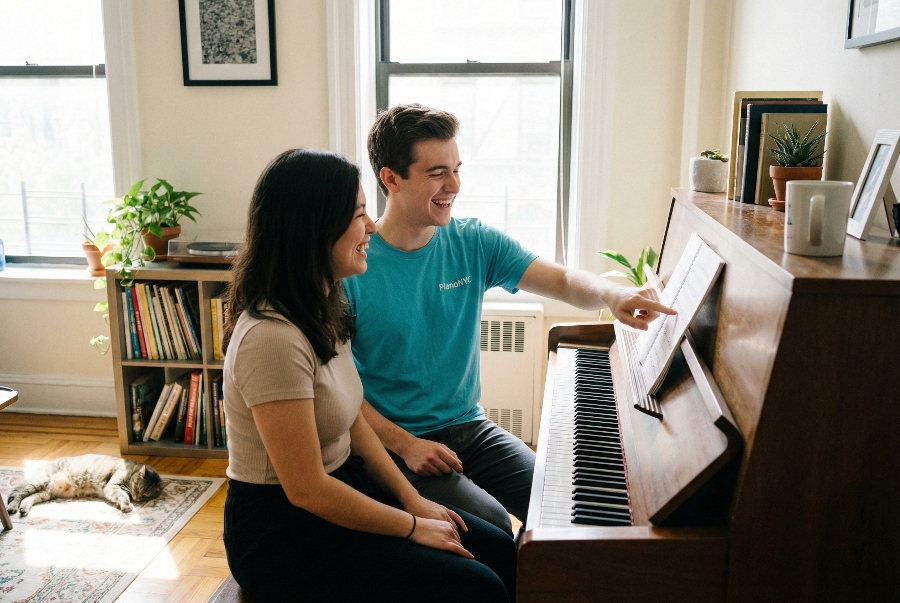
Essential Questions to Ask Before Choosing a Piano Teacher
Selecting an instructor requires asking specific questions regarding educational background, instructional philosophy, and administrative policies. Evaluating these factors helps families find an educator who matches their musical goals.
What Are the Teacher’s Qualifications and Background?
Professional piano instructors should possess formal conservatory degrees, active performance experience, and specialized pedagogical training. Qualified educators hold music performance or music education degrees from accredited institutions, maintain professional affiliations, and engage in continuous pedagogical development.
Standard professional credentials include:
- Bachelor of Music, Master of Music, or Doctoral degree from institutions such as The Juilliard School, Manhattan School of Music, or Mannes School of Music
- Active memberships in recognized organizations, including the Music Teachers National Association (MTNA)
- Verified background clearances and documented training in early childhood music education
- Continued pedagogical coursework in keyboard ergonomics, music theory, and performance psychology
Active performance experience demonstrates artistic capability and keyboard fluency. Experienced instructors balance performance mastery with patient instructional methods, delivering well-rounded musical training for students at every level.
What Is Their Specific Teaching Approach and Style?
Teaching methodologies vary significantly across instructors and determine how effectively a student grasps foundational skills. Experienced teachers utilize balanced pedagogical frameworks, adapting their instruction to each student’s learning style, cognitive age, and stylistic preferences.
Standard instructional frameworks include:
- Classical pedagogy emphasizing physical posture, scale patterns, and standard repertoire from the Baroque, Classical, and Romantic eras
- Comprehensive musicianship integrating practical music theory, rhythmic solfège, and ear training
- Modern contemporary approaches incorporating popular melodies, jazz chords, and digital notation resources
- Method series such as Faber Piano Adventures, Alfred’s Premier Piano Course, and Bastien Piano Basics
The most effective teachers customize curricula based on your child’s musical goals. They introduce diverse musical styles while maintaining strict standards for posture, rhythmic precision, and score reading.
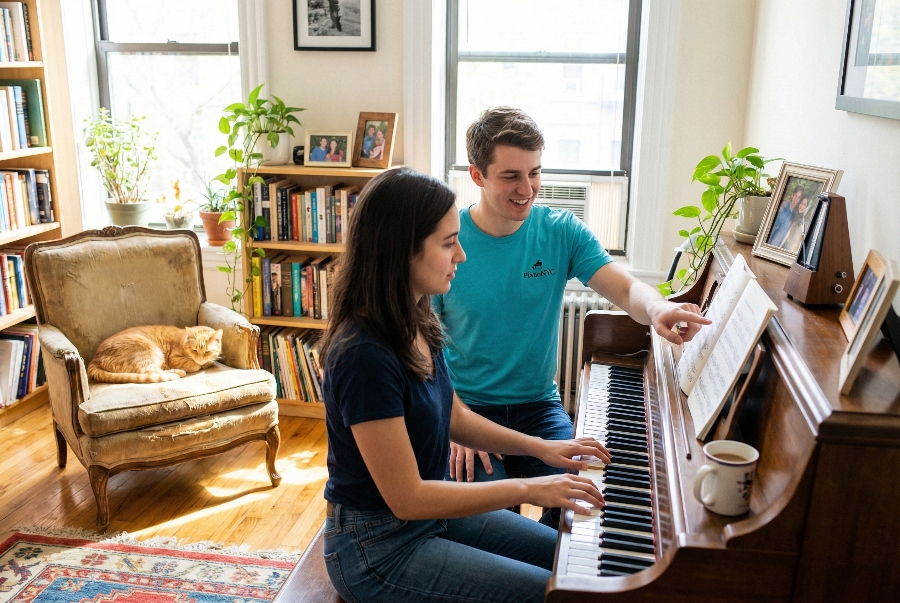
What Are the Expectations for Practice and Progress?
Transparent practice guidelines and structured benchmarks establish clear accountability for steady musical growth. Professional teachers define daily practice routines, assign targeted drills, and evaluate progress through regular milestone tracking.
Standard practice guidelines include:
- Daily practice routines ranging from 15 to 30 minutes for beginners and 45 to 60 minutes for intermediate pianists
- Focused technical drills targeting finger independence, wrist flexibility, and scale fingerings
- Curated repertoire study spanning contrasting musical styles, textures, and historical periods
- Formal progress reviews conducted every 12 weeks to evaluate technique, sight-reading, and completed repertoire
Progress tracking incorporates objective assessments, family check-ins, and performance opportunities. Effective instructors communicate expectations clearly and adjust pacing to support healthy student motivation.
What Kind of Personality Would Your Child Enjoy Learning From?
Teacher personality directly influences student engagement, classroom confidence, and sustained motivation. The ideal instructor balances patience with structure, providing constructive feedback while maintaining a warm and encouraging learning environment.
Consider your child’s learning temperament during evaluations:
- Reserved children thrive with gentle, nurturing educators who build confidence through positive reinforcement
- Energetic learners excel with dynamic instructors who incorporate movement, clapping, and rhythmic games
- Analytical students respond best to systematic, step-by-step instruction with clear technical rules
- Inquisitive students flourish with instructors who encourage creative composition and teach them how to improvise on piano
Observing a trial session reveals teacher-student compatibility and instructional rapport. A harmonious match fosters long-term musical dedication and artistic growth.
What Is the Studio’s Availability and Budget?
Practical logistical factors such as scheduling availability, lesson location, and instructional fees determine educational sustainability. Piano instruction costs and transit requirements vary significantly across New York City.
Budget and scheduling factors include:
- Standard private lesson rates ranging from $75 to $200 USD per hour across NYC
- Tuition packages that offer savings, including 4-lesson or 12-lesson packages
- Method books, sheet music, and instructional notebooks purchased at local sheet music stores NYC musicians recommend
- Commuting time and transit expenses associated with traveling to a commercial studio
In-home lessons eliminate commuting challenges and transit costs, enabling busy families to integrate music education seamlessly into weekly routines.
Important Factors for Private Piano Lessons in New York City
Families evaluating music programs must weigh individual learning goals, instruction formats, and performance opportunities available across New York City.
Assessing the Student’s Main Goal and Current Level of Knowledge
Identifying your child’s musical ambitions and technical baseline ensures proper instructor matching and curriculum pacing. Clear objectives ensure instruction remains engaging while building reliable foundational skills.
Common musical goals include:
- Classical training focused on conservatory auditions, competitive festivals, and standardized examinations
- Contemporary playing exploring jazz harmony, chord charts, and popular repertoire
- Comprehensive music theory, sight-reading, and composition fundamentals
- Recreational performance for personal enjoyment, stress reduction, and cognitive development
Technical assessment covers keyboard posture, rhythmic accuracy, and sight-reading proficiency. Thorough evaluations ensure appropriate lesson pacing and prevent frustration.
Beginning students starting at age 4 or older require teachers skilled in keyboard orientation, hand shape, and early notation. Intermediate students benefit from instructors holding advanced performance credentials who can teach nuanced interpretation. Tailored programs serve every age group, including young beginners, intermediate youths, and private piano lessons for seniors starting or continuing their musical studies.
Deciding Between Online, In-Person, or Home Lessons
Lesson delivery formats influence learning efficiency, student focus, and household convenience. Each format offers distinct features for NYC households:
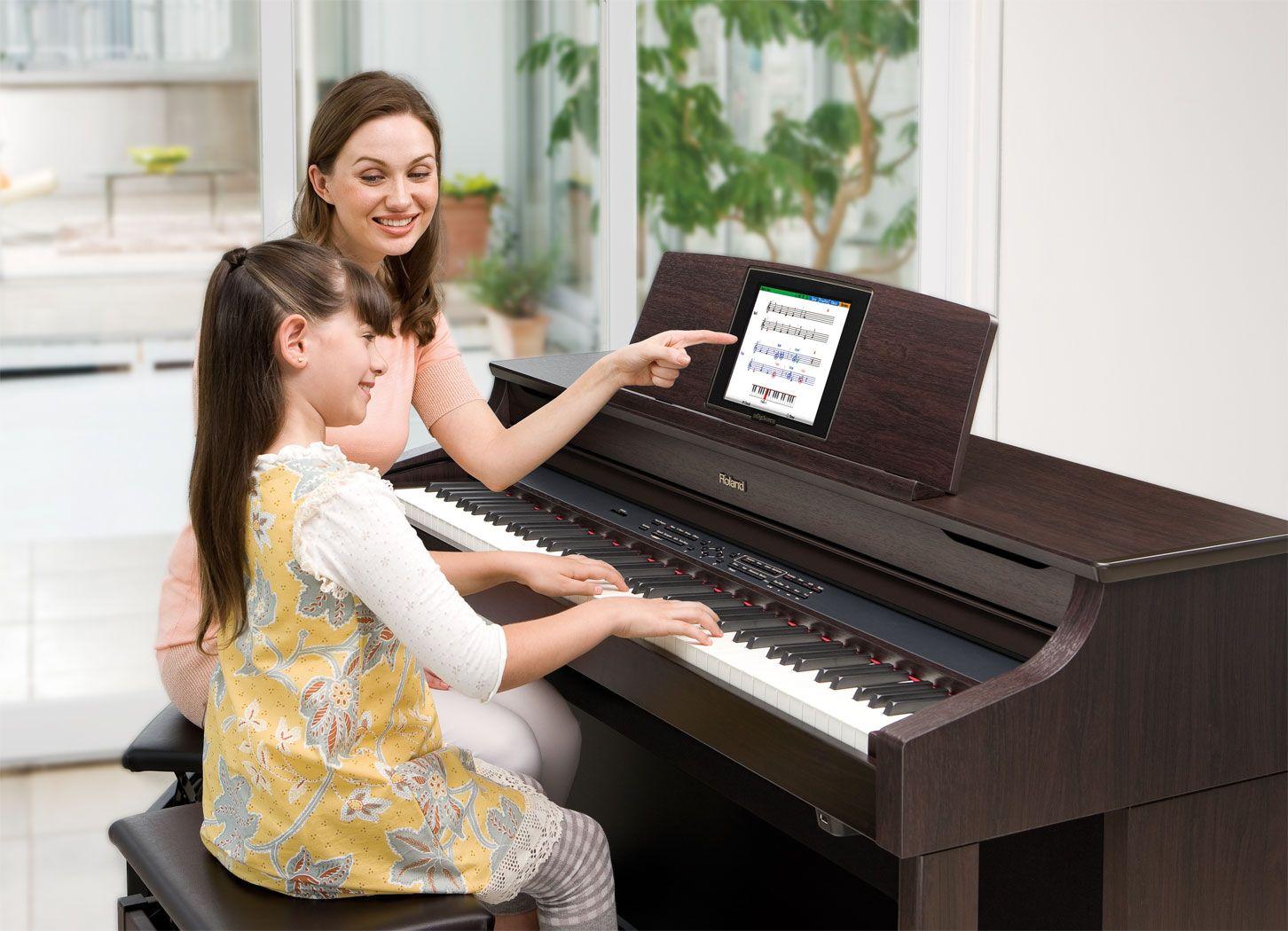
In-Home Private Lessons provide personalized one-on-one instruction at the student’s own instrument, eliminating commuting time across the city. Teachers assess the home practice setup, seat height, and instrument condition directly.
Commercial Studio Lessons take place in external music facilities. This option requires families to travel 45 to 60 minutes each way via subway or car, adding substantial transit time to weekly schedules.
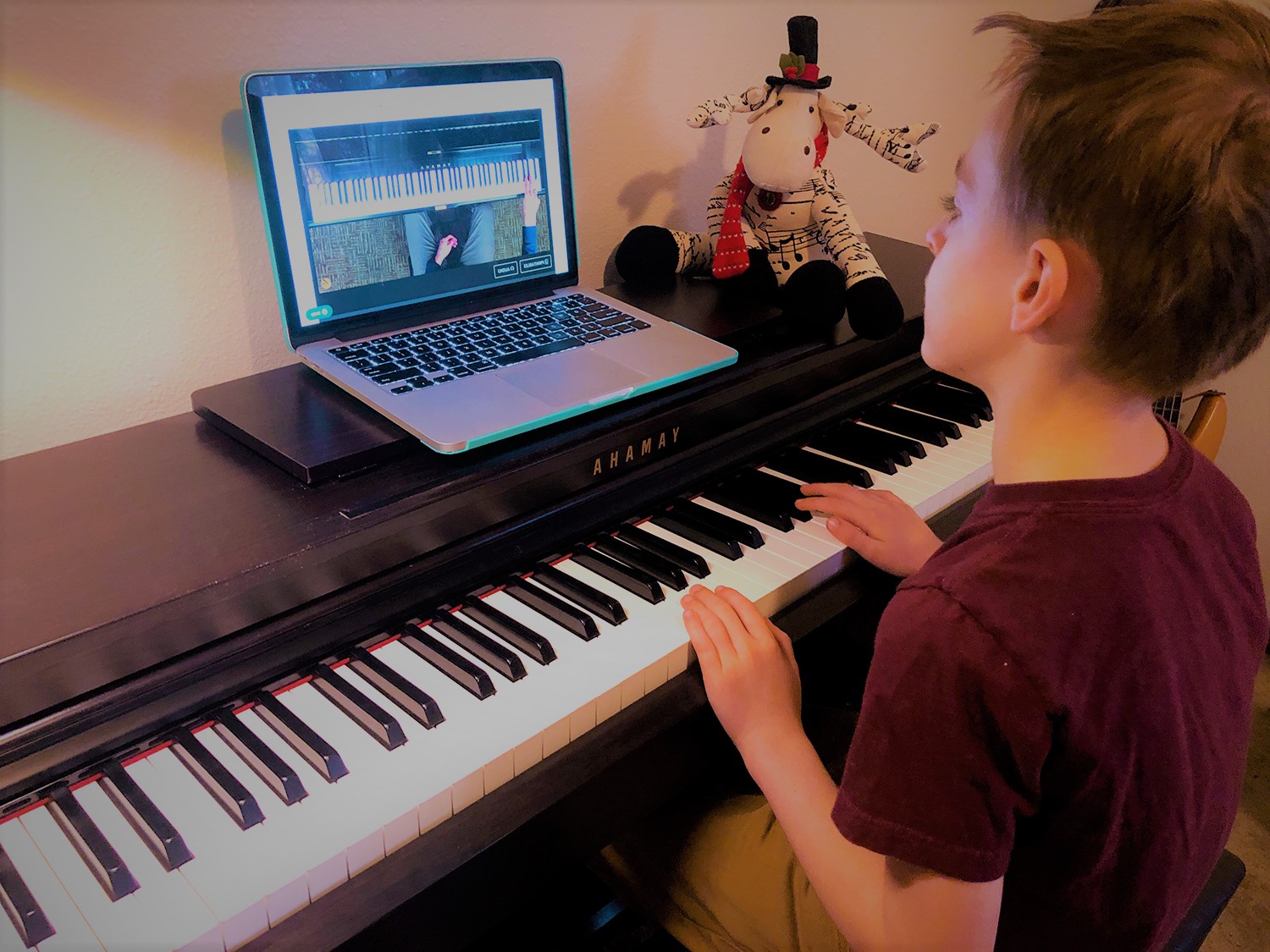
Online Lessons offer scheduling flexibility and remote access for traveling students or severe weather days. While useful as a supplement, remote sessions lack direct hands-on posture adjustment and physical touch calibration.
Selecting the appropriate format depends on student age, attention span, and household scheduling needs. For most children, in-home instruction provides the highest instructional focus and convenience.
Studio Opportunities & Experiences Available in NYC
New York City provides rich cultural resources that complement private piano study. Access to professional performance halls, conservatories, and diverse musical venues enriches student learning beyond weekly lessons.
Enrichment opportunities include:
- Formal student recitals hosted in acoustic concert spaces and historic auditoriums
- Standardized exams through the Royal Conservatory of Music (RCM) Certificate Program and ABRSM
- Audition preparation for institutions such as Fiorello H. LaGuardia High School and pre-college conservatory divisions
- Collaborative chamber music opportunities with other young instrumentalists
Live concert attendance exposes developing musicians to world-class performance standards, inspiring dedication and musical appreciation.
How PrivatePianoLessons Helps You Find the Perfect Instructor
PrivatePianoLessons provides premier 1-on-1 private in-home piano instruction across all 5 boroughs of New York City: Manhattan, Brooklyn, Queens, The Bronx, and Staten Island. Headquartered for administrative coordination at 817 W End Ave, New York, NY 10025, our service brings degreed music educators directly to your living room with 0 USD travel fees.
Key highlights of PrivatePianoLessons:
- Conservatory-Educated Faculty: 48 vetted piano instructors, 100% holding Bachelor’s, Master’s, or Doctoral degrees in music, and verified with comprehensive 24-month background checks.
- 4-Criteria Teacher Match: Precise pairings based on student goals, preferred genres, learning personality, and neighborhood location.
- Convenient Scheduling: Flexible in-home lesson times from 07:00 to 21:00, Monday through Sunday, across Manhattan, Brooklyn, the Bronx, Staten Island, and piano lessons Queens families rely on.
- Structured 8-Level Pathway: Comprehensive curricula aligned with RCM and ABRSM standards, written progress reports every 12 weeks, and 2 formal recitals per year in June and December.
- Risk-Free Assessment: A complimentary 30-minute in-home trial evaluation to assess student level, instrument setup, and learning objectives before enrollment.
Frequently Asked Questions
How Much Do Private Piano Lessons Cost in NYC?
Private piano lesson rates in New York City range from $75 to $200 USD per session, with advanced coaching reaching $350 USD. At PrivatePianoLessons, individual lesson fees start at $75 USD per 30-minute lesson for beginners, with 0 USD travel fees across all 5 boroughs. Families save 5% on 4-lesson packages and 10% on 12-lesson packages.
At What Age Should Children Begin Piano Lessons?
Children should begin formal private piano instruction between ages 4 and 7, depending on individual attention span and hand coordination. Essential readiness indicators include the ability to focus for 30 minutes, basic counting skills, letter recognition from A to G, and individual finger control.
How Often Should Children Practice Piano?
Children should practice piano for 15 to 45 minutes daily, 5 days per week, to build reliable muscle memory and musical fluency. Beginning students make steady progress with 15-minute daily sessions, while intermediate students require 30 to 45 minutes of daily practice covering scales, method exercises, and repertoire.
What Type of Piano Do We Need at Home?
Students need an acoustic piano or an 88-key digital piano with fully weighted keys to develop proper touch sensitivity and finger strength. Acoustic instruments require proper humidity control (40% to 50%) and biannual piano tuning NYC seasonal weather demands (standard A4 = 440 Hz). Unweighted plastic keyboards should be avoided as they do not build legitimate keyboard technique.
How Long Does It Take to Learn Piano?
Developing foundational piano proficiency takes 1 to 2 years of consistent weekly lessons and daily practice, while intermediate musicianship develops over 3 to 5 years. With structured 1-on-1 instruction, beginners typically play recognizable two-handed melodies within their first 12 weeks of study.
