

Interpreting Johann Sebastian Bach’s keyboard works is essential for developing classical piano technique, polyphonic awareness, and articulatory control on the modern piano. Bach’s compositions cultivate independent finger dexterity, contrapuntal hearing, and structural discipline across all musical eras. Engaging with complex polyphonic textures also highlights piano lessons brain benefits, as the intense focus required strengthens neuroplasticity and cognitive agility. This comprehensive guide examines historical keyboard differences, stylistic conventions, and practical practice strategies to master Bach on the modern piano.
Understanding Unique Challenges of Playing Bach on Piano
The Difference Between the Baroque Harpsichord and Modern Piano
The primary difference between the Baroque harpsichord and the modern piano lies in their sound production mechanics, dynamic capabilities, and sustain duration. Harpsichords produce tone by plucking strings with plectra (quills), creating an immediate attack with fixed volume regardless of finger velocity. The modern acoustic piano uses felt-covered hammers to strike strings, enabling continuous dynamic gradation from pianissimo to fortissimo.
Baroque keyboard instruments featured terraced dynamics—contrasting volume blocks—rather than gradual crescendos and diminuendos. Harpsichordists relied on articulation, agogic accents, and rhythmic inflection to shape musical phrases. Interpreting Bach on a modern piano requires adapting touch to preserve this transparent clarity while avoiding excessive damper pedaling. Maintaining a relaxed wrist and free arm weight prevents physical strain, incorporating principles similar to piano exercises for arthritis to ensure tension-free execution.
Why Bach is Essential for Classical Piano Technique
Bach’s compositions serve as the cornerstone of classical piano education because they develop four indispensable technical competencies:
- Polyphonic awareness: Trains the pianist to hear, balance, and voice multiple independent melodic lines simultaneously.
- Finger independence: Builds equal strength and agility across all five fingers without relying on pedal resonance.
- Architectural understanding: Reveals formal symmetry, voice leading, and functional harmonic progressions.
- Articulatory control: Demands precise separation between legato, non-legato, and staccato touches.
Pianists consistently practice Bach throughout their careers to maintain technical balance and polyphonic clarity. The Two-Part Inventions and The Well-Tempered Clavier remain central benchmark repertoire for serious classical study.
The Role of Theory in Understanding Bach’s Music
Music theory provides the analytical foundation needed to interpret Bach’s contrapuntal structures and tonal architecture:
Harmonic analysis clarifies underlying figured bass progressions, cadential arrival points, and modulations that dictate tonal tension. Understanding key centers guides phrasing choices and dynamic pacing.
Counterpoint knowledge enables musicians to identify subjects, countersubjects, answers, episodes, and stretti in inventions and fugues. This structural clarity informs voicing and balance decisions.
Form recognition illuminates binary, ternary, and ritornello frameworks, helping pianists project larger structural shapes and cadential resolutions.
Key Elements for a Stylistic Bach Interpretation
Articulation and Phrasing: Detached vs. Legato
Authentic Baroque articulation on modern piano requires a default detached (non-legato or quasi-legato) touch, reserving true legato for lyrical subjects and slurred groupings:
- Detached articulation: Delivers slight separation between stepwise diatonic notes, simulating Baroque string bowings and harpsichord transparency.
- Selective legato: Applies sustained touch to expressive chromatic passages and cantabile melodic lines.
- Phrase endings: Releases final notes naturally on upbeats without percussive accentuation.
- Ornament integration: Executes decorative trills within the established articulatory framework without disrupting pulse.
Practicing each voice with dedicated articulation builds distinct character into every contrapuntal line while reinforcing finger control.
Dynamics and Voicing in Polyphonic Textures
Bach’s polyphonic writing demands dynamic stratification to ensure every simultaneous voice remains distinct and transparent:
Voice hierarchy changes continuously throughout each movement. The primary thematic subject requires prominence, while accompanying countersubjects and pedal points remain dynamically balanced underneath.
Subject entrances in fugues must emerge with clarity. Project entering voices by leaning weight into the fingertips rather than hammering individual keys.
Episode passages function as thematic transitions and benefit from lighter dynamic textures, creating contrast against formal subject statements.
A Quick Guide to Bach’s Ornamentation and Trills
Baroque ornaments function as expressive harmonic and rhythmic devices rather than mere decorations:
- Trills begin on the upper diatonic auxiliary note on the beat, creating harmonic dissonance that resolves cleanly.
- Mordents alternate rapidly between the main note and lower neighbor to impart rhythmic energy.
- Appoggiaturas lean into the beat, taking half the value of the principal note (or two-thirds of a dotted note).
- Turns and grace notes connect melodic leaps smoothly while maintaining metric alignment.
Consult Urtext scholarly editions to interpret ornament symbols accurately. When in doubt, prioritize rhythmic flow and clarity over excessive ornamentation speed.
Establishing Proper Tempo and Rhythmic Stability
Stylistic Bach performance requires an unyielding metric pulse informed by Baroque dance meters:
Character indication derives from movement types (Allemande, Courante, Sarabande, Gigue). These historical dance meters define the pulse, tempo limits, and musical affect.
Technical security dictates tempo selection. Choose a speed that ensures clean finger articulation, accurate ornamentation, and contrapuntal separation without rushing.
Internal metric stability must remain consistent throughout. Practice with a metronome to eliminate involuntary accelerandos and maintain structural continuity.
Recommended Repertoire to Practice Interpreting Bach
Beginner: Notebooks for Anna Magdalena Bach (Menuet in G Minor)
The Notebook for Anna Magdalena Bach offers accessible literature for developing foundational two-part coordination. The Menuet in G Minor (BWV Anh. 115) develops:
- Two-voice counterpoint: Cultivates independence between right-hand melody and left-hand bass support.
- Clear binary structure: Illustrates phrase symmetry, repeat conventions, and cadential inflections.
- Steady triple meter: Reinforces dance-like rhythmic stability and clean quarter-note articulation.
- Basic ornamentation: Introduces standard Baroque trills and mordents within an approachable texture.
Master each hand separately before combining hands, ensuring the left hand maintains a clean, detached bass line.
Intermediate: Two-Part Inventions and Preludes in C Major
Bach’s Two-Part Inventions (BWV 772–786) and Little Preludes represent essential intermediate repertoire for polyphonic mastery:
Invention No. 1 in C Major (BWV 772) explores a single motivic subject across inversion, sequence, and modulation, requiring precise hand independence.
Prelude in C Major (BWV 846 from WTC Book 1) introduces broken chordal arpeggiation and steady harmonic voice leading across five-part textures.
Singing one voice aloud while playing the other voice at the piano accelerates contrapuntal hearing and prevents passive mechanical practice.
Advanced: The Well-Tempered Clavier and Partitas
The Well-Tempered Clavier (BWV 846–893) and the Six Partitas (BWV 825–830) form the pinnacle of advanced classical keyboard repertoire:
- 48 Preludes and Fugues: Span all 24 major and minor keys across Books 1 and 2, presenting three-, four-, and five-voice fugal textures.
- Technical and musical breadth: Encompasses delicate French overtures, dense chromatic ricersars, and virtuosic toccatas.
- Six Partitas (BWV 825–830): Demand sophisticated dance phrasing, wide dynamic color palettes, and stylistic rhythmic integrity.
Masterworks: Goldberg Variations plus Italian Concerto
The Goldberg Variations and Italian Concerto showcase Bach’s mastery of large-scale architecture and solo keyboard concerto writing:
Goldberg Variations (BWV 988) contains 30 variations built upon a 32-bar bass ground aria. The work alternates canons at increasing intervals, character dances, and virtuosic manualiter etudes, demanding supreme musical maturity.
Italian Concerto (BWV 971) translates orchestral tutti and solo textures to a single keyboard instrument through contrasting dynamic registers and driving Italianate rhythms.
Effective Practice Strategies for Bach Pieces
Analyzing the Counterpoint; Structure
Score analysis before physical practice accelerates memorization, accurate voicing, and interpretive security:
Identify all subject and countersubject statements in fugues and inventions. Mark their entrances and transformations with colored annotations.
Analyze key modulations and cadential points. Understanding where tonal tension peaks guides musical phrasing and volume levels.
Delineate formal sections to grasp the macro-structure, ensuring seamless pacing from opening exposition to final cadence.
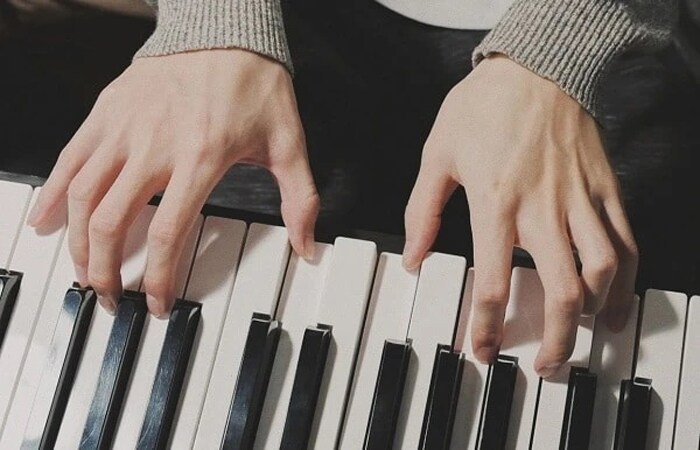
Hands Separate Practice plus Slow Tempo Consistency
Meticulous practice habits produce consistent results. Establishing a regular piano practice schedule provides the dedicated focus necessary to conquer polyphony:
- Practice hands separately until fingerings, voice leading, and dynamic shaping are completely secure.
- Maintain slow, sub-divided tempos to verify absolute note and rhythmic accuracy before building speed.
- Adhere strictly to chosen fingerings, as inconsistent fingering destroys polyphonic legato and articulation.
- Practice voice pairs in fugues (e.g., soprano and bass, or alto and tenor) before assembling the complete texture.
Enhancing Your Skills with PrivatePianoLessons in New York City
Why Choose Professional Instruction for Bach Interpretation
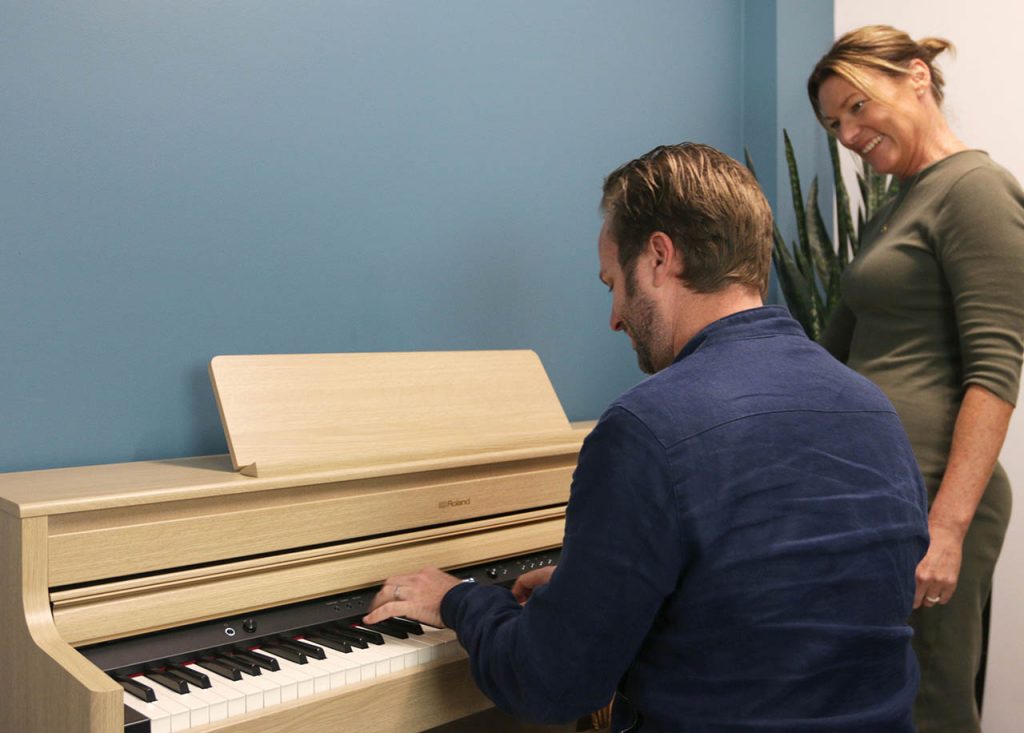
Mastering Bach requires specialized guidance in Baroque style and contrapuntal technique. PrivatePianoLessons provides 1-on-1 in-home piano instruction throughout all 5 boroughs of New York City: Manhattan, Brooklyn, Queens, The Bronx, and Staten Island. Founded in 2010 by pianist James Harrison, our faculty includes 48 conservatory-trained instructors holding degrees from The Juilliard School, Manhattan School of Music, and Mannes School of Music. We provide tailored guidance for competitive auditions as well as private piano lessons for seniors directly in your home with 0 USD travel fees.
Personalized Learning Approaches
PrivatePianoLessons designs individualized curriculums based on our 8-level system referencing RCM Certificate Program and ABRSM standards:
- Beginners: Build hand independence and note-reading discipline using foundational Baroque literature.
- Intermediate students: Master polyphony, ornament execution, and touch through the Two-Part Inventions.
- Advanced pianists: Refine fugal voicing, structural pacing, and interpretation across The Well-Tempered Clavier and Partitas.
Performance Opportunities and Musical Growth
PrivatePianoLessons supports artistic progress through structured performance and assessment platforms:
- Written progress reports: Detailed evaluations provided every 12 weeks tracking technique, voicing, and repertoire milestones.
- Bi-annual student recitals: Free performance opportunities organized each June and December in Manhattan concert halls.
- Exam preparation: Focused training for RCM, ABRSM, and school auditions, maintaining a 96% student pass rate.
Contact Information for Bach Piano Instruction
PrivatePianoLessons
Address: 817 W End Ave, New York, NY 10025, USA
Phone: +1 (917) 903-2146
Email: [email protected]
Website: https://privatepianonyc.com
Hours: 07:00 – 21:00, Monday – Sunday
Service Area: Manhattan, Brooklyn, Queens, The Bronx, Staten Island (In-Home Lessons, 0 USD Travel Fee)
Frequently Asked Questions
What makes Bach interpretation different from other classical composers?
Bach interpretation differs from other classical composers primarily due to its strict polyphonic counterpoint, where every voice possesses equal melodic and structural importance. Classical and Romantic piano music typically features homophonic textures—a dominant melody supported by chordal accompaniment—while Bach requires independent voicing, distinct articulation in each hand, and minimal sustaining pedal.
How long does it take to master basic Bach interpretation skills?
Mastering basic Bach interpretation skills typically requires 6 to 12 months of structured study for intermediate pianists. Developing independent finger dexterity through two-part literature like the Anna Magdalena Notebook and Two-Part Inventions establishes the contrapuntal foundation necessary to tackle complex three- and four-voice fugues.
Should I use pedal when playing Bach on piano?
You should use the sustaining pedal sparingly and with great discretion when playing Bach on the modern piano. Continuous pedaling obscures Baroque counterpoint and blurs voice leading; brief touches of direct pedal should only be applied to enhance acoustic warmth or assist awkward physical finger connections.
What edition should I use for studying Bach piano works?
You should use scholarly Urtext editions from reputable publishers such as G. Henle Verlag, Bärenreiter, or Wiener Urtext. Urtext editions present Bach’s original notation free from romanticized 19th-century editorial dynamics, arbitrary phrasing slurs, or inaccurate pedal markings, ensuring an authentic stylistic foundation.
Can adults successfully learn Bach interpretation as beginner pianists?
Yes, adult beginners can successfully learn Bach interpretation by starting with simple two-voice pieces from the Notebook for Anna Magdalena Bach. Adult learners frequently progress quickly in contrapuntal music because their developed analytical reasoning enables them to understand voice relationships, formal symmetry, and harmonic structures efficiently.
