
Classical piano music spans over 400 years of artistic evolution, encompassing 4 distinct eras that shaped modern piano pedagogy. PrivatePianoLessons delivers specialized private piano lessons across New York City, guiding students through each historical period through dedicated one-on-one piano instruction. Each musical era—Baroque, Classical, Romantic, and Contemporary—features unique compositional techniques, performance conventions, and technical demands that pianists must master.
Understanding musical periods enhances interpretive insight while establishing a disciplined technical foundation. Piano students who explore historical context develop greater stylistic accuracy, rhythmic control, and nuanced tone production across diverse classical repertoire.
The 4 Major Eras of Classical Music: A Quick Overview
Classical music history divides into 4 primary periods spanning from 1600 to the present day: the Baroque Era (1600–1750), the Classical Era (1750–1820), the Romantic Era (1830–1900), and the Contemporary Period (1900–present). The Baroque Era established foundational keyboard polyphony and contrapuntal voice leading. The Classical Era introduced structural balance, periodic phrasing, and sonata-allegro form. The Romantic Era expanded emotional expression, chromatic harmony, and virtuosic keyboard technique. The Contemporary Period introduced diverse 20th- and 21st-century idioms, including polytonality, impressionistic color, and extended techniques.
These 4 historical periods form the structural framework for studying classical piano repertoire. PrivatePianoLessons incorporates music history directly into its 8-level curriculum to elevate technical precision and interpretive depth across all levels.
The Baroque Era (c. 1600–1750)
Musical Features and Recognizable Traits of Baroque Music
Baroque keyboard music is characterized by contrapuntal polyphony, terraced dynamics, and rhythmic drive. Counterpoint serves as the primary structural element, interweaving two or more independent melodic lines with equal thematic importance. Because early keyboard instruments lacked sustained dynamic gradations, Baroque compositions employ terraced dynamics, shifting abruptly between piano and forte without gradual crescendos.
Key Baroque musical features include:
- Continuous bass lines (basso continuo): establishing harmonic progression and architectural stability across measures
- Systematic ornamentation: incorporating trills, mordents, turns, and appoggiaturas to sustain and color melodic notes
- Binary and ternary forms: structuring dance movements within keyboard suites, including allemandes, courantes, sarabandes, and gigues
- Tonal and modal frameworks: developing major-minor functional harmony from earlier modal systems
The harpsichord and clavichord served as the primary keyboard instruments during this era before the modern piano existed. Modern pianists study Baroque articulation, non-legato finger touch, and minimal sustain pedaling to preserve voice clarity on acoustic pianos.
Influential Composers of the Baroque Period
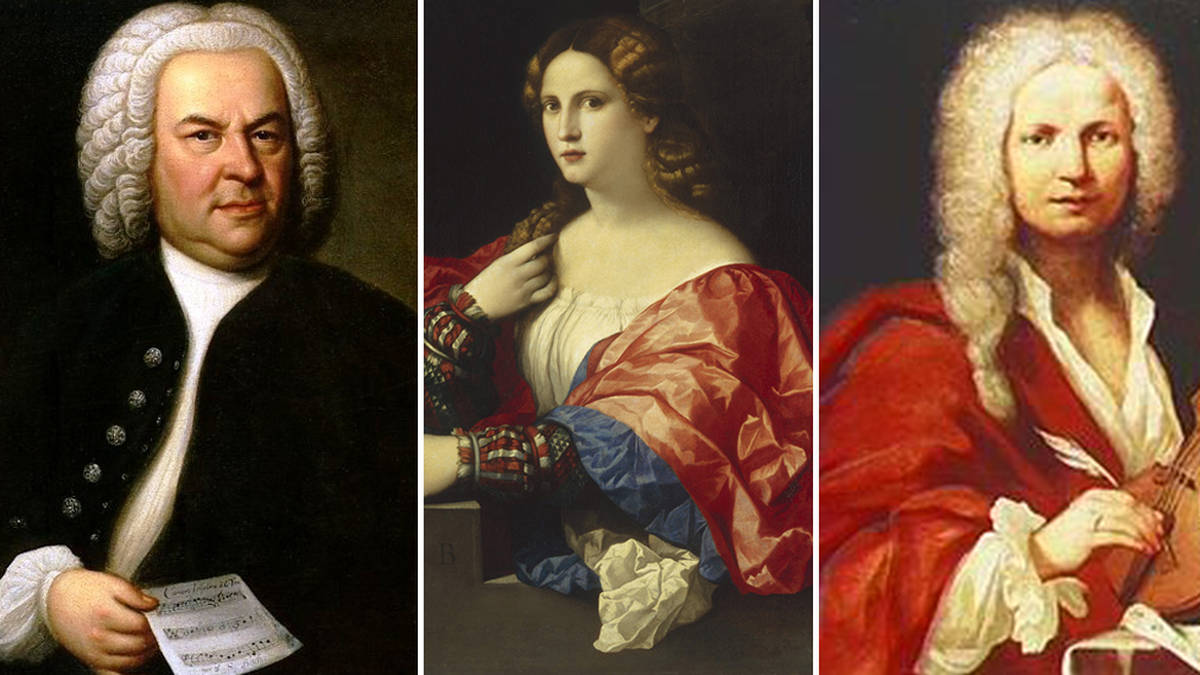
The Baroque keyboard repertoire centers on foundational works by Johann Sebastian Bach, George Frideric Handel, and Domenico Scarlatti. Johann Sebastian Bach (1685–1750) composed the 48 preludes and fugues of The Well-Tempered Clavier, which establish the standard for contrapuntal mastery and keyboard temperament. Bach’s Two-Part Inventions and Three-Part Sinfonias develop equal hand independence, finger dexterity, and thematic dialogue.
George Frideric Handel (1685–1759) composed 16 keyboard suites combining dramatic Italian vocal lyricism with German counterpoint. Domenico Scarlatti (1685–1757) created 555 keyboard sonatas that introduced hand-crossing, rapid repeated notes, and wide arpeggiated leaps.
Private piano lessons utilize Baroque literature to develop:
- Hand independence: balancing independent melodic voices across both hands simultaneously
- Articulative clarity: executing crisp detaché, legato, and staccato touches without relying on the damper pedal
- Historical ornamentation: executing authentic trills and ornaments on the beat according to period conventions
The Classical Era (1750–1820)
Defining Characteristics and Historical Context
Classical period music emphasizes formal clarity, symmetrical proportions, and homophonic textures. Emerging during the Enlightenment, Classical aesthetics favored structural balance and reason over intricate Baroque ornamentation. Sonata-allegro form became the dominant structural framework, organizing musical themes into exposition, development, and recapitulation sections.
Key Classical musical characteristics include:
- Homophonic texture: featuring a prominent cantabile melody supported by Alberti bass or chordal accompaniment
- Gradual dynamics: utilizing controlled crescendos and diminuendos made possible by dynamic touch
- Periodic phrase structure: organizing musical ideas into balanced 4-measure and 8-measure antecedent-consequent phrases
- Diatonic functional harmony: establishing clear tonic-dominant polarities and clean cadential resolutions
The fortepiano emerged during this era, enabling touch-sensitive volume changes that the harpsichord could not produce. Determining the ideal piano lessons age for child helps young musicians develop proper finger curvature, wrist flexibility, and classical touch sensitivity early.
Key Composers Essential for Today’s Piano Students
Wolfgang Amadeus Mozart, Ludwig van Beethoven, and Franz Joseph Haydn represent the core pillars of Classical piano literature. Wolfgang Amadeus Mozart (1756–1791) authored 18 solo piano sonatas and 27 piano concertos characterized by crystalline elegance and operatic vocal phrasing. Mozart’s Piano Sonata in C Major, K. 545 and Sonata in A Major, K. 331 introduce balanced scale passages, Alberti bass control, and thematic variation.
Ludwig van Beethoven (1770–1827) bridged the Classical and Romantic eras across his 32 piano sonatas. Early sonatas like Op. 2, No. 1 reflect classical formal discipline, while middle-period masterpieces like Op. 13 “Pathétique” and Op. 27, No. 2 “Moonlight” expand dramatic dynamic contrast and emotional power. Franz Joseph Haydn (1732–1809) composed 62 keyboard sonatas celebrated for rhythmic vitality, wit, and motivic development.
PrivatePianoLessons incorporates these Classical masterworks to develop:
- Classical phrasing: shaping antecedent and consequent musical sentences with natural vocal inflection
- Sonata form analysis: recognizing thematic exposition, modulation, development, and recapitulation in performance
- Dynamic control: executing precise sub-divisions from pianissimo to fortissimo using arm weight and fingertip sensitivity
The Romantic Era (c. 1830–1900)
Emotional Expression and Musical Style Changes
Romantic piano music prioritizes intense personal emotion, poetic expression, and rich chromatic harmony over classical restraint. Composers pushed harmonic boundaries through altered chords, extended modulations, and sustained lyricism. Industrial advancements in piano manufacturing—such as cast-iron frames, felt-covered hammers, and expanded 88-key compasses—allowed instruments to produce unprecedented resonance and dynamic volume.
Romantic musical innovations include:
- Programmatic expression: evoking extra-musical narratives, literature, poetry, and evocative landscapes
- Tempo rubato: flexing rhythmic tempo subtly for expressive storytelling while maintaining
