

Learning classical piano opens doors to centuries of musical heritage while developing disciplined keyboard technique. At PrivatePianoLessons, the premier provider of in-home piano lessons NYC families trust, our conservatory-trained instructors guide students through carefully curated repertoire that fosters artistic expression and foundational literacy.
Why Choose Classical Repertoire for Your Piano Journey?
Classical repertoire establishes the technical and expressive foundation required for all piano playing styles. Studying classical compositions develops finger independence, tonal balance, rhythmic precision, and dynamic nuance. Pianists gain superior sight-reading proficiency and a thorough understanding of musical form, voice leading, and harmonic structure.
Original classical compositions offer authentic harmonic depth that simplified arrangements cannot replicate. Master composers engineered these works specifically for the acoustic keyboard to teach touch sensitivity and pedal articulation. While some students encounter the Suzuki piano method NYC teachers occasionally reference, learning standard notation and classical literature establishes reliable note-reading habits and technical confidence from the very first lesson.
Our New York City piano instructors observe that beginning with classical pieces accelerates overall instrumental mastery. Classical music reinforces proper hand posture, curved fingers, and relaxed wrists, establishing disciplined practice habits that support any musical genre.
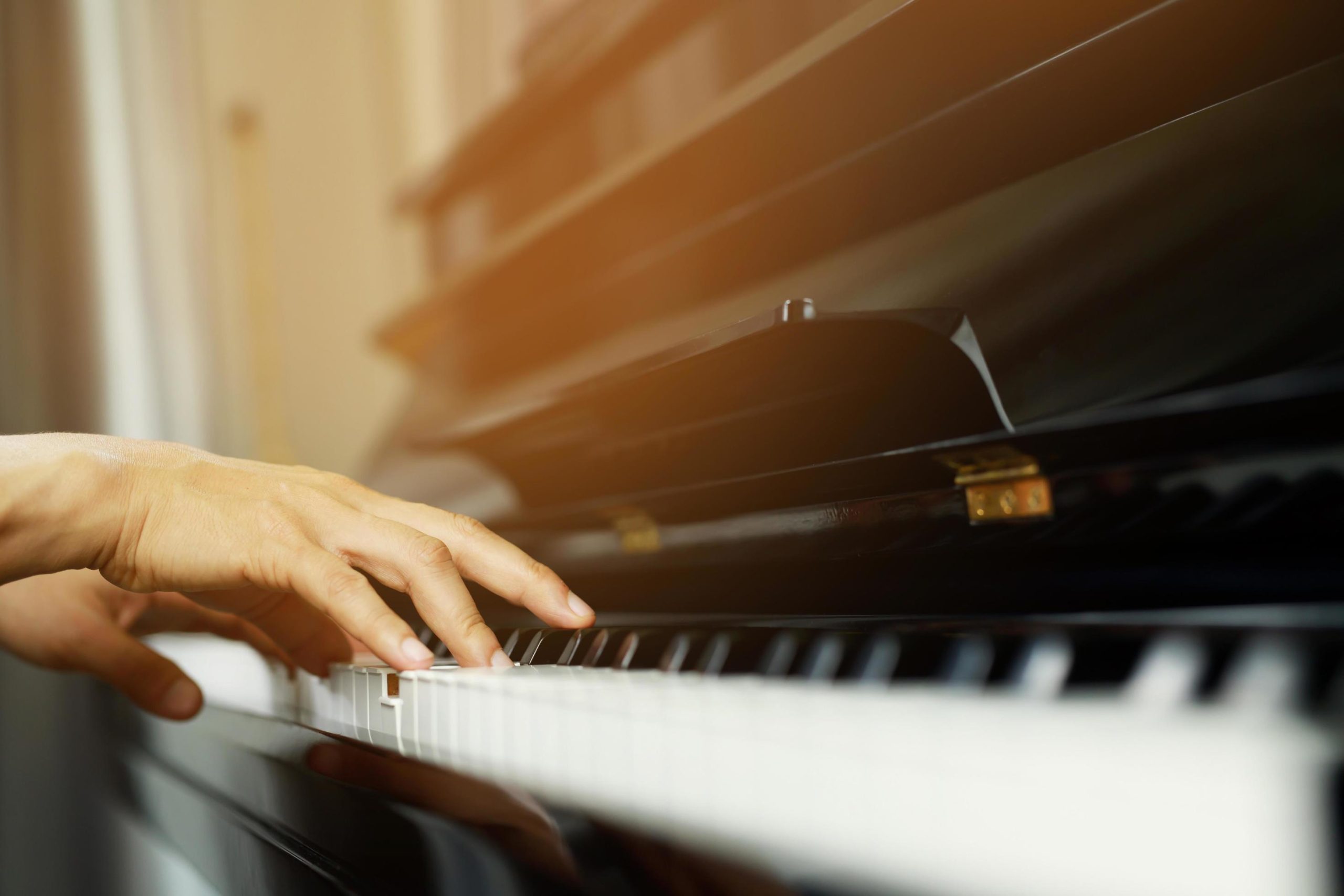
Essential Beginner Friendly Classical Piano Pieces to Start Learning
Beginner-friendly classical pieces introduce fundamental keyboard techniques through accessible musical structures. These selections provide progressive technical challenges while maintaining artistic depth, offering an ideal gateway to classical music for beginners across all age groups.
Bach – Minuet in G Major, BWV Anh 114
Bach’s Minuet in G Major, BWV Anh 114 teaches binary dance form, basic chord progressions, and melodic phrasing. Found in the 1725 Notebook for Anna Magdalena Bach and composed by Christian Petzold, this classic Baroque work serves as an essential teaching benchmark.
The composition features an accessible two-part structure in 3/4 time that trains hand independence. The right hand navigates graceful melodic contours within comfortable five-finger positions, while the left hand outlines steady harmonic bass lines. Pianists learn to balance melodic projection against accompaniment while coordinating contrasting articulations between both hands.
Practice tempo should start at 80–90 beats per minute (moderately slow) and gradually advance to a performance tempo of 120–130 beats per minute. A standard performance takes approximately 2 minutes.
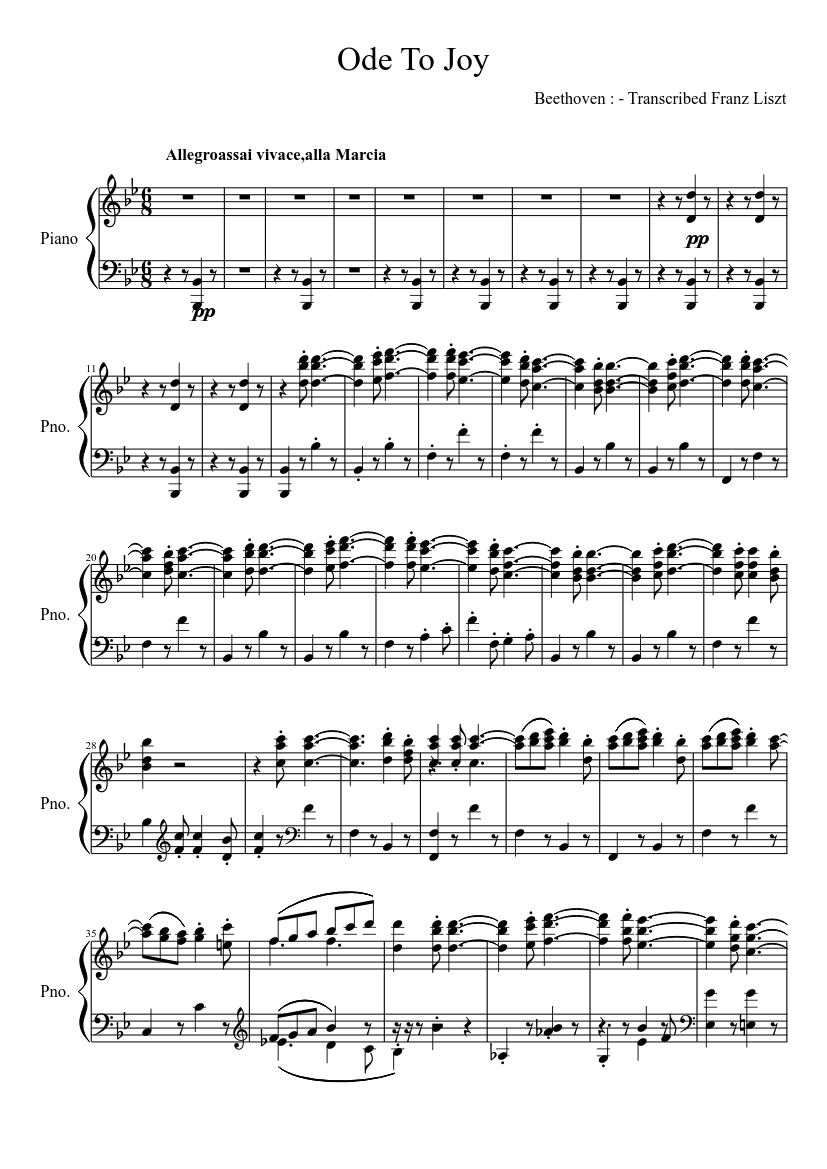
Beethoven – Ode to Joy (Theme from Symphony No. 9)
Beethoven’s Ode to Joy theme introduces pianists to Classical period phrasing, stepwise melodic motion, and steady rhythmic pacing. This famous melody from Symphony No. 9 delivers immediate musical satisfaction without demanding complex finger extensions.
The piece emphasizes smooth legato touch and balanced phrase shaping. Students learn to connect notes seamlessly while releasing phrase endings gently without disrupting the underlying tempo. The accompanying left hand introduces foundational tonic and dominant harmonies.
Instructors recommend beginning practice at 60–70 beats per minute (andante) before building toward a bright tempo of 100–110 beats per minute. Most elementary arrangements last between 1.5 and 2 minutes.
Pachelbel – Canon in D
Pachelbel’s Canon in D introduces polyphonic texture and ground-bass construction in a highly accessible format. Elementary arrangements preserve the iconic eight-measure harmonic progression while adapting intricate contrapuntal variations for early-stage pianists.
Students cultivate an unwavering internal pulse across sustained phrases. The repeating bass line progression builds muscle memory in the left hand, allowing the right hand to execute melodic voice leading and rhythmic subdivisions cleanly.
Recommended practice tempo starts at 70–80 beats per minute, advancing to 95–105 beats per minute. Standard beginner arrangements run approximately 2 to 3 minutes in length.
Bach – Prelude in C Major (The Well-Tempered Clavier)
Bach’s Prelude in C Major, BWV 846 from The Well-Tempered Clavier Book I develops even finger articulation and continuous arpeggiated coordination. Its systematic broken-chord structure makes it an invaluable practical study in keyboard harmony.
The piece consists of continuous thirty-second and sixteenth-note broken chords repeated across evolving harmonic progressions. Pianists learn to maintain steady arm weight, execute smooth thumb-under transitions, and release key tension between hand shifts. This repetitive pattern builds finger strength and equal finger independence.
Begin practice at 60–80 beats per minute, eventually working up to a fluent tempo of 110–120 beats per minute. Total performance duration spans approximately 2 minutes.
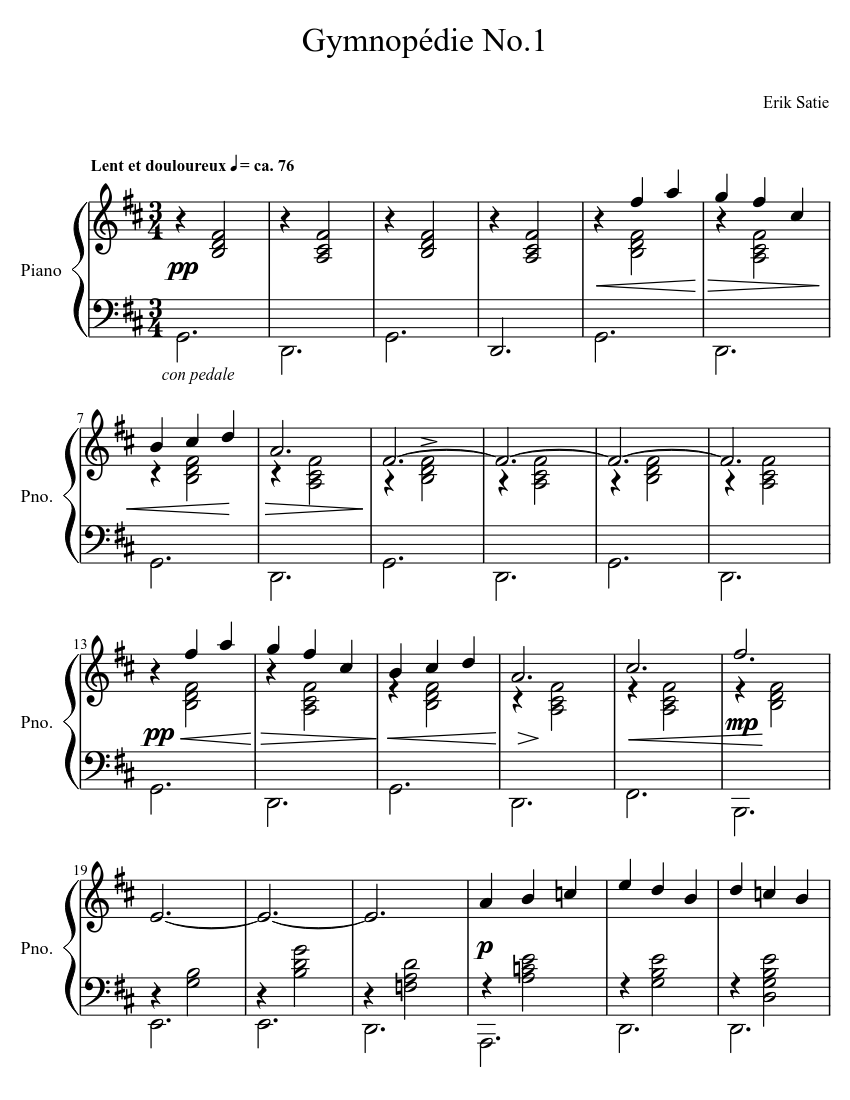
Satie – Gymnopédie No. 1
Erik Satie’s Gymnopédie No. 1 introduces early modern harmony, atmospheric chord voicings, and expressive timing. Composed in 1888, this tranquil piece prioritizes tone color, pedaling control, and touch sensitivity over rapid finger speed.
The unhurried 3/4 meter demands careful listening to acoustic decay and dynamic balance. Students learn to coordinate the damper pedal cleanly, preventing harmonic blurring between major seventh and minor seventh chords. The left hand practices wide bass-to-chord jumps while the right hand projects a haunting modal melody.
Practice tempo should remain steady and deliberate at 60–70 beats per minute (lento). The complete work lasts roughly 3 to 4 minutes.
Chopin – Prelude in E Minor (Op. 28, No. 4)
Chopin’s Prelude in E Minor, Op. 28, No. 4 introduces Romantic lyricism, chromatic harmony, and subtle rubato within an accessible technical framework. Despite its profound emotional depth, the physical mechanics remain within reach of diligent beginners.
The piece emphasizes cantabile playing—making the piano sing like a human voice. The right hand shapes a solemn, sustained melodic line while the left hand executes repeating eighth-note chords that descend chromatically. Pianists learn to calibrate pedaling and balance dynamics to prevent the accompaniment from overpowering the melody.
The recommended tempo ranges from 50 to 60 beats per minute (largo). A complete performance takes approximately 1.5 to 2 minutes.
Grieg – Morning Mood from Peer Gynt Op. 13
Edvard Grieg’s Morning Mood from Peer Gynt Suite No. 1, Op. 46 captures Norwegian Romanticism through pastoral melody and expressive dynamic contours. Piano arrangements distill the rich orchestral colors into accessible two-hand textures.
The piece cultivates expressive phrasing, gentle pastoral swaying in 6/8 meter, and gradual dynamic development. Pianists practice controlled crescendos and diminuendos while maintaining a supportive left-hand accompaniment. The work also introduces basic modal modulation and pentatonic melodic phrasing.
Practice tempo starts at 70–80 beats per minute (andante), building to 90–100 beats per minute. Performance duration typically lasts 2 to 3 minutes.

Best Piano Books and Sheet Music Resources for Beginners
Reliable sheet music editions ensure that students learn accurate notes, historical fingerings, and proper stylistic interpretations from the start. Our NYC piano faculty recommends verified publications and public-domain archives that offer clear typography and dependable editorial guidance.
First 50 Classical Pieces You Should Play on the Piano
The “First 50 Classical Pieces You Should Play on the Piano” collection by Hal Leonard provides expertly graded arrangements of essential classical works. Spanning Baroque, Classical, and Romantic periods, the anthology exposes students to diverse historical styles without overwhelming them technically.
Each arrangement retains the composer’s harmonic character while adapting challenging passages for early-grade pianists. The volume includes helpful fingering suggestions, tempo indicators, and introductory performance notes. Material corresponds to RCM Preparatory through Level 3 standards, supplying 1 to 2 years of progressive study.
Featured composers include Johann Sebastian Bach, Ludwig van Beethoven, Frédéric Chopin, Claude Debussy, and Wolfgang Amadeus Mozart. The clean formatting helps students build sight-reading confidence and repertoire breadth.
Classical and Romantic PDF sheet music compilations
Digital score libraries offer immediate access to thousands of public-domain classical compositions in authentic PDF formats. These platforms allow pianists to compare historical editions and study original composer manuscripts.
IMSLP (International Music Score Library Project) serves as the primary international archive for classical scores, providing free access to authoritative Urtext editions. Students can study unedited historical texts from every musical era.
Our instructors also recommend MuseScore for interactive digital scores and community arrangements. The platform provides playback tools and tempo adjustments that assist visual and auditory learners during home practice sessions.
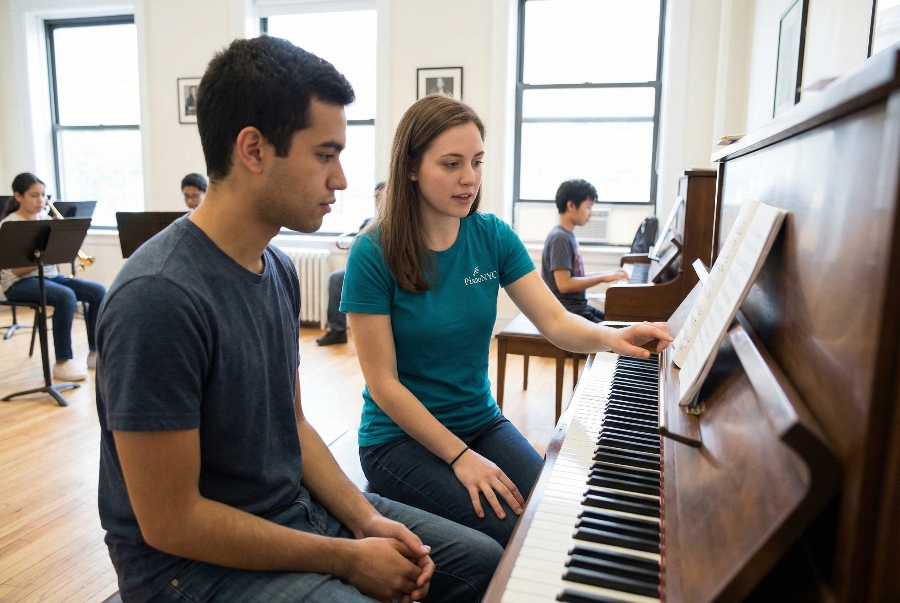
Improving Technique through Private Piano Lessons in New York City
One-on-one private piano lessons offer customized technical instruction that automated apps and generic tutorials cannot duplicate. Experienced teachers evaluate each student’s ergonomic habits, hand shape, and learning pace to design tailored practice routines that accelerate progress. This dedicated personal support makes learning piano after 60 an enjoyable, accessible journey through senior-specific repertoire adjustments and gentle joint warm-ups.
Private lessons ensure immediate feedback, correcting subtle hand tension, improper finger curves, and rhythmic flaws before they become ingrained habits. Instructors select repertoire matching the student’s unique musical goals, accelerating technical fluency while building genuine performance confidence.
While dense apartment living and noise regulations occasionally lead city musicians to look into piano practice rooms NYC offers for rental, learning at home eliminates commuting friction entirely. Private in-home lessons take place directly on the student’s personal acoustic or digital piano—the exact instrument they practice on every day.
Private piano lessons in New York City generally range from $70 to $160 per hour, depending on teacher credentials and location. PrivatePianoLessons provides structured in-home instruction starting at $75 per 30-minute session ($100 for 45 minutes; $130 for 60 minutes) with $0 travel fees across Manhattan, Brooklyn, Queens, The Bronx, and Staten Island.
Start Your Musical Journey with PrivatePianoLessons Today
PrivatePianoLessons provides premier 1-on-1 in-home piano lessons throughout all five New York City boroughs: Manhattan, Brooklyn, Queens, The Bronx, and Staten Island. Founded on May 12, 2010, by classical pianist and educator James Harrison, our faculty of 48 background-checked, conservatory-trained instructors brings personalized instruction directly to your home with $0 travel fees. Lessons run from 07:00 to 21:00 daily, structured around an 8-level curriculum aligned with RCM and ABRSM standards—whether you focus on classical mastery or plan to explore the best jazz clubs NYC is known for.
Contact our coordination headquarters at 817 W End Ave, New York, NY 10025, call +1 (917) 903-2146, or visit privatepianonyc.com to book your free 30-minute in-home trial assessment today.
Câu Hỏi Thường Gặp (FAQs)
How much do private piano lessons cost in New York City?
Private piano lessons in New York City typically cost $70 to $160 per hour. PrivatePianoLessons offers transparent in-home tuition starting at $75 per 30-minute session ($100 for 45 minutes, $130 for 60 minutes) with $0 travel fees across Manhattan, Brooklyn, Queens, The Bronx, and Staten Island.
What is the best beginner classical piano piece to start with?
Bach’s Minuet in G Major, BWV Anh 114 is widely recognized as the best beginner classical piece, teaching two-hand independence, simple ternary form, and fundamental phrasing within a comfortable five-finger hand position.
Where can I find free classical sheet music online?
The International Music Score Library Project (IMSLP) is the leading public-domain archive for free, downloadable classical sheet music PDF scores, featuring thousands of historical Urtext and scholarly editions.
