

Senior piano students in New York City achieve steady musical progress through method books designed specifically for mature adult learners. PrivatePianoLessons provides specialized 1-on-1 in-home instruction across Manhattan, Brooklyn, Queens, The Bronx, and Staten Island, guiding mature beginners through structured curriculums that accommodate vision, finger dexterity, and cognitive processing for those seeking private piano lessons NYC.
Piano education for older adults prioritizes ergonomic hand posture, clear large-format musical notation, gradual technical pacing, and mature repertoire. Quality method books establish strong foundational technique, music theory comprehension, and reading fluency while respecting adult musical preferences.
Best Piano Method Books for Beginners together with Seniors approved by PrivatePianoLessons
Adult piano method books provide sequential curriculums that build solid technical and theoretical foundations for older beginners. PrivatePianoLessons utilizes these vetted resources during in-home lessons to deliver consistent technical progress for students across New York City.
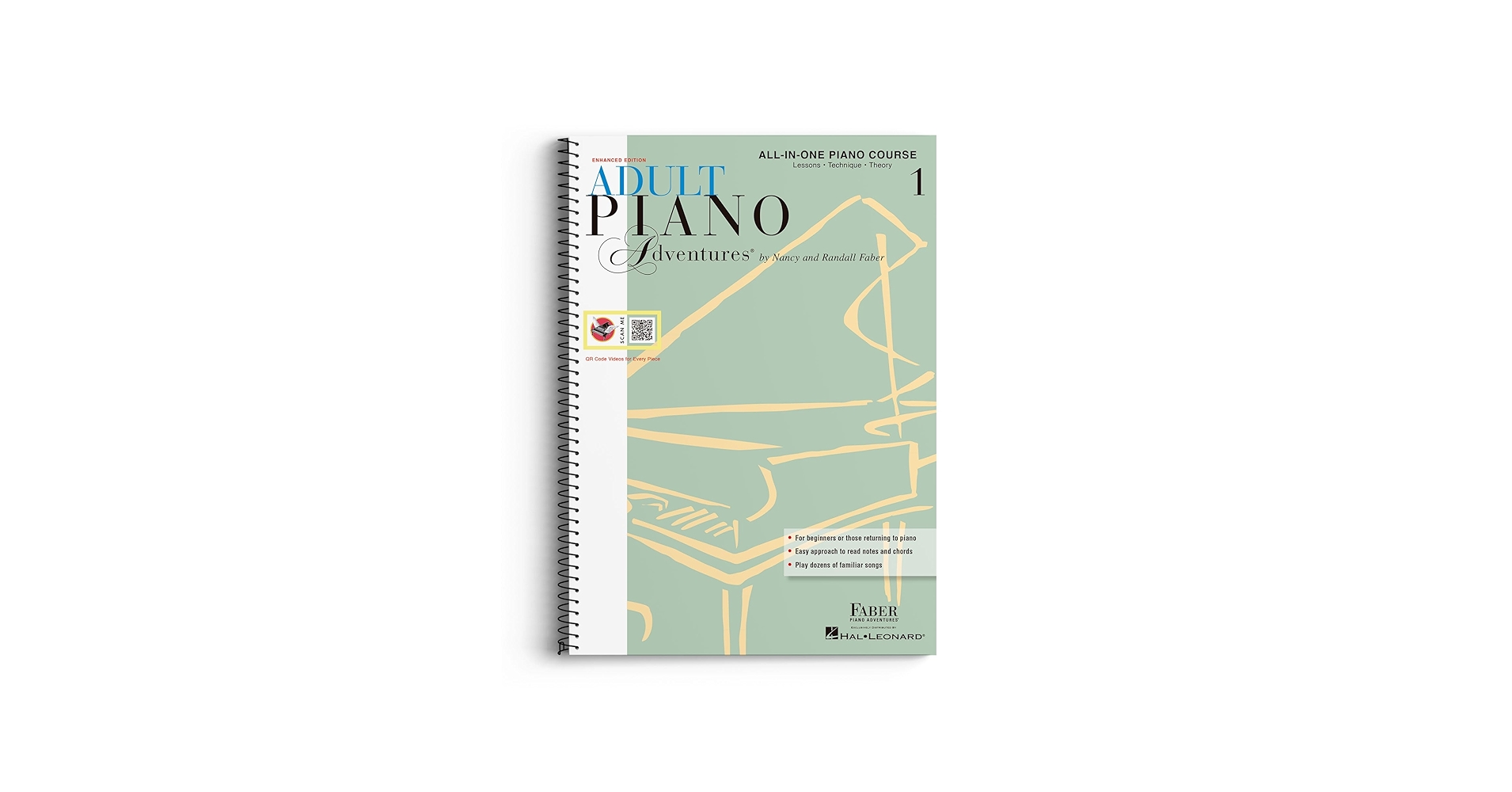
Faber: Adult Piano Adventures All-In-One Course Book 1
Nancy and Randall Faber designed Adult Piano Adventures Book 1 with 16 structured units integrating lesson pieces, music theory, and technique exercises. The course combines classical themes, folk songs, and popular melodies with clear instructional graphics.
Key benefits include:
- Spiral-bound binding allows the book to lay completely flat on any piano music rack.
- Integrated QR codes grant instant access to professional audio accompaniments and instructional video demonstrations.
- Logical chord progressions introduce lead sheets, primary triads, and root-position harmonies systematically.
- Large-format music engraving reduces visual strain during sight-reading exercises.
The curriculum develops two-handed coordination, finger independence, and dynamic control through contemporary musical settings. Students build technical fluency while mastering core music theory.
Alfred’s Basic Adult All-in-One Course, Book 1
Alfred’s Basic Adult All-in-One Course Book 1 by Willard A. Palmer, Morton Manus, and Amanda Vick Lethco unites lesson, theory, and technique into a single volume. This unified structure minimizes material clutter while establishing a methodical chord-based foundation.
Notable features include:
- Consolidated three-in-one format streamlines practice routines without requiring separate workbooks.
- Diverse musical selections span classical themes, blues standards, and American folk arrangements.
- High-contrast visual layouts feature enlarged staves that benefit mature students with visual challenges.
- Systematic harmonic progression teaches primary chords early to facilitate song accompaniment.
The method reinforces interval reading and chord accompaniment patterns, enabling seniors to play recognizable musical arrangements within their initial weeks.
Bastien: Piano for Adults – Book 1
Jane Smisor Bastien and Lisa Bastien engineered Bastien Piano for Adults Book 1 with an accelerated pedagogical sequence tailored for adult analytical minds. The method respects mature cognitive abilities while pacing physical finger exercises appropriately.
Distinctive elements include:
- Multi-key approach develops broad fingerboard navigation across major and minor five-finger positions.
- Companion digital access provides variable-speed audio accompaniments for disciplined tempo control.
- Clear theory summaries reinforce interval identification, key signatures, and rhythmic notation.
- Balanced technical studies cultivate finger articulation alongside lyrical phrasing.
Students advance toward intermediate literature through structured keyboard drills that reinforce hand autonomy and tactile familiarity.
Hal Leonard Student Piano Library: Adult Piano Method – Book 1
The Hal Leonard Adult Piano Method Book 1 emphasizes natural physical technique, expressive musicianship, and creative improvisation alongside traditional staff reading. This approach motivates mature learners through rich, stylistically varied acoustic orchestrations.
Key components include:
- Ear-training and improvisation prompts foster musical creativity from the initial units.
- Eclectic repertoire covers jazz, classical, blues, and contemporary popular styles.
- Online audio access delivers orchestrated backing tracks recorded by professional studio musicians.
- Ergonomic keyboard diagrams reinforce relaxed wrist alignment and efficient finger movement.
The method cultivates rhythmic security and expressive dynamics while preventing excessive tension in the hands and forearms.
The Classical Piano Method – Method Book 1
The Classical Piano Method Book 1 by Hans-Günter Heumann delivers European-style conservatory training tailored for modern adult beginners. The course prioritizes classical repertoire development, finger independence, and strict rhythmic accuracy.
Primary features include:
- Authentic masterwork arrangements feature pieces by Johann Sebastian Bach, Wolfgang Amadeus Mozart, and Ludwig van Beethoven.
- Finger-independence exercises strengthen articulation and melodic voicing in both hands.
- Historical commentary and composer profiles provide valuable artistic context for each unit.
- Methodical note-reading exercises eliminate reliance on finger-number crutches.
This textbook suits senior learners aspiring to master traditional classical repertoire through disciplined artistic standards.
Piano For Dummies (3rd ed.)
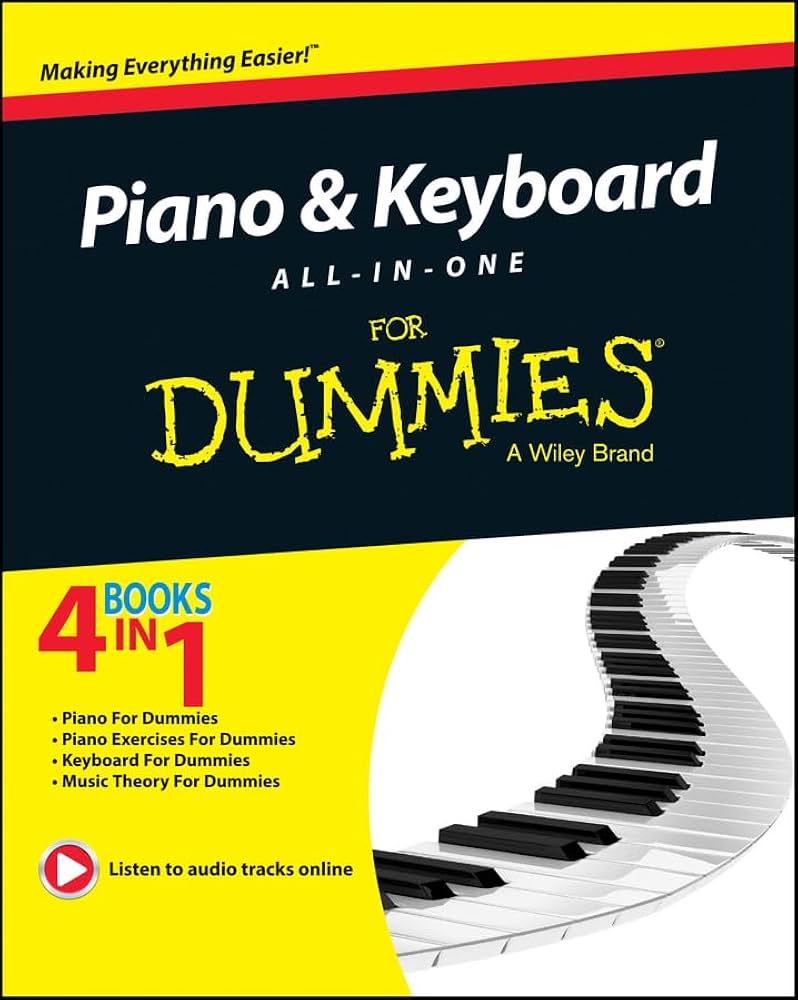
Piano For Dummies (3rd Edition) by Blake Neely and David Pearl operates as a comprehensive instructional guide and modular reference manual rather than a strict sequential method book. The volume explains keyboard fundamentals, instrument mechanics, and music theory through accessible prose.
Valuable aspects include:
- Clear explanatory text simplifies abstract theoretical principles, including the circle of fifths and chord inversions.
- Reference chapter organization allows mature learners to revisit specific technical topics as needed.
- Practical guidance details acoustic versus digital piano selection, posture alignment, and maintenance care.
- Supplemental audio tracks demonstrate exercises and performance excerpts for home study.
This handbook serves as an effective companion guide alongside structured method books during private lessons.
Popular Easy-to-Read Piano Songbooks for Private Piano Lessons tại New York City students
Supplementary piano songbooks provide musical variety, performance motivation, and artistic enjoyment alongside structured method books. PrivatePianoLessons curates easy-to-read songbooks with clear notation, uncluttered staves, and appropriate arrangements for older beginner students in New York City.
The WunderKeys Pop Staff Piano Library For Older Beginners
The WunderKeys Pop Staff Piano Library by Andrea Dow and Trevor Dow introduces a transitional notation format designed specifically for mature beginners. The system pairs standard treble clef notation with chord symbols in place of complex bass clef lines.
Unique characteristics include:
- Pop Staff visual notation eliminates initial bass-clef overload, accelerating two-handed performance.
- Contemporary classical-pop arrangements offer sophisticated harmonic textures suitable for adult ears.
- Gradual bass note integration steadily transitions students toward standard grand staff literacy.
- Accessible arrangements foster confidence and finger independence without cognitive frustration.
This framework bridges chord-based playing and formal note reading, delivering immediate musical satisfaction.
Peaceful Piano Playlist – Faber
Peaceful Piano Playlist by Faber Music gathers 35 contemporary classical, ambient, and minimalist piano solos arranged for accessible playing. The collection emphasizes expressive phrasing, serene tempos, and delicate dynamic shadings.
Collection highlights include:
- Calming repertoire selections promote stress reduction, cognitive clarity, and physical hand relaxation.
- Uncluttered music engravings provide spacious note layouts that aid seniors with visual fatigue.
- Notable works include compositions by Ludovico Einaudi, Max Richter, and Yann Tiersen.
- Therapeutic musical selections provide benefits comparable to music therapy for stress while reinforcing tonal control.
These meditative arrangements reward thoughtful touch and sustained pedaling without demanding rapid finger dexterity.
The Essential Film Collection – Faber Music
The Essential Film Collection features 36 memorable cinematic themes arranged for late-beginner and intermediate pianists. Familiar movie soundtracks provide recognizable auditory targets that accelerate learning.
Notable inclusions:
- Iconic cinematic scores include compositions by John Williams, Ennio Morricone, and Hans Zimmer.
- Intermediate-level reductions maintain harmonic fullness while avoiding awkward finger stretches.
- High-contrast printing and clear measure spacing ensure effortless reading under home lighting.
- Beloved melodies inspire consistent daily practice and emotional engagement at the keyboard.
Film music arrangements motivate mature learners by transforming familiar melodies into satisfying solo performances.
Short Romantic Pieces for Piano – Lionel Salter
Short Romantic Pieces for Piano, edited by Lionel Salter for ABRSM, comprises a graded five-volume anthology of authentic nineteenth- and twentieth-century keyboard gems. The series introduces mature students to historical masterworks through manageable miniature forms.
Anthology benefits include:
- Authentic classical masterworks encompass miniatures by Alexander Glazunov, Enrique Granados, and Isaac Albéniz.
- Graded progression aligns directly with international standards like ABRSM and the RCM Certificate Program.
- Expressive romantic literature develops singing tone, expressive rubato, and subtle wrist flexibility.
- Original composer notations preserve artistic authenticity without oversimplifying musical textures.
These historical compositions bridge method book fundamentals with genuine concert literature.
A First Book of Blues for the Beginning Pianist
A First Book of Blues for the Beginning Pianist by David Dutkanicz teaches foundational blues idioms through progressive solo arrangements. The volume builds groove, rhythmic stability, and harmonic understanding through authentic 12-bar blues progressions.
Educational components include:
- Systematic blues scale instruction enhances keyboard awareness and hand coordination.
- Left-hand bass patterns introduce walking basses, boogie-woogie figures, and syncopated comping.
- Classic blues standards and original etudes establish steady rhythmic pulsation.
- Phrasing exercises cultivate swing articulation, blue notes, and expressive call-and-response dynamics.
Blues instruction sharpens rhythmic pulse and motor coordination while introducing American roots music traditions.
Big Phat Jazz Piano Solos – Gordon Goodwin
Big Phat Jazz Piano Solos features 10 intermediate-level arrangements transcribed directly from Gordon Goodwin’s Grammy-winning Big Phat Band charts. The book challenges advancing adult students with sophisticated jazz harmony and rhythmic swing.
Collection strengths include:
- Professional jazz harmonies incorporate seventh chords, rootless voicings, and extended altered chords.
- Syncopated rhythmic figures develop precise hand coordination and metronomic accuracy.
- Stylistic arrangements honor legendary NYC jazz legends through contemporary big-band idioms.
- Accompanying recordings illustrate authentic jazz phrasing, swing feel, and articulation nuances.
Jazz repertoire deepens harmonic comprehension and polyrhythmic independence for senior pianists exploring non-classical literature.
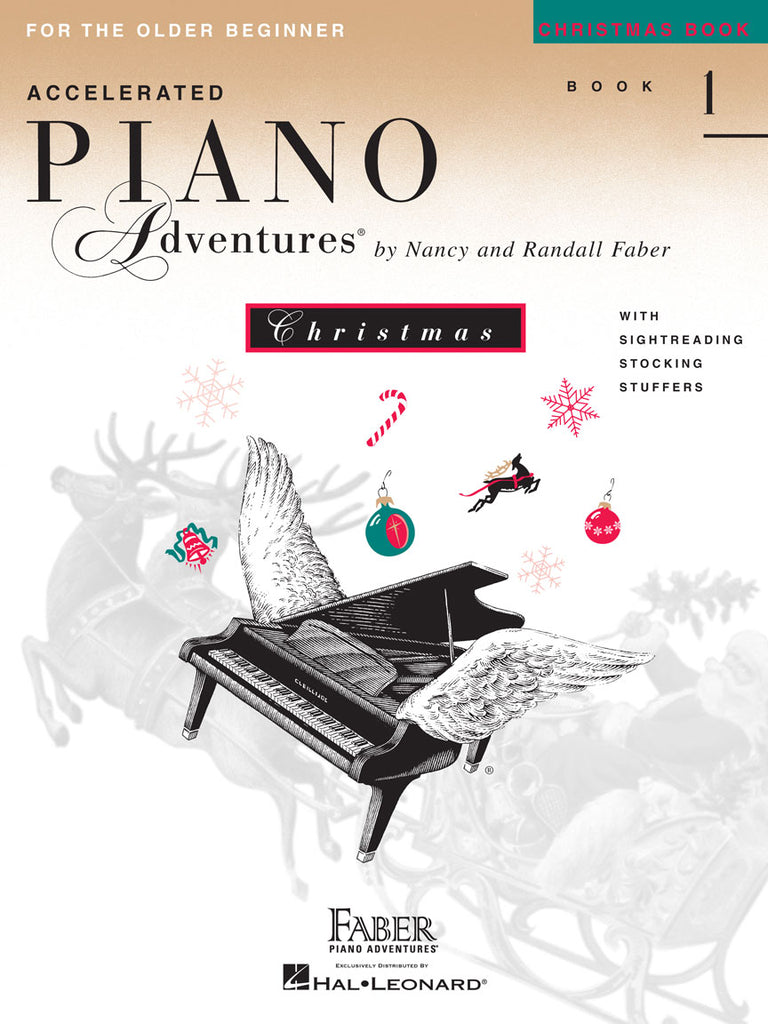
Why use a piano method book designed for Older Beginners?
Piano method books engineered for older beginners accommodate the unique cognitive strengths, visual requirements, and motor coordination needs of adult learners. Traditional children’s primers rely on cartoon illustrations and juvenile pacing, whereas adult-focused methods deliver mature musical repertoire and efficient conceptual explanations.
Specialized adult method books provide essential pedagogical advantages:
- Cognitive alignment: Adult brains assimilate complex music theory, harmonic relationships, and formal structures faster than children, but adult hands require targeted exercises to develop fine motor coordination. Dedicated adult methods balance conceptual speed with deliberate physical repetition.
- Sophisticated musical repertoire: Mature students stay motivated when playing music that reflects their personal taste. Adult methods integrate classical themes, jazz standards, Broadway selections, and folk ballads rather than nursery rhymes.
- Optimal instructional pacing: Adult publications balance systematic concept introduction with sufficient consolidation time. This structure prevents cognitive frustration while ensuring secure technical fundamentals.
- Visual and physical accommodations: Enlarged staves, high-contrast printing, wide measure spacing, and spiral bindings accommodate mature eyesight, reduce neck strain, and alleviate hand fatigue.
- Sustained practice motivation: Methodical learning benchmarks, self-assessment checkpoints, and recognizable performance pieces encourage consistent daily practice habits.
Common Questions About Learning Piano as a Senior
Older adults frequently ask fundamental questions regarding curriculum selection, music literacy, repertoire genres, and instrument choices before starting piano lessons. Clarifying these considerations enables senior students to approach their musical education with clarity and realistic expectations.
Is This A Method Book or a Songbook?
Method books provide a sequential, structured pedagogical curriculum that teaches posture, finger technique, music theory, and sight-reading systematically. Songbooks contain curated collections of standalone performance pieces organized around a specific genre or theme without progressive exercises.
Effective piano education combines both instructional formats. A foundational method book establishes secure technique, while a complementary songbook provides artistic variety and enjoyment.
What Is “Classical Pop” Repertoire?
Classical pop repertoire combines timeless classical melodies and compositional structures with contemporary popular harmonies, cinematic styling, and modern rhythms. This hybrid genre preserves the elegance of traditional masterworks while incorporating accessible, expressive pop sensibilities.
Representative examples include simplified arrangements of Beethoven’s Moonlight Sonata with modern ambient accompaniments or Chopin’s Nocturnes updated with contemporary chord voicings. The genre offers mature learners satisfying musical experiences without requiring virtuosic concert technique.
Can I learn piano without learning how to read music?
You can learn piano without traditional sheet music by using chord charts, lead sheets, or ear-training methods, but learning standard notation offers superior long-term musical autonomy. Standard music literacy unlocks centuries of repertoire and allows you to communicate accurately with other musicians.
While rote learning and chord charts yield rapid short-term results, combining formal note-reading with chord recognition establishes complete musicianship. PrivatePianoLessons integrates notation literacy alongside chord knowledge to equip students with lifelong musical skills.
What piano should I get as a complete beginner?
Beginner piano students should select an instrument featuring 88 full-sized, weighted keys to build proper hand strength, finger articulation, and dynamic control. While families often evaluate the best beginner piano for child students, mature beginners require the same touch sensitivity to protect joint health:
Acoustic pianos (Upright or Grand): Deliver authentic mechanical key action, organic acoustic resonance, and natural dynamic response. They require dedicated floor space, climate stability, and professional tuning twice per year to maintain standard concert pitch (A4 = 440 Hz).
Digital pianos: Feature 88 weighted, hammer-action keys that faithfully replicate acoustic touch in a space-saving cabinet. They never require tuning, provide volume control with headphone capability, and maintain consistent pitch.
Electronic keyboards: Offer lightweight portability and low cost, but unweighted plastic keys fail to build necessary finger independence and can cause forearm strain.
PrivatePianoLessons recommends choosing an acoustic piano or an 88-key digital piano with weighted hammer action to ensure safe, ergonomically sound technical development.
Advice on Self-Learning vs Private Piano Lessons tại New York City
Choosing between independent self-study and private piano instruction determines how quickly, safely, and thoroughly an adult student acquires keyboard proficiency. While mobile apps and video tutorials provide convenient introductory exposure, in-person instruction ensures proper ergonomic technique and personalized feedback.
A balanced comparison highlights key distinctions between both approaches:
- Self-learning benefits:
- Flexible practice scheduling fits around personal work and retirement commitments.
- Low initial cost requires only instructional books or digital subscription apps.
- Self-directed pacing permits unlimited repetition of challenging sections.
- Independent study eliminates performance pressure in private environments.
- Self-learning limitations:
- Unchecked postural flaws, wrist stiffness, and incorrect fingering become ingrained physical habits.
- Absence of personalized diagnostic feedback delays problem resolution and technical progress.
- Lack of external accountability and structured milestones frequently leads to practice abandonment.
- Limited guidance in musical expression, touch sensitivity, and pedaling hinders artistic growth.
- Private lesson advantages with PrivatePianoLessons:
- Direct physical guidance prevents musculoskeletal strain and promotes relaxed joint alignment.
- Tailored weekly lesson plans address individual artistic preferences and physiological considerations.
- Immediate professional feedback accelerates note-reading fluency and two-hand coordination.
- Structured accountability and personalized encouragement foster sustainable practice habits.
Whether you seek a private piano teacher Staten Island or an instructor in Manhattan, Brooklyn, Queens, or The Bronx, PrivatePianoLessons matches students with conservatory-trained educators who deliver customized 1-on-1 instruction directly in your home. Combining expert weekly guidance with consistent independent practice provides the most effective pathway to musical fulfillment.
How to Create an Efficient Piano Practice Routine with PrivatePianoLessons
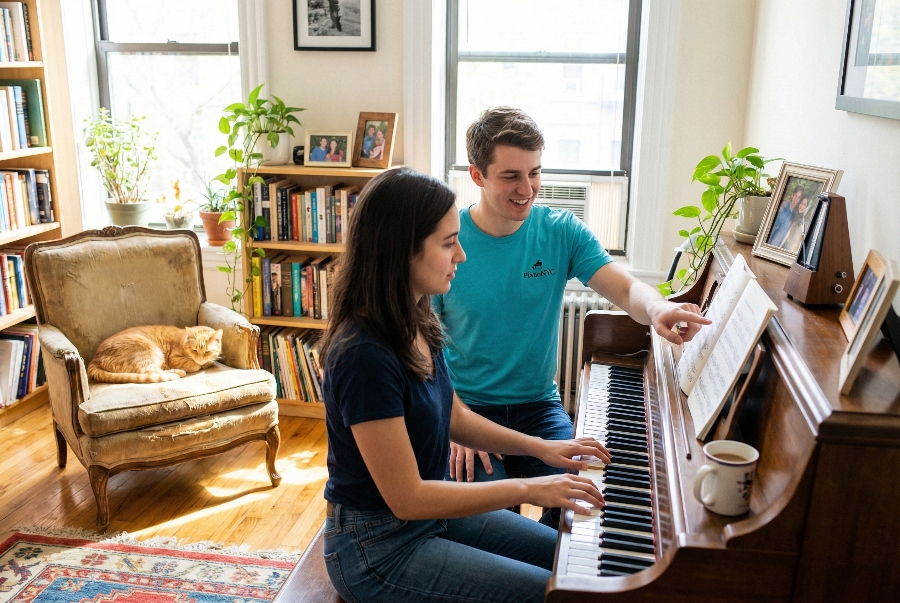
Creating an efficient piano practice routine requires structured, purposeful practice sessions that maximize musical growth within realistic daily time constraints. PrivatePianoLessons designs individualized practice regimens for New York City students, balancing technical conditioning with repertoire development.
Essential practice components for mature students include:
- Warm-up exercises: Dedicate 3 to 5 minutes to gentle finger stretches, five-finger patterns, or slow scales to warm up hand muscles and establish mental focus.
- Technique development: Spend 5 to 10 minutes addressing specific mechanical skills, including finger independence, chord transitions, and how to use piano pedals with correct foot articulation.
- Repertoire practice: Devote 10 to 15 minutes to active lesson pieces using targeted strategies such as hands-separate practice, metronome practice, and short phrase repetition.
- Theory application: Spend 3 to 5 minutes analyzing chord structures, key signatures, and rhythm patterns directly within your sheet music.
- Creative exploration: Conclude with 2 to 3 minutes of expressive playing, improvisation, or revisiting previously mastered favorite pieces for pure enjoyment.
Recommended practice durations:
- 15 to 20 minutes daily for beginners to build motor habits without physical fatigue.
- 30 to 45 minutes daily for intermediate students preparing multi-page literature.
- Deliberate, focused daily practice produces far greater progress than sporadic, lengthy sessions.
About PrivatePianoLessons: Founded on May 12, 2010, by classical pianist and educator James Harrison, PrivatePianoLessons provides 1-on-1 in-home piano lessons across Manhattan, Brooklyn, Queens, The Bronx, and Staten Island with 0 USD travel fees. Coordinated from headquarters at 817 W End Ave, New York, NY 10025, USA, our faculty of 48 degreed instructors (100% holding a Bachelor of Music or higher, with 19 possessing Master’s or Doctorate degrees) teaches students ages 4 to 84+. Lessons operate from 07:00 to 21:00, Monday through Sunday, structured around our 8-level curriculum referenced against RCM and ABRSM standards, featuring 12-week progress reports and a complimentary 30-minute in-home evaluation.
