

Many adults in New York City harbor a desire to return to the piano. Returning players often recall childhood lessons, the satisfaction of completing a piece, or a lifelong aspiration to play. Professional careers, family commitments, and daily responsibilities frequently delay musical pursuits. With financial stability and structured routines, mature learners often ask whether it is too late to relearn piano as an adult.
Adult learners can relearn the piano successfully at any age. Adult students often progress faster than younger beginners because they bring mature cognitive focus, self-discipline, and deep emotional resonance to their practice. While parents evaluate the optimal piano lessons age for child beginners, mature brains retain neural adaptability for musical learning throughout adulthood.
Is It Too Late to Relearn Piano as an Adult?
Relearning the piano as an adult is entirely achievable and offers distinct cognitive advantages over childhood instruction. Mature brains process abstract harmonic structures, theoretical frameworks, and expressive nuances faster than developing minds. Adults synthesize theoretical concepts with physical technique efficiently, allowing for deeper musical interpretation from the first session.
Neurological research from institutions like The Juilliard School indicates that adults returning to piano training often reactivate dormant motor patterns within months. Procedural motor memory endures over decades; finger patterns, keyboard geography, and spatial awareness established in earlier years remain embedded in the nervous system.
Musical training stimulates neuroplasticity by establishing new neural pathways and reinforcing existing synaptic connections regardless of chronological age. Playing piano engages auditory processing, visual reading, and motor coordination simultaneously, which strengthens cognitive reserve and executive function.
Adult time constraints foster disciplined practice habits. Mature players practice with defined objectives, analyzing why specific drills exist and applying targeted corrections immediately. This intentional approach accelerates technical progress far beyond unfocused childhood practice sessions.
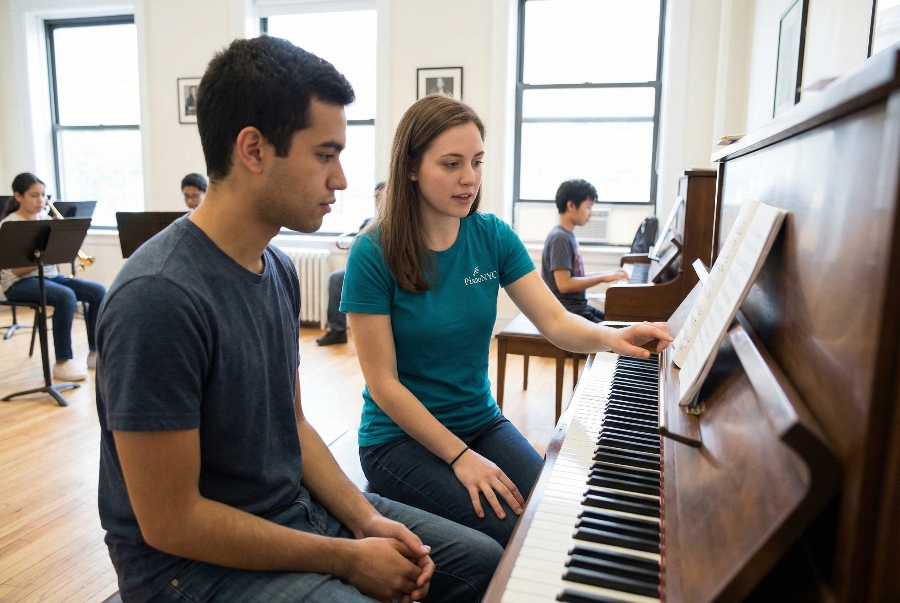
A Quick Guide to Relearning the Piano After Taking a Long Hiatus
Returning to the keyboard after an extended hiatus requires a structured technical reintroduction. Muscle memory retains musical patterns, but physical tendons and finger joints require gradual reconditioning. Theoretical concepts return rapidly once practical keyboard exercises reactivate dormant foundational knowledge.
Take Baby Steps, Manage Expectations
Initial practice sessions should prioritize gentle exploratory playing over rigorous technical drills. Beginning with simplified arrangements rebuilds hand coordination, restores keyboard confidence, and establishes positive psychological associations with practice.
Physical execution often lags behind cognitive recall during the opening weeks of study. Your brain recognizes intricate musical phrases before your finger tendons can execute them smoothly. Professional instructors at PrivatePianoLessons recommend setting incremental benchmarks—such as mastering four measures cleanly—to navigate this temporary transition successfully.
Achievable weekly goals build lasting momentum. You can increase technical velocity and dynamic complexity once tactile dexterity returns. Returning players reactivate existing cognitive networks rather than starting from zero.
Properly Stretch then Warmup Before Playing
Adult hand physiology requires deliberate physical preparation to maintain flexibility and prevent repetitive strain. Tendons and finger joints stiffen over years of sedentary desk work, requiring gradual warmups before rigorous repertoire practice.
A daily physical warmup prepares muscles for keyboard work:
- Extend each finger individually, hold the stretch gently for 10 seconds, and release tension slowly.
- Rotate both wrists in circular motions clockwise and counterclockwise to lubricate wrist joints.
- Massage the forearm extensor and flexor muscles to stimulate blood circulation before touching the keys.
Slow scale routines should follow physical stretches. Deliberately playing the C major scale with hands separate reinforces tactile evenness before you attempt dynamic tempo increases.
Posture is Key to Preventing Injury
Correct piano posture prevents physical strain and unlocks effortless keyboard mechanics. Chronic desk ergonomics—such as rounded shoulders, forward head posture, and spinal slouching—impair forearm movement and limit dynamic control.
Bench height adjustment represents the initial step in ergonomic setup. Proper bench elevation establishes proper piano posture, positioning your forearms parallel to the floor with elbows slightly forward of your torso. Both feet must rest firmly flat on the floor to stabilize core spinal alignment.
Your spine must remain neutral and upright while keeping your shoulders dropped and tension-free. Muscular tension in the neck or shoulder girdle restricts blood flow down the arms, impairing finger independence and causing premature fatigue.
Professional piano instructors identify and correct subtle postural misalignments before physical habits solidify. Instructors at PrivatePianoLessons routinely evaluate adult ergonomics during lessons to ensure sustainable, strain-free playing.
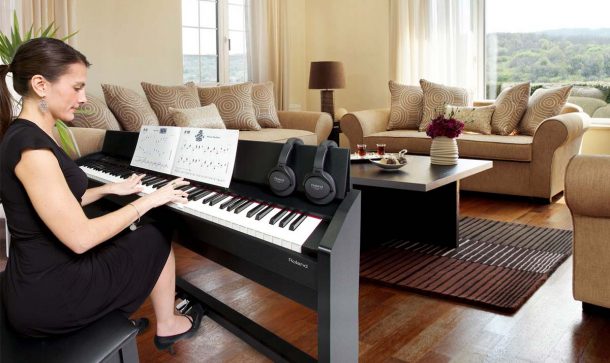
Refresh Your Knowledge of Music Theory
Reviewing music theory systematically accelerates note reading and harmonic comprehension for returning pianists. Theoretical principles often reemerge quickly once practical drills trigger associative memory networks.
Fundamental notation review begins with landmark note recognition across the grand staff. Identifying guide notes—such as Bass C, Middle C, and Treble C—streamlines sight-reading in both clefs without counting individual ledger lines.
Key signatures and scale constructions form the architectural foundation of keyboard literature. Reviewing major scales alongside relative minor patterns clarifies tonal centers, fingering logic, and interval relationships.
Chord progressions provide immediate practical utility for adult learners. Understanding primary harmonic triads—tonic, subdominant, and dominant chords—enables you to harmonize melodies, interpret lead sheets, and accompany songs across diverse musical genres.
Play Full Pieces That Inspire You
Adult musical motivation thrives when working on personally inspiring repertoire rather than repetitive children’s method drills. Selecting music that resonates with your personal tastes sustains consistent practice habits.
Pianists can select high-quality arrangements across classical masterpieces, cinematic scores, and Broadway standards to maintain engagement. Playing meaningful melodies accelerates expressive phrasing and deepens artistic satisfaction.
Jazz repertoire offers sophisticated harmonic exploration for returning pianists. Studying jazz piano chords for beginners introduces major seventh, minor seventh, and dominant seventh voicings that unlock creative improvisational freedom.
Repertoire selection should balance challenge with immediate technical feasibility. Choosing pieces slightly below your peak technical ceiling establishes positive reinforcement, solidifies accuracy, and prevents practice discouragement.
Developing Effective Practice Strategies for Returning Players
Effective adult practice strategies maximize limited schedules through targeted, objective-driven routines. Adult learners possess superior mental concentration but require systematic methods to achieve consistent technical improvement.
The Importance of Deliberate Practice
Deliberate practice isolates specific technical obstacles rather than playing through entire pieces passively. Focused isolation produces measurable technical advancement in minimal time.
Targeted practice routines isolate musical problem spots:
- Isolate uneven rhythm sections and practice them with distinct rhythmic variations, such as dotted rhythms.
- Separate difficult hand transitions and practice difficult measures hands-separately before combining them.
- Rehearse challenging harmonic shifts slowly to build accurate tactile finger spacing.
Slow practice builds dependable muscle memory. Practicing at a reduced tempo allows the nervous system to coordinate accurate fingerings, dynamic balance, and articulation before you increase speed.
Dividing practice sessions into micro-goals creates compounding progress. Mastering two to four measures with metronomic precision delivers superior long-term results compared to repeating full pieces with ingrained errors.
Prioritize Consistency Over Long Practice Sessions
Practicing 20 to 30 minutes daily produces superior technical retention compared to cramming three hours once a week. The human brain consolidates motor sequences and procedural memory during sleep intervals between frequent, shorter sessions.
Morning practice sessions allow professionals to work when mental energy and focus remain peak. Practicing before workday distractions emerge ensures consistent daily musical progress.
Evening practice serves as an effective decompression ritual after demanding professional hours. Playing piano shifts cognitive focus away from workplace stress, providing creative restoration and mindful engagement.
How to Stay Consistent Even Without a Teacher
Independent adult practice requires proactive accountability systems to maintain momentum and structure. Self-directed students can establish practical benchmarks to prevent sporadic practice routines.
Performance deadlines create productive practice accountability:
- Schedule informal home performances for family members or supportive friends.
- Record video performances monthly on your phone to assess technical progress objectively.
- Document weekly practice milestones in a dedicated practice journal to monitor repertoire completion.
Strategic technology integration strengthens timing and accountability. Learning how to practice with metronome applications develops internal rhythmic discipline and prevents unconscious tempo fluctuations.
Participating in adult piano forums and local amateur music groups provides valuable community encouragement. Sharing repertoire milestones with fellow returning players reinforces long-term commitment.
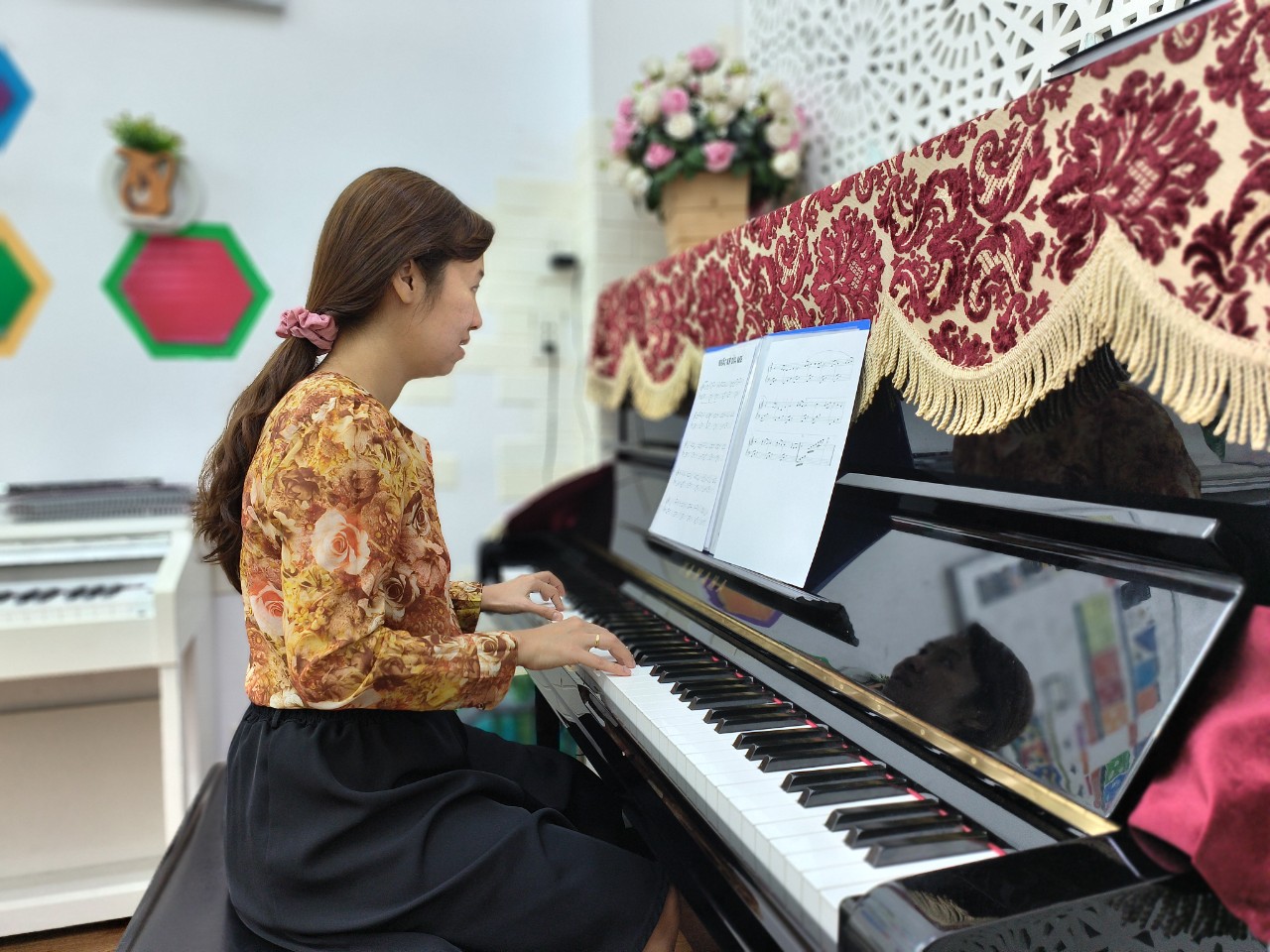
Choosing the Right Path: Self-Study vs. Private Piano Lessons in New York City
Adult learners must evaluate independent self-study against personalized private instruction based on their personal schedule, musical goals, and budget. Both learning pathways offer distinct advantages for returning players.
Challenges of Relearning Alone
Self-directed learning provides scheduling flexibility but presents technical pitfalls for returning pianists. Without experienced observation, subtle biomechanical inefficiencies and incorrect fingering choices develop into entrenched habits that impede advancement.
Repertoire selection proves challenging for solo learners. Adults frequently choose overly complex pieces that cause physical tension and frustration, or overly simplistic method exercises that stifle artistic growth.
Independent motivation often wanes during inevitable technical plateaus. Navigating difficult polyrhythms or hand independence challenges without expert troubleshooting frequently leads to abandonment.
Why Hiring a Teacher Accelerates Progress
Professional piano instruction provides structured guidance, technical precision, and accountability that self-study cannot replicate. Experienced educators diagnose physical tension, explain complex theoretical concepts, and design efficient technical exercises tailored to your anatomy.
Customized lesson planning adapts to your unique learning style and musical ambitions. Whether you prefer classical counterpoint, jazz harmony, or contemporary accompaniment, an experienced mentor structures repertoire around your specific interests.
Real-time feedback eliminates technical errors before they become permanent motor habits. Immediate diagnostic corrections of wrist elevation, fingering choices, and rhythmic accuracy save months of remedial practice.
Professional mentors expand your musical repertoire and historical perspective. Instructors introduce expressive nuances, pedagogical etudes, and stylistic traditions that enhance your musical understanding.
Experience Personalized Growth with PrivatePianoLessons
PrivatePianoLessons provides premier 1-on-1 in-home piano instruction across New York City, tailored specifically for adult learners and busy professionals. Our faculty of 48 degreed instructors—100% holding a Bachelor of Music or higher and fully background-checked—delivers customized lessons directly to your apartment on your schedule, 7 days a week, from 07:00 to 21:00 with zero travel fees.
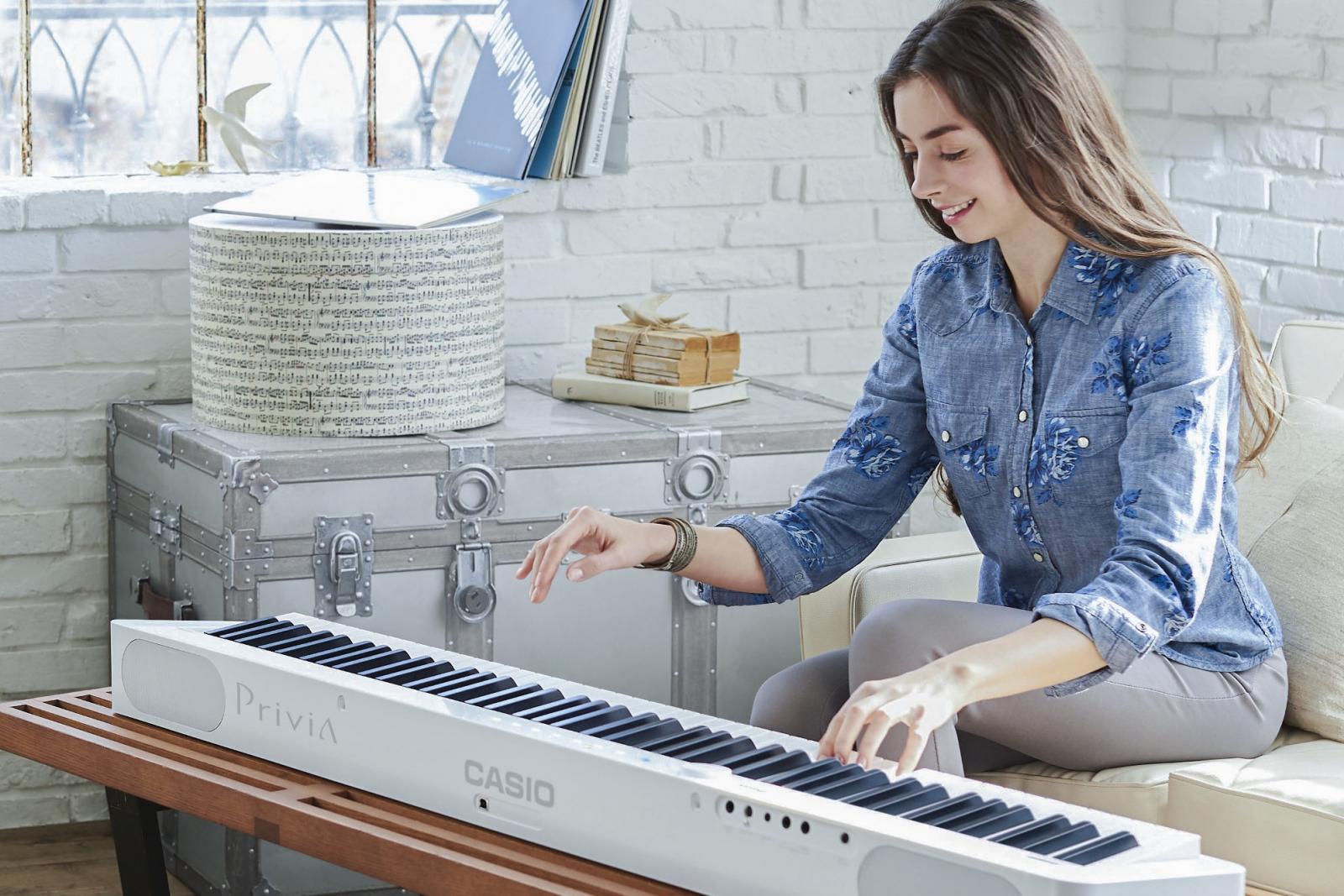
Common Do’s and Don’ts When Returning to the Piano
Returning adult pianists should adopt mindful practice habits while avoiding common physical and psychological traps. Understanding these key guidelines protects against physical strain and promotes consistent artistic development.
-
Don’t Get Too Big for Your Britches
Unrealistic performance expectations frequently undermine adult piano progress. Remembering advanced pieces played in youth often tempts returning players to tackle virtuosic literature immediately, leading to technical frustration.
Resuming study several levels below your previous skill level protects technical foundations. Finger tendons require gradual conditioning, sight-reading skills need refreshing, and tactile familiarity must rebuild systematically.
Avoid comparing current technique with nostalgic recollections of childhood facility. Developing piano technique requires patience, structured repetition, and steady physical adaptation.
Focus on incremental daily progress rather than distant milestones. Celebrate measurable achievements, such as mastering a clean two-hand transition, executing a smooth arpeggio, or sight-reading a lead sheet accurately.
-
Pay Attention to Any Pain or Tension
Physical pain signals biomechanical strain that requires immediate technical correction. Ignoring bodily warning signs risks repetitive strain injuries, including tendonitis and carpal tunnel syndrome.
Distinguish between healthy muscular fatigue and sharp physical pain:
- Muscular fatigue feels like mild, dull tiredness that subsides after rest.
- Physical pain presents as sharp, burning, or shooting discomfort in the wrists, forearms, or tendons.
Stop playing immediately if you experience sharp or burning physical discomfort. Rest your hands and evaluate your bench height, wrist flexibility, and finger tension before resuming practice.
Optimize ergonomic conditions in your practice space. Ensure proper ambient lighting, comfortable room temperature (20–22°C / 68–72°F), and an adjustable bench to maintain relaxed biomechanics.
-
Do Focus on Enjoyment and Fun
Piano practice should serve as an inspiring creative outlet rather than an additional source of daily stress. Cultivating personal enjoyment ensures sustainable long-term engagement at the instrument.
Select repertoire that genuinely excites your artistic sensibilities. Dedicate your practice time to compositions you love, whether classical nocturnes, jazz ballads, film themes, or popular arrangements.
Explore diverse musical genres to build musical versatility. Mature students possess the intellectual depth to appreciate diverse harmonic traditions, preventing boredom and expanding musicianship.
Share your music with family and friends when you feel confident. Playing music for supportive listeners enriches your practice routine and provides meaningful performance goals.
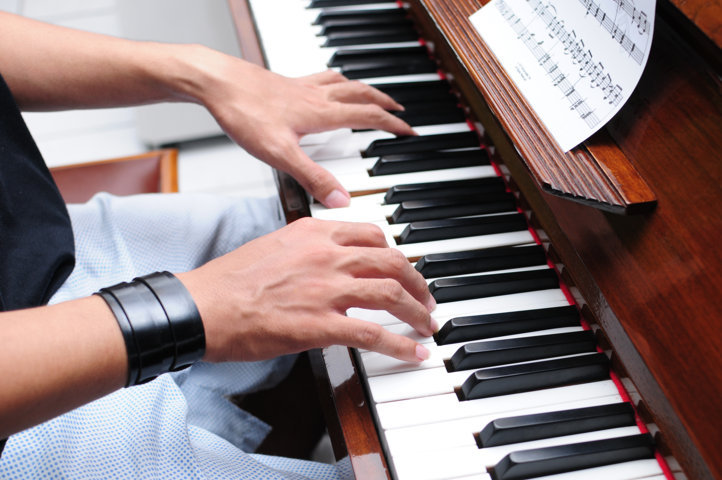
Selecting the Right Instrument for Your New York City Apartment
Choosing the ideal keyboard instrument requires balancing authentic acoustic response with practical urban living considerations. New York City apartments present unique spatial, acoustic, and financial realities that influence instrument selection.
Acoustic Pianos vs. Weighted Keyboards
Acoustic pianos provide unmatched natural resonance, harmonic overtone richness, and authentic mechanical escapement feedback. However, space constraints and shared walls often make acoustic grand or upright pianos challenging in New York City apartments.
Upright pianos require substantial floor space and regular maintenance, while grand pianos exceed the spatial capacity of most apartment floor plans. Furthermore, acoustic pianos produce acoustic volume that can disturb adjacent neighbors in high-density residential buildings, especially during early morning or late evening practice.
High-end digital pianos and 88-key weighted keyboards provide practical, high-performance alternatives for apartment residents:
- Fully weighted hammer-action keys simulate the physical resistance and inertia of traditional acoustic piano actions.
- Headphone outputs and volume dials allow unrestricted, silent practice at any hour without neighbor disturbances.
- Compact footprints fit comfortably into compact Manhattan, Brooklyn, or Queens apartment living rooms.
- Digital instruments maintain pitch stability indefinitely, eliminating recurring tuning costs and environmental humidity concerns.
What Piano Should You Get as a Returning Player?
Returning adult pianists should choose an instrument that supports proper finger mechanics and expressive dynamic range. Investing in adequate keyboard specifications protects technique and facilitates seamless transitions to acoustic instruments.
Select an 88-key digital piano featuring fully weighted hammer action as an absolute minimum standard. Non-weighted or semi-weighted portable keyboards lack physical resistance, encouraging shallow finger stroke habits that impede expressive control.
Evaluate dynamic touch sensitivity and polyphony specifications carefully. Choose instruments with high touch-sensitivity settings and minimum 128-note polyphony to ensure complex pedal passages ring clearly without dropped notes.
Budget for instrument quality from reputable manufacturers such as Yamaha, Roland, Kawai, or Casio. A high-grade digital piano provides a satisfying tactile touch, authentic acoustic samples, and long-term durability for returning players.
Start Your Relearning Journey with PrivatePianoLessons Today
Relearning piano enriches your daily life with creativity, focus, and cognitive vitality. PrivatePianoLessons delivers premier, 1-on-1 in-home private piano lessons tailored specifically for adult learners across New York City.
Our vetted faculty of 48 professional educators—100% holding music degrees and rigorously background-checked—travels directly to your home in Manhattan, Brooklyn, Queens, The Bronx, and Staten Island with zero travel fees. Whether you want to master classical masterworks, explore jazz improvisation, or connect with a dedicated private piano teacher Staten Island residents rely on, we tailor every lesson to your personal goals and schedule.
Schedule your free 30-minute in-home assessment today. Call +1 (917) 903-2146 or visit privatepianonyc.com to start your musical journey on your own piano.
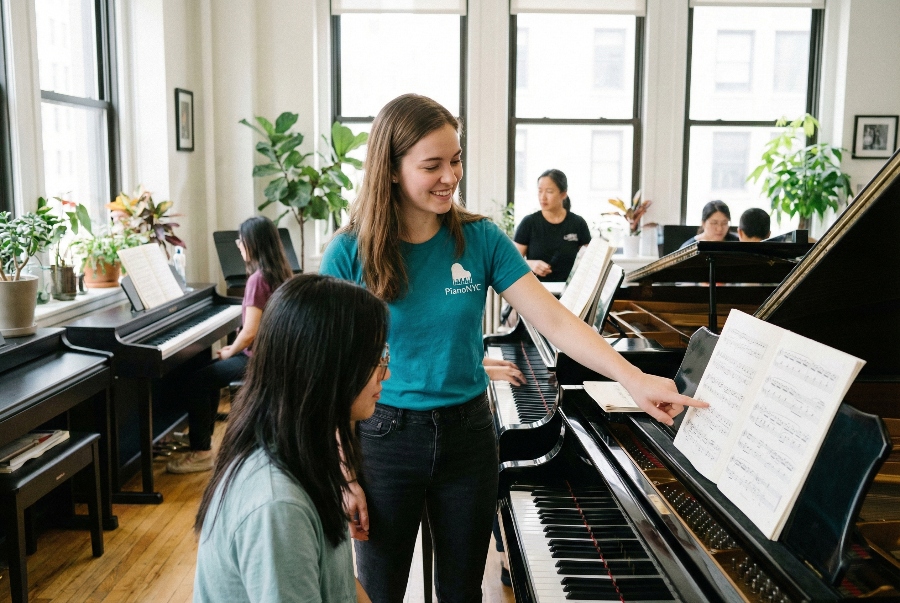
Frequently Asked Questions About Relearning Piano as an Adult (FAQs)
The following questions are frequently asked by adult learners returning to piano and answered by the expert instructional faculty at PrivatePianoLessons:
Is It Too Late to Relearn Piano as an Adult?
No, it is never too late to relearn piano as an adult. Mature students often learn faster than children due to focused discipline, conceptual comprehension, and clear artistic goals. Procedural motor memory from past lessons remains intact and reactivates within months of deliberate practice. Furthermore, scientific research confirms that musical training stimulates neuroplasticity and enhances cognitive vitality at any stage of life.
What Are the Benefits of Hiring a Private Piano Teacher?
Hiring a private piano teacher provides structured accountability, personalized curriculum, and real-time biomechanical correction. An expert instructor immediately identifies posture and finger tension issues, preventing repetitive strain injuries and bad physical habits. Private mentors design customized repertoire suited to your musical goals, troubleshoot challenging passages efficiently, and dramatically accelerate learning compared to solitary self-study.
Should You Choose an Acoustic Piano or a Weighted Keyboard for an NYC Apartment?
An 88-key weighted digital piano is generally the most practical choice for a New York City apartment. While acoustic pianos provide unmatched tactile resonance, 88-key weighted hammer-action digital pianos replicate acoustic action accurately while offering volume control and headphone jacks for quiet apartment living. Digital pianos also require less floor space, eliminate seasonal tuning costs, and fit easily into high-density urban residences.
PrivatePianoLessons
817 W End Ave, New York, NY 10025, USA
Phone: +1 (917) 903-2146
Email: [email protected]
Website: https://privatepianonyc.com
Hours: 07:00 – 21:00, Monday – Sunday
