

Piano dexterity develops through disciplined practice routines, physiological awareness, and targeted biomechanical exercises. Adult learners frequently encounter unique hurdles when training finger independence, yet consistent practice develops remarkable finger coordination, fluency, and keyboard control. This technical guide outlines systematic methods to condition the hands, isolate individual digits, and accelerate the musical progress of any private piano student.
Why Finger Dexterity Matters for Adult Students
Finger dexterity matters for adult students because fine motor independence governs keyboard navigation, rhythmic precision, and expressive dynamic control. Adult hands often retain muscular stiffness from years of non-musical fine motor tasks, such as typing or writing. Targeted dexterity training releases involuntary tension, enabling each digit to strike and release keys with deliberate speed and agility.
Dexterity allows a pianist to articulate independent polyphonic voices simultaneously. The left hand sustains steady bass lines or accompaniment textures, while the right hand articulates intricate melodic contours. Adults who build independent finger strength execute advanced musical repertoire with confidence, ranging from classical inventions to easy jazz standards to learn.
Neurological research shows that systematic keyboard drills stimulate adult neuroplasticity. Daily finger isolation practice creates neural connections between the motor cortex and the hands, enhancing overall manual coordination and cognitive focus.
Essential Piano Exercises to Build Dexterity, Coordination, Control
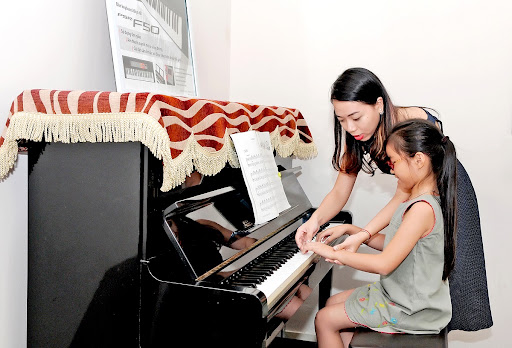
Systematic piano exercises build finger dexterity, coordination, and control across all ten digits through repetitive biomechanical conditioning. Daily execution of targeted physical patterns establishes neuromuscular coordination, finger independence, and balanced key velocity within three to six weeks of disciplined practice.
The Five Finger Scale, Finger Drills
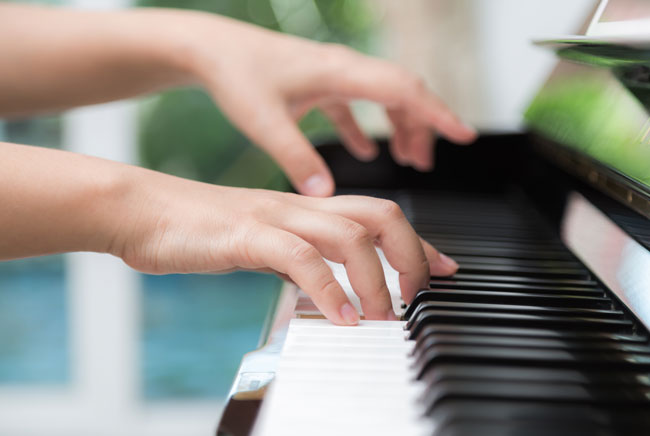
The five-finger scale establishes foundational hand shape and digit independence across adjacent piano keys. While visual applications such as piano learning games help illustrate foundational note patterns, tactile acoustic drills build lasting muscle memory. Position your right hand over C4-D4-E4-F4-G4, assigning one finger to each key with curved knuckles and a supple wrist.
Execute this five-finger pattern at various metronome markings, beginning at 60 beats per minute (bpm) and accelerating systematically to 120 bpm:
- Play ascending patterns (1-2-3-4-5) with even tone across all fingers.
- Play descending patterns (5-4-3-2-1) maintaining stable knuckle joints.
- Play alternating interval patterns (1-3-2-4-3-5-4-2-1) to isolate adjacent finger pairs.
Finger isolation drills reinforce individual finger strength. Depress and hold keys 1, 3, and 5 while repeatedly lifting and striking key 2. Repeat this drill with various finger combinations, dedicating extra practice to the fourth and fifth digits.
The Contrary Motion Scale for Coordination
Contrary motion scales develop bilateral coordination by engaging symmetrical hand patterns that mirror each other across the keyboard. Place both thumbs on middle C (C4). The right hand ascends (C-D-E-F-G-A-B-C) while the left hand descends (C-B-A-G-F-E-D-C) simultaneously using identical finger numbers (1-2-3-1-2-3-4-5).
Mirror symmetry simplifies neurological processing while training hands to move in opposite directions. Begin at 50 bpm, synchronizing each finger strike and release. Advance from C major to G major, D major, and all twelve keys. This symmetrical biomechanical training functions reliably on an acoustic grand or on an introductory keyboard like the best beginner piano for child learners, as standard keyboard layouts maintain uniform key widths.
Playing Chords: Solid, Broken Claw
Chord exercises cultivate balanced finger strength and controlled weight distribution across multiple keys simultaneously. Form a gentle arch with your hand, keeping wrists level with the keyboard. Depress all three notes of a C major triad (C-E-G) simultaneously with equal velocity to produce a balanced, resonant chord.
Practice triad inversions across the keyboard to adapt finger geometry to different intervals:
- Root position (C-E-G): Engage fingers 1-3-5 in the right hand and 5-3-1 in the left hand.
- First inversion (E-G-C): Engage fingers 1-2-5 in the right hand and 5-3-1 in the left hand.
- Second inversion (G-C-E): Engage fingers 1-2-4 in the right hand and 5-2-1 in the left hand.
Broken chords separate vertical triads into fluid arpeggiated contours. Play C-E-G-C ascending, followed by C-G-E-C descending, connecting each note with a smooth legato touch. Maintain arm weight transfer between keys at 60 to 72 bpm.

Practicing Legato, Staccato Articulation
Legato and staccato articulation exercises develop opposing muscular actions that refine touch, tone quality, and dynamic control. Legato requires continuous weight transfer between fingers without breaks in sound, an essential technique for interpreting the fluid textures of impressionist piano music. Practice five-finger legato runs at 70 bpm, releasing the previous key precisely as the next key sounds.
Staccato articulation requires rapid, spring-like key releases originating from the finger knuckles while maintaining a quiet, stable wrist. Alternate between two bars of legato scales and two bars of staccato scales to train rapid muscle contraction and relaxation.
Addressing Specific Challenges: Weak Ring Finger
Addressing the natural weakness of the fourth finger requires targeted isolation routines designed around hand anatomy. Adult pianists often struggle with the ring finger due to biological structural limitations rather than personal deficiency.
Anatomy of Hand, Fourth Finger
The anatomy of the human hand limits fourth finger independence because the ring finger shares tendons and connective tissue with adjacent digits. While the thumb, index finger, and pinky possess dedicated extensor muscles, the ring finger connects to the common extensor tendon (extensor digitorum) via transverse fibrous bands called juncturae tendinum.
Attempting to force high finger lift on the fourth digit strains the dorsal tendons. Effective technique trains the supporting intrinsic lumbrical and interosseous muscles located between the metacarpal bones. Developing these supporting muscles gives you clean key articulation without requiring unnatural finger elevation.
Exercises to Isolate, Strengthen Ring Finger
Ring finger isolation exercises strengthen local musculature by training the fourth digit to act independently of neighboring fingers. Practice holding fingers 1, 2, 3, and 5 flat on a desk while lifting only finger 4 approximately 2.5 cm (1 inch) upward. Hold for 3 seconds, lower slowly, and repeat 15 times per hand.
At the piano keyboard, play five-finger patterns while applying an accent exclusively to fourth-finger notes. In a standard C-D-E-F-G pattern, play F with deliberate arm weight and a dynamic marking of forte (f), while keeping adjacent notes at piano (p). This contrast builds neural pathways for selective fourth-digit activation.
Helpful Finger Strength Exercises to Do Away from Piano
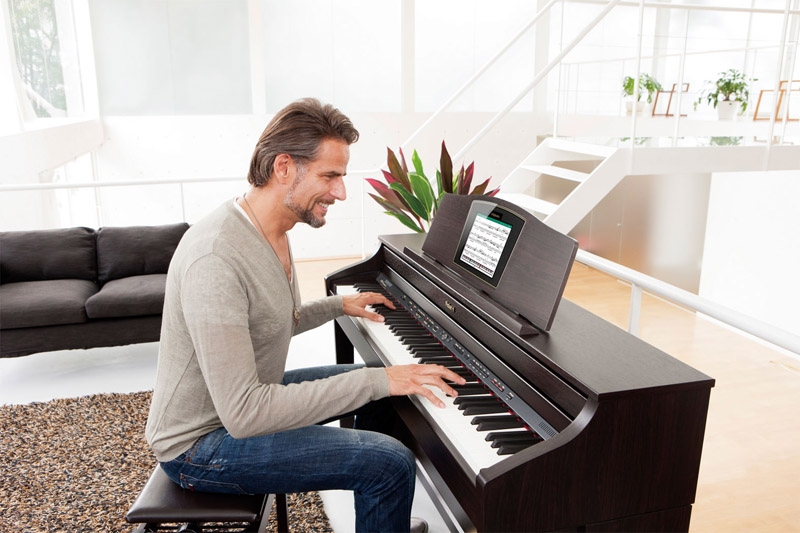
Helpful finger strength exercises away from the piano condition hand muscles, tendons, and ligaments without requiring keyboard access. Performing these conditioning exercises daily prevents repetitive strain injuries and accelerates keyboard dexterity.
Make a Fist, Finger Extension
The fist-and-extension exercise builds grip strength and antagonistic extensor muscle balance throughout the forearm and palm. Squeeze your hand into a firm fist for 5 seconds, and then extend all fingers outward as widely as possible for 5 seconds. Perform 10 consecutive cycles.
Finger extension stretches counteract the tight flexor contractions developed during long practice sessions. Spread all five digits wide on a tabletop, hold the passive stretch for 15 seconds, and release. You can incorporate variable resistance using therapy putty or a silicone grip ball to build endurance.
Finger Lifting, Thumb Strengthening
Individual finger lifting and thumb strengthening drills improve digit autonomy, opposition range, and joint mobility. Place your palm flat on a firm surface, keeping all knuckles level. Lift each finger individually 10 to 20 times while keeping the remaining digits relaxed against the surface.
Thumb opposition drills reinforce the primary pivot digit used in scale playing:
- Touch the tip of your thumb to the tip of your index finger, hold for 3 seconds, and release.
- Repeat the touch against your middle finger, ring finger, and pinky finger sequentially.
- Slide your thumb across the palm toward the base of the pinky to stretch the abductor pollicis muscles.
Perform 10 full opposition cycles per hand to facilitate smooth thumb-under transitions in two-octave scales.
Wrist Extension, Flexibility
Wrist extension and flexibility stretches release forearm tension, preserve tendon gliding mobility, and protect against repetitive strain injuries. Extend your right arm straight with your palm facing down. Use your left hand to pull the right fingers gently upward for 15 seconds, then downward for 15 seconds.
Execute circular wrist rotations to maintain synovial fluid circulation within the carpal joint. Perform 5 slow clockwise rotations followed by 5 counter-clockwise rotations per wrist. Follow these rotations with tendon-gliding movements, curling your fingers from an open hand into a hook fist, a flat fist, and a full fist.
Tips for Consistent Practice, Technique Improvement
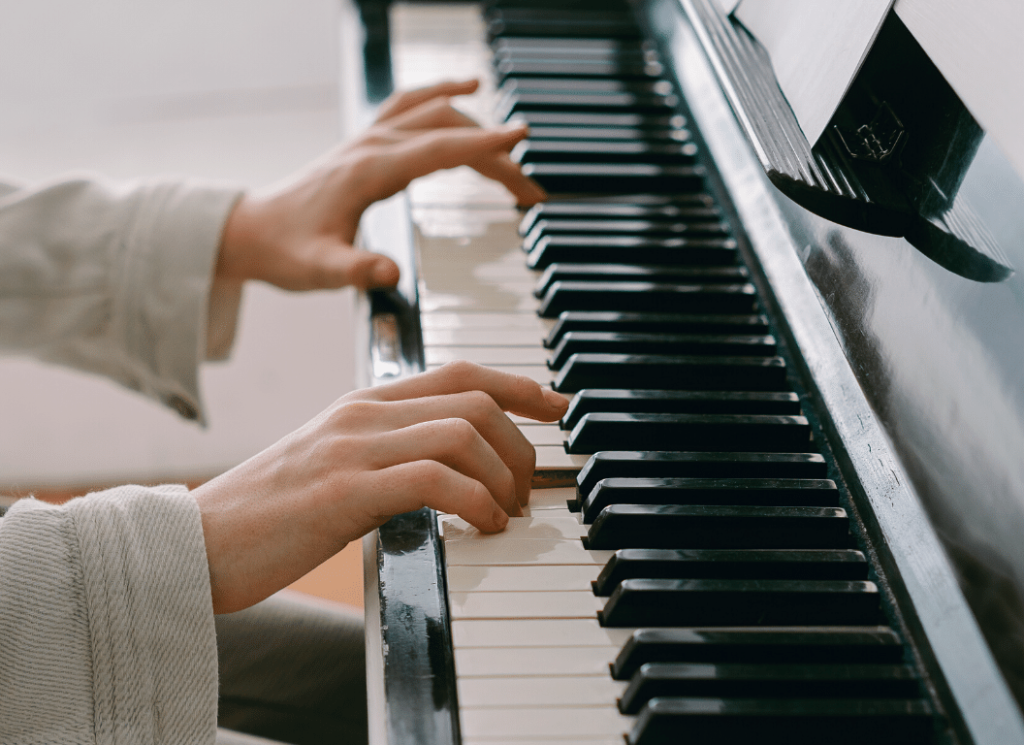
Consistent technique improvement requires deliberate practice habits, biomechanical relaxation, and progressive tempo management. Focused short-duration practice delivers superior technical retention compared to lengthy, unfocused repetitions.
The Importance of Relaxation, Posture
Proper posture and physical relaxation establish the physiological foundation for fluid, fatigue-free piano dexterity. Sit tall on the front half of the piano bench with your feet planted flat on the floor for stability. Adjust the bench height so your forearms rest parallel to the floor, establishing a straight alignment from your elbow through your wrist to your knuckles at approximately 48 to 51 cm (19 to 20 inches) above the floor.
Tension restricts blood flow and impedes fine motor control. Check your shoulders, neck, and forearms every 10 minutes to release involuntary tightness. Coordinate diaphragmatic breathing with musical phrases, inhaling before musical entries and exhaling during technical passages.
How Slow Practice Leads to Faster Dexterity
Slow practice leads to faster dexterity by engraving clean neural pathways and precise motor memory before adding tempo demands. Rushing through technical passages forces your central nervous system to compensate with tension and erratic rhythms.
Practice technical exercises with a metronome set to 60 bpm, focusing on rhythmic evenness and relaxed tone. Increase the metronome by 4 to 6 bpm only after executing an exercise perfectly three times consecutively. This disciplined tempo progression builds lasting technical fluency that withstands performance pressure.
How PrivatePianoLessons in New York City Accelerates a student’s Progress
PrivatePianoLessons accelerates adult piano progress by delivering tailored one-on-one in-home instruction directly to your living room in New York City. Coordinated from 817 W End Ave in Manhattan’s Upper West Side, our faculty travels directly to your home across all five boroughs—Manhattan, Brooklyn, Queens, The Bronx, and Staten Island—with 0 USD travel fees.
Every instructor holds a degree in music, providing real-time feedback on hand shape, knuckle alignment, and arm weight to eliminate tension before bad habits form. Following our proven 8-level curriculum benchmarked against RCM and ABRSM standards, we tailor exercise regimens to your individual physical needs on your own acoustic or weighted digital piano. Whether you seek customized adult guidance in Manhattan or convenient in-home piano lessons Staten Island residents trust, our personalized in-home approach ensures measurable technical growth at your own pace.
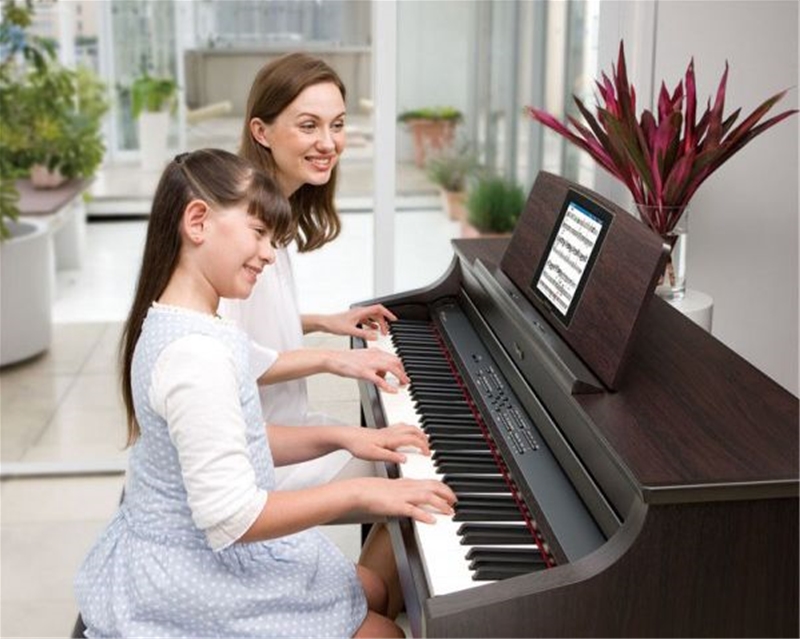
Frequently Asked Questions (FAQs) about Piano Dexterity
What is the most effective practice strategy for piano dexterity?
The most effective practice strategy for piano dexterity is short, daily focused sessions of 20 to 30 minutes emphasizing slow repetitions with a metronome. Prioritizing technical precision, loose wrists, and consistent articulation builds reliable neuromuscular pathways far more efficiently than infrequent, lengthy practice marathons.
How can a pianist maintain motivation during plateaus?
A pianist maintains motivation during plateaus by recording weekly practice sessions, tracking measurable metronome milestones, and alternating technical drills with expressive repertoire. Objective audio recordings document subtle advancements in tone evenness and finger control that may feel imperceptible during daily practice routines.
Why is patience and persistence necessary for developing piano technique?
Patience and persistence are necessary for developing piano technique because neuromuscular coordination, tendon adaptation, and digit independence require months of repetitive physiological conditioning. Biological remodeling of finger motor pathways occurs gradually, rewarding consistent, low-tension daily practice with lasting technical freedom and musical fluency.
