
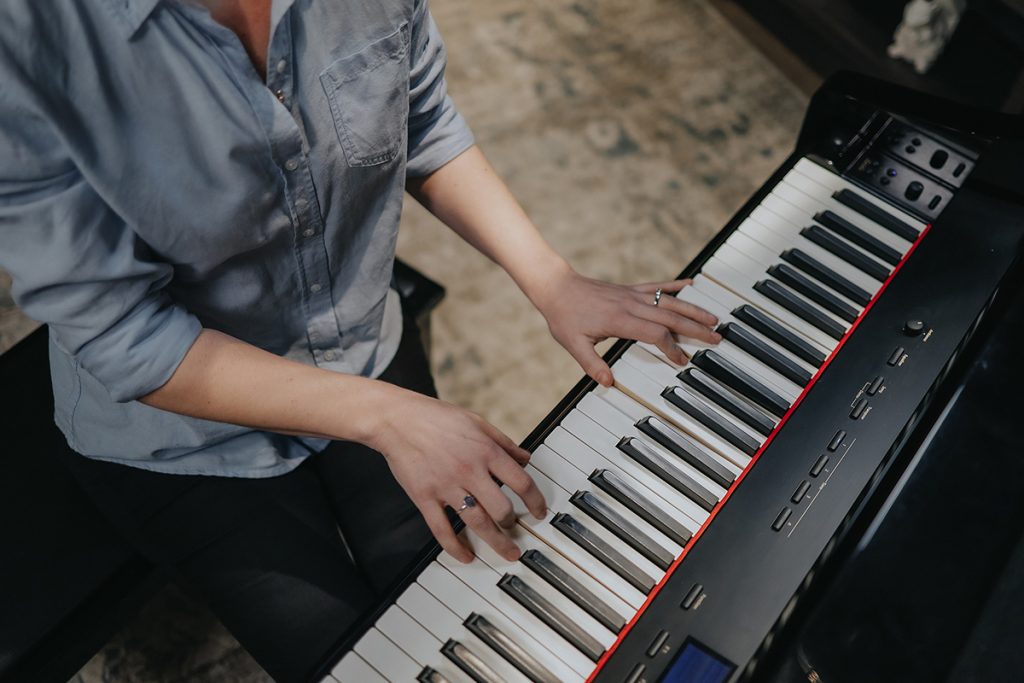
Learning piano as an adult presents distinct cognitive, emotional, and creative advantages rather than limitations. Adult piano students in New York City consistently achieve measurable musical milestones through structured home practice and professional instruction from private piano teachers NYC.
Is It Ever Too Late to Learn Piano?
There’s No Such Thing as “Too Old to Learn The Keyboard”
Adults retain significant neurological capacity to master complex motor skills and musical notation at any stage of life. Musical neuroplasticity research confirms that the adult brain continuously creates new neural pathways through regular keyboard practice. Professional instructors at PrivatePianoLessons guide adult students ranging from age 18 to over 85 through structured foundational training. For older learners, studying classical repertoire and exploring music appreciation for seniors stimulates cognitive vitality, memory retention, and mental acuity.
Adult piano students possess distinct cognitive advantages over younger learners:
- Superior analytical capacity for understanding music theory, chord construction, and harmonic relationships.
- Sustained attention spans that enable focused, efficient practice sessions of 30 to 60 minutes.
- Refined fine motor control developed through decades of professional and daily manual activities.
A piano teacher’s honest opinion on adults learning the art form
Adult music instruction succeeds through customized pedagogical methods that leverage mature analytical reasoning. Experienced piano educators recognize that adult learners grasp harmonic relationships, rhythmic subdivisions, and expressive musical interpretation substantially faster than children.
Adult students typically master foundational keyboard literacy within 3 to 6 months, whereas children often require 8 to 12 months for equivalent skill development. This accelerated progress reflects mature students’ ability to connect musical structures with existing conceptual knowledge. Furthermore, adult learners demonstrate superior lesson attendance rates, intrinsic motivation, and consistent weekly practice discipline.
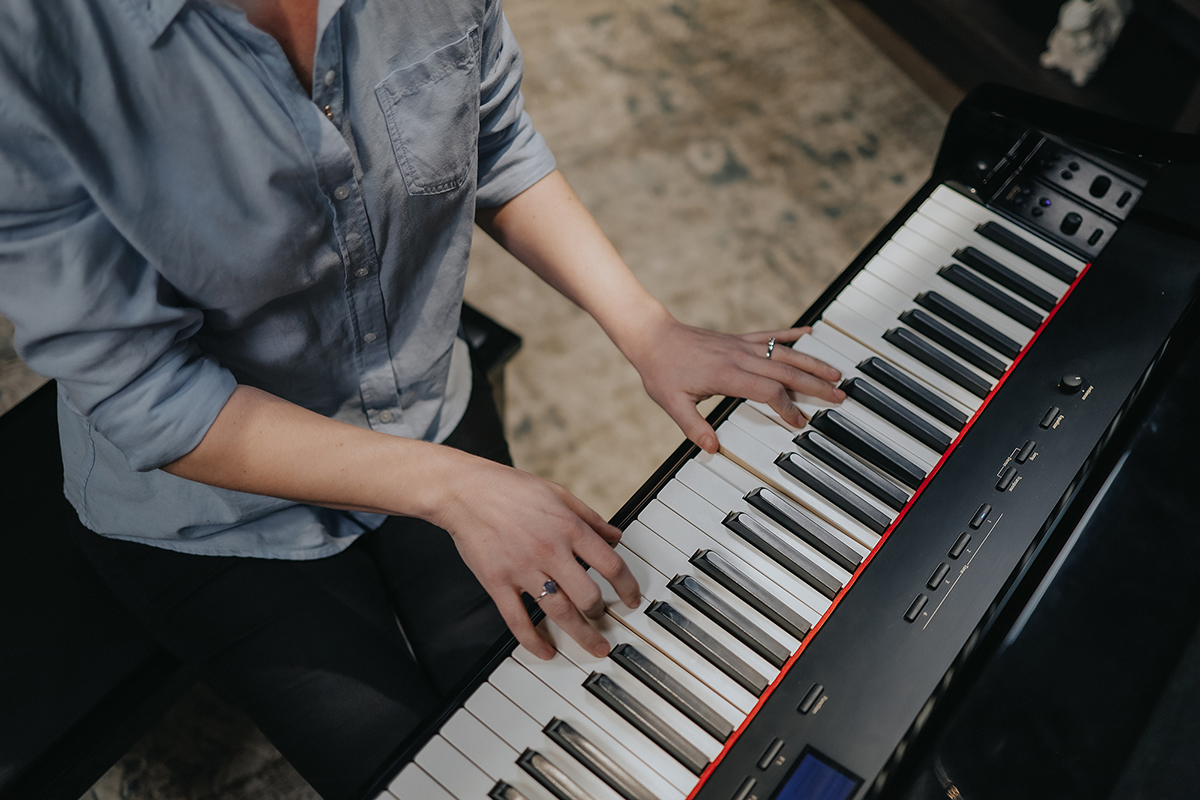
Why it’s easier to learn piano as an adult
Greater desire to learn along with discipline
Adult piano students progress rapidly because intrinsic motivation drives their musical education. Self-directed adult learners choose piano lessons out of genuine personal desire rather than external expectations, fostering dedicated practice routines of 30 to 45 minutes daily that accelerate technical mastery.
Understanding of preferences for learning
Mature students possess clear metacognitive awareness of their personal learning modalities and sensory strengths. Adult music students readily articulate their primary learning preferences:
- Visual learning through sheet music, chord charts, and structural score analysis.
- Auditory learning through active listening, ear training, and interval recognition.
- Kinesthetic learning through tactile keyboard exploration, physical repetition, and muscle memory development.
This self-awareness allows private instructors to tailor pedagogical methodologies, such as contrasting Suzuki vs traditional piano approaches, ensuring maximum efficiency.
Quicker grasp of intellectual along with emotional concepts
Adult brains process abstract musical frameworks and emotional narratives with sophisticated depth. Mature students comprehend advanced theoretical constructs from their earliest lessons:
- Complex chord structures, voice leading, and functional harmonic progressions.
- Artistic phrasing, dynamic shading, and expressive interpretation across diverse musical styles.
- Advanced rhythmic configurations, including syncopation, compound meters, and polyrhythms.
Adult instruction focuses on these analytical capabilities, connecting performance technique with historical appreciation, such as exploring Steinway piano history, to accelerate intermediate repertoire development.
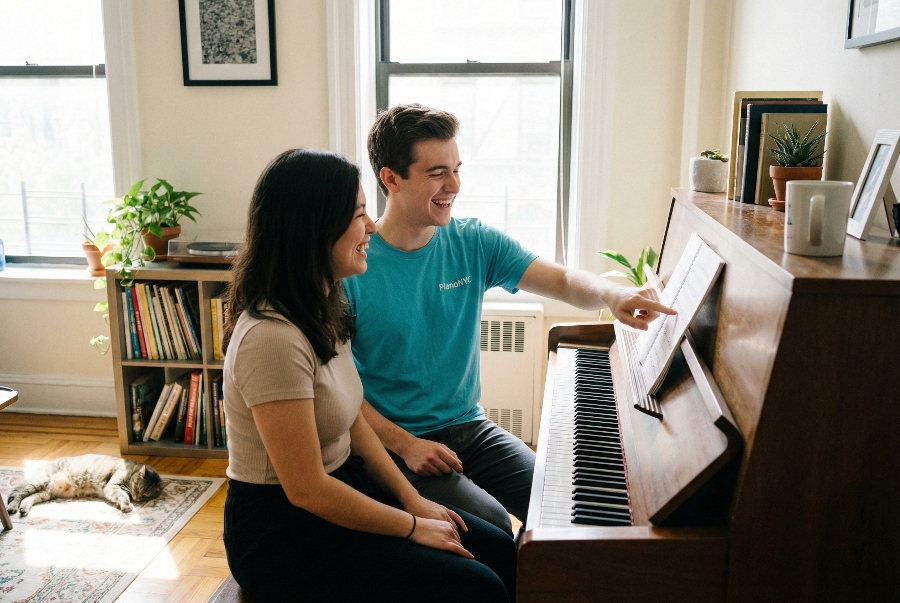
More peer-like relationship with teachers at PrivatePianoLessons
Private piano lessons for adults establish a collaborative, professional partnership between student and educator. PrivatePianoLessons pairs adult learners with degreed faculty members—100% holding Bachelor of Music degrees or higher, with 19 holding Master’s or Doctorates—who treat mature students as musical colleagues. Teachers tailor lesson pacing, design custom practice regimens for busy work schedules, and select repertoire aligned with personal artistic aspirations.
Common obstacles to overcome as a mature keyboard student
Fear of inadequacy and unreasonable expectations
Self-doubt and unrealistic progress expectations represent the primary psychological hurdle for adult beginners. Adult students often evaluate their initial playing against professional recordings or childhood memories. Professional educators dismantle these self-imposed barriers by:
- Establishing structured 3-month, 6-month, and 12-month progress milestones.
- Emphasizing individual technical progression over competitive comparison.
- Reinforcing fundamental physical breakthroughs, proper posture, and expressive phrasing.
Managing busier schedules as well as responsibilities
Adult learners overcome demanding professional and family schedules by establishing targeted, flexible practice habits. Effective scheduling strategies include:
- Focused morning practice blocks of 20 to 30 minutes before professional obligations begin.
- Weekend deep-focus practice sessions of 45 to 60 minutes dedicated to repertoire interpretation.
- Targeted 15-minute evening review sessions reinforcing finger independence and technical exercises.
PrivatePianoLessons eliminates commuting friction entirely by delivering one-on-one instruction directly to students’ homes across New York City from 07:00 to 21:00 daily.
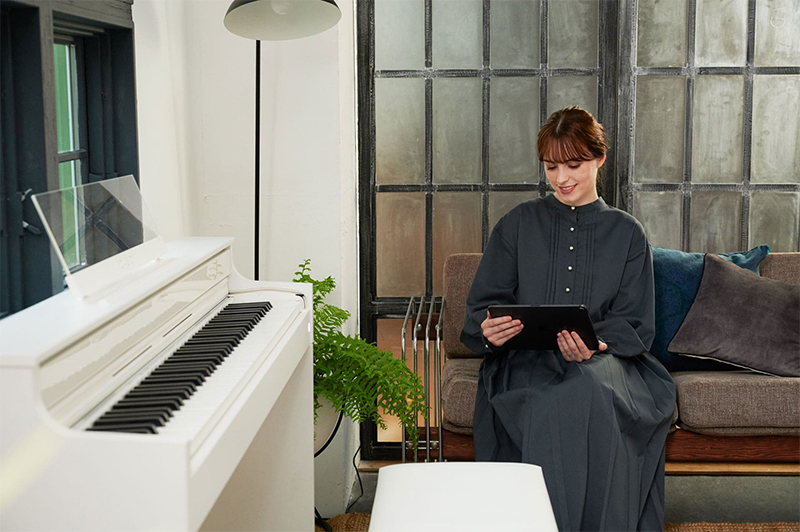
Physical challenges like fully-grown hands
Adult hand physiology offers significant mechanical advantages alongside specific physical constraints. Mature hands possess distinct structural traits that influence keyboard execution:
- Expanded hand span facilitating octave reaches, wide intervals, and multi-note chord voicings.
- Established finger bone density and hand strength developed through professional work and manual activities.
- Muscular tension or joint stiffness requiring systematic warm-up exercises, wrist relaxation, and ergonomic positioning.
Qualified educators prescribe targeted technical warm-ups and ergonomic biomechanics that protect joints while capitalizing on adult hand span.
How Long Does It Take The Average Person To Learn The Instrument?
Your First Six Months At The Piano
Adult beginners acquire core technical mechanics and fundamental music literacy during the initial 6 months. Through consistent practice of 30 minutes daily, 5 days per week, students achieve:
- Proper hand arch posture, relaxed wrist motion, and individual finger independence.
- Accurate reading of treble clef notation and basic bass clef navigation.
- Elementary rhythmic control in 2/4, 3/4, and 4/4 time signatures.
- Two-hand coordination in five-finger patterns, playing simple classical melodies and popular folk standards.
By The End Of Year One
Twelve months of structured piano instruction yields functional keyboard fluency and foundational performance skills. Dedicated adult students achieve Level 2 competencies, equivalent to RCM Level 1 or ABRSM Grade 1:
- Fluent sight-reading across both treble and bass clefs simultaneously.
- Accurate execution of major and minor scales, two-octave arpeggios, and I–IV–V harmonic cadences.
- Independent two-hand performance of 8 to 12 complete pieces by composers such as Bach, Mozart, and Clementi.
- Chord accompaniment techniques supporting popular melodies and lead sheets.
By The End Of Year Two
Second-year piano students transition into intermediate musicianship and expressive repertoire execution. Reaching Level 3 to 4 on standard conservatory benchmarks enables adult pianists to master:
- Intermediate classical sonatinas, early Romantic character pieces, and Bach two-part inventions.
- Advanced chord inversions, seventh chords, and basic damper pedal mechanics.
- Complex syncopated rhythms, triplet figures, and dynamic nuance across both hands.
- Foundational improvisation frameworks and harmonization of popular lead sheets.
Year Four and Beyond
Four or more years of dedicated study elevates adult pianists to advanced technical and interpretive mastery. Consistent study brings pianists to Level 6 through 8, equivalent to advanced conservatory grades:
- Performance of complete Classical sonata movements, Chopin nocturnes, and Romantic ballades.
- Advanced jazz harmony, rootless voicings, modal improvisation, and swing phrasing.
- Fluent sight-reading of multi-movement sheet music and advanced lead sheets.
- Personalized interpretive expression, tone voicing, and stylistic articulation.
Advanced adult players often refine their artistic ear by listening to master performers at the best jazz clubs NYC features, absorbing nuances of phrasing and live ensemble collaboration.
Steps For Learning The Piano As An Adult
Is it possible to self learn piano?
Self-directed learning provides elementary musical orientation but often creates entrenched technical deficiencies. Adults attempting to learn piano exclusively through mobile apps and video tutorials risk:
- Developing incorrect wrist, arm, and hand biomechanics that induce muscle fatigue or repetitive strain injury.
- Overlooking crucial ear-training, rhythm subdivision, and dynamic articulation skills.
- Practicing inefficiently without structured curriculum milestones or expert diagnostic feedback.
Digital applications offer helpful supplementary tools, but they cannot evaluate tactile keyboard touch, posture, or tonal balance like an experienced private mentor.
The benefit of Private Piano Lessons in New York City regarding progress
Personalized one-on-one instruction accelerates adult skill acquisition through customized pacing and immediate diagnostic guidance. Individual piano lessons provide comprehensive educational advantages:
- Custom lesson architecture tailored to adult career schedules and musical goals.
- Real-time technical corrections that prevent bad habits and promote relaxed physical technique.
- An 8-level curriculum referenced against RCM and ABRSM evaluation standards.
- Written progress evaluations delivered every 12 weeks to benchmark technical milestones.
- Performance opportunities at bi-annual student recitals held in professional Manhattan auditoriums.
PrivatePianoLessons delivers this tailored instruction directly in student homes throughout Manhattan, Brooklyn, Queens, The Bronx, and Staten Island. Headquartered at 817 W End Ave, New York, NY 10025, the academy operates from 07:00 to 21:00 daily with 0 USD travel fees. Whether you reside in Upper Manhattan or seek a dedicated private piano teacher Staten Island, in-home instruction ensures consistent, expert guidance on your personal piano.
So Exactly How Hard Is Learning The Keyboard As An Adult?
Learning the piano as an adult presents manageable, systematic milestones rather than insurmountable technical obstacles. Mature keyboard students report that private piano study offers profound personal benefits:
- Mentally stimulating cognitive enrichment that enhances focus and neural plasticity.
- Physically engaging fine-motor exercise that develops hand flexibility and strength.
- Emotionally restorative creative expression that relieves daily professional stress.
Initial hand-independence coordination challenges resolve within 8 to 12 weeks of structured 30-minute daily practice. As physical muscle memory solidifies, keyboard execution transitions from deliberate cognitive calculation into fluid musical expression. Professional guidance ensures continuous motivation, sustainable technical progression, and lifelong artistic enjoyment.
Câu Hỏi Thường Gặp Về Việc Học Piano Khi Trưởng Thành (FAQ)
Người 18, 20, hoặc 30 tuổi có quá lớn để bắt đầu học piano không?
No, individuals aged 18, 20, or 30 years old are never too old to begin learning the piano. Adults in this demographic possess optimal neuroplasticity, fine motor coordination, and cognitive maturity, enabling rapid technical acquisition and strong retention of music theory concepts.
Mất bao lâu để người trưởng thành học được piano?
Most adults require 6 months of consistent daily practice (30 minutes per day) to play simple songs with both hands. Within 12 months, adult students confidently perform 8 to 12 beginner-level pieces, and by year two, mature learners master intermediate classical sonatinas and contemporary arrangements.
Việc học piano khi trưởng thành có khó không?
Learning piano as an adult is a manageable challenge rather than an insurmountable barrier. Initial hand coordination hurdles typically resolve within 8 to 12 weeks of structured practice, after which technical execution becomes increasingly fluid as muscle memory develops under professional guidance.
