
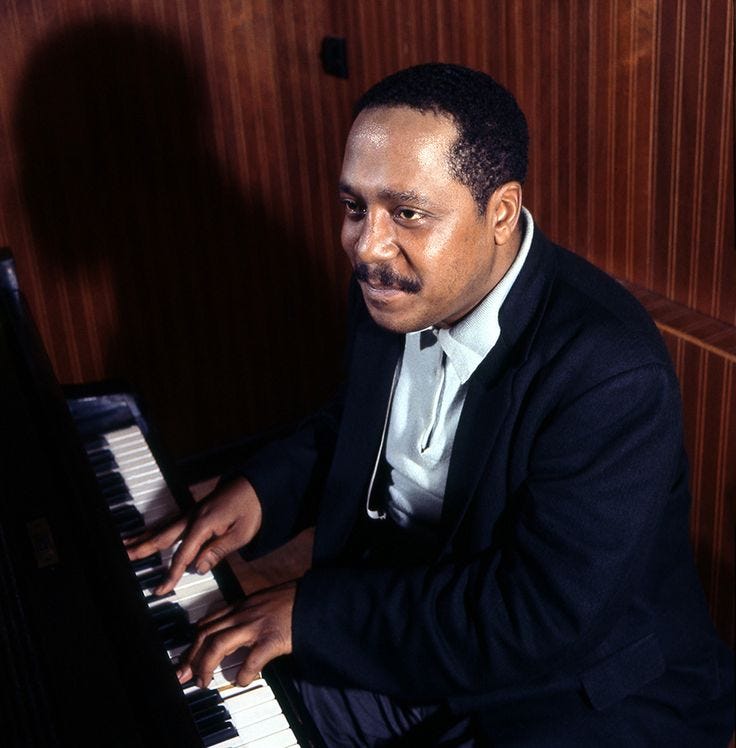
New York City stands as the undisputed capital of jazz piano artistry, where legendary musicians have shaped the genre’s evolution for over a century. Its vibrant musical scene has produced virtuoso pianists whose harmonic innovations and distinctive techniques continue to inspire musicians worldwide. This comprehensive guide explores historical jazz pioneers, contemporary masters, and the best classical music venues NYC offers for live acoustic inspiration.
Legendary Jazz Musicians / Pianists from New York History
Thelonious Monk
Thelonious Sphere Monk (1917–1982) revolutionized modern jazz through his unorthodox harmonic structures and angular melodic sensibilities. Raised in Manhattan’s San Juan Hill neighborhood, Monk honed an idiosyncratic keyboard approach that became central to the birth of bebop and modern jazz piano.
Monk composed essential jazz standards such as "Round Midnight," "Blue Monk," and "Straight, No Chaser." His percussive attack, characterized by minor-second dissonances and abrupt rhythmic displacements, challenged conventional European pianism. Contemporary pianists analyze Monk’s compositions to master spatial economy, metric modulation, and unexpected resolutions.
Beyond theoretical innovation, Monk transformed improvisational architecture. He proved that the acoustic piano can convey deep expressive depth through deliberate note choices and calculated pauses rather than continuous scalar runs.
Bud Powell
Earl Rudolph "Bud" Powell (1924–1966) codified the modern bebop piano vocabulary. Born in Harlem, Powell adapted the virtuosic right-hand horn lines of Charlie Parker and Dizzy Gillespie to the keyboard, moving away from two-handed stride conventions toward modern linear phrasing.
Powell’s technical brilliance paired rapid single-note lines in the right hand with sparse, rootless shell voicings in the left hand. This textural division freed the piano from purely timekeeping duties and allowed room for harmonic substitutions. His seminal Blue Note recordings remain standard study material for jazz improvisation students worldwide.
Modern jazz educators emphasize Powell’s transcriptions to teach rapid linear voice-leading and rhythmic syncopation. His harmonic approach continues to serve as the gateway to advanced modern piano performance.
Herbie Hancock
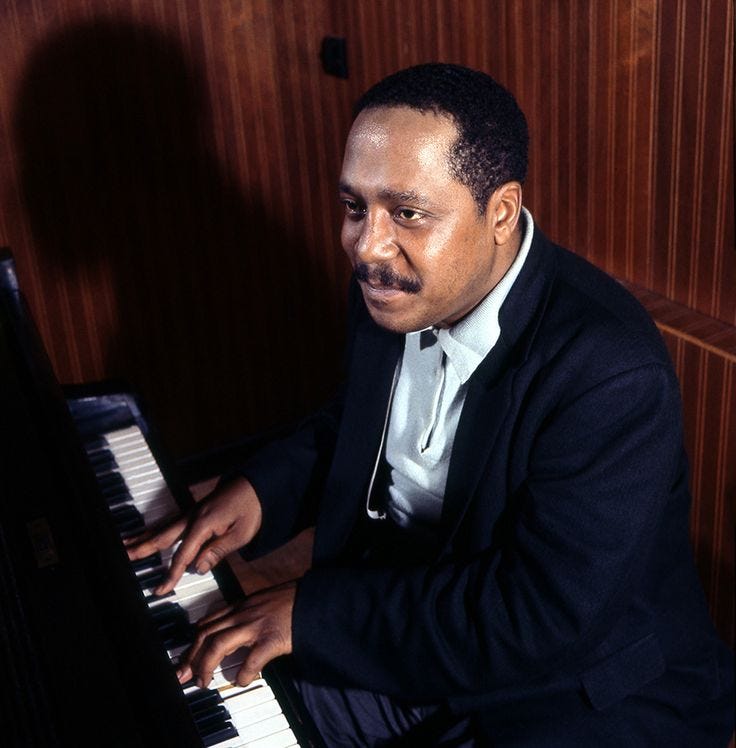
Herbert Jeffrey Hancock (born 1940) represents the bridge between acoustic post-bop mastery and electric jazz-funk exploration. After arriving in New York City in 1960, Hancock joined the Miles Davis Second Great Quintet, where his polytonal comping redefined small-ensemble rhythm sections.
Hancock’s compositions, including "Maiden Voyage," "Cantaloupe Island," and "Watermelon Man," combine modal harmony with memorable melodic hooks. His versatility often resolves the digital vs acoustic piano debate by demonstrating that acoustic pianos and synthesizers both serve vital expressive purposes in modern musicianship.
His groundbreaking 1970s work with the Headhunters introduced synthesizers, vocoders, and clavinet claviers to mainstream audiences. Hancock’s ongoing career illustrates how classical touch, blues foundations, and electronic technology coexist at the highest level of artistry.
Chick Corea
Armando Anthony "Chick" Corea (1941–2021) expanded the technical and stylistic range of jazz piano through his mastery of acoustic and electric mediums. Arriving in New York in the early 1960s, Corea established himself through high-profile collaborations with Stan Getz, Sarah Vaughan, and Miles Davis.
Corea’s compositions blend post-bop sophistication with Latin American rhythmic vitality and Spanish flamenco elements. His groundbreaking band Return to Forever pioneered jazz fusion, while his classic tunes "Spain," "Armando’s Rhumba," and "Windows" became standard jazz repertoire. In solo acoustic settings, his touch showcased classical counterpoint reminiscent of Béla Bartók and Domenico Scarlatti.
Piano students study Corea’s rapid staccato articulation, polyrhythmic independence, and crisp rhythmic phrasing. His educational clinics emphasized disciplined finger mechanics combined with spontaneous group communication.
Keith Jarrett
Keith Jarrett (born 1945) achieved global prominence through completely improvised, unscripted solo piano concerts that bridge classical discipline and jazz improvisation. Following formative New York engagements with Art Blakey’s Jazz Messengers and Miles Davis, Jarrett turned toward total acoustic acoustic expression.
Jarrett’s landmark 1975 release The Köln Concert remains the best-selling solo piano album in history. His approach integrates classical voice-leading, gospel vamps, and folk lyricism into spontaneous multi-movement suites. Jarrett’s steadfast dedication to acoustic grand pianos highlights the instrument’s dynamic subtlety and acoustic resonance.
Contemporary performers study Jarrett’s physical connection to the keyboard, tone production, and emotional authenticity. His ability to maintain unbroken focus on stage offers useful insights for pianists applying stage fright tips piano professionals rely on during live recitals.
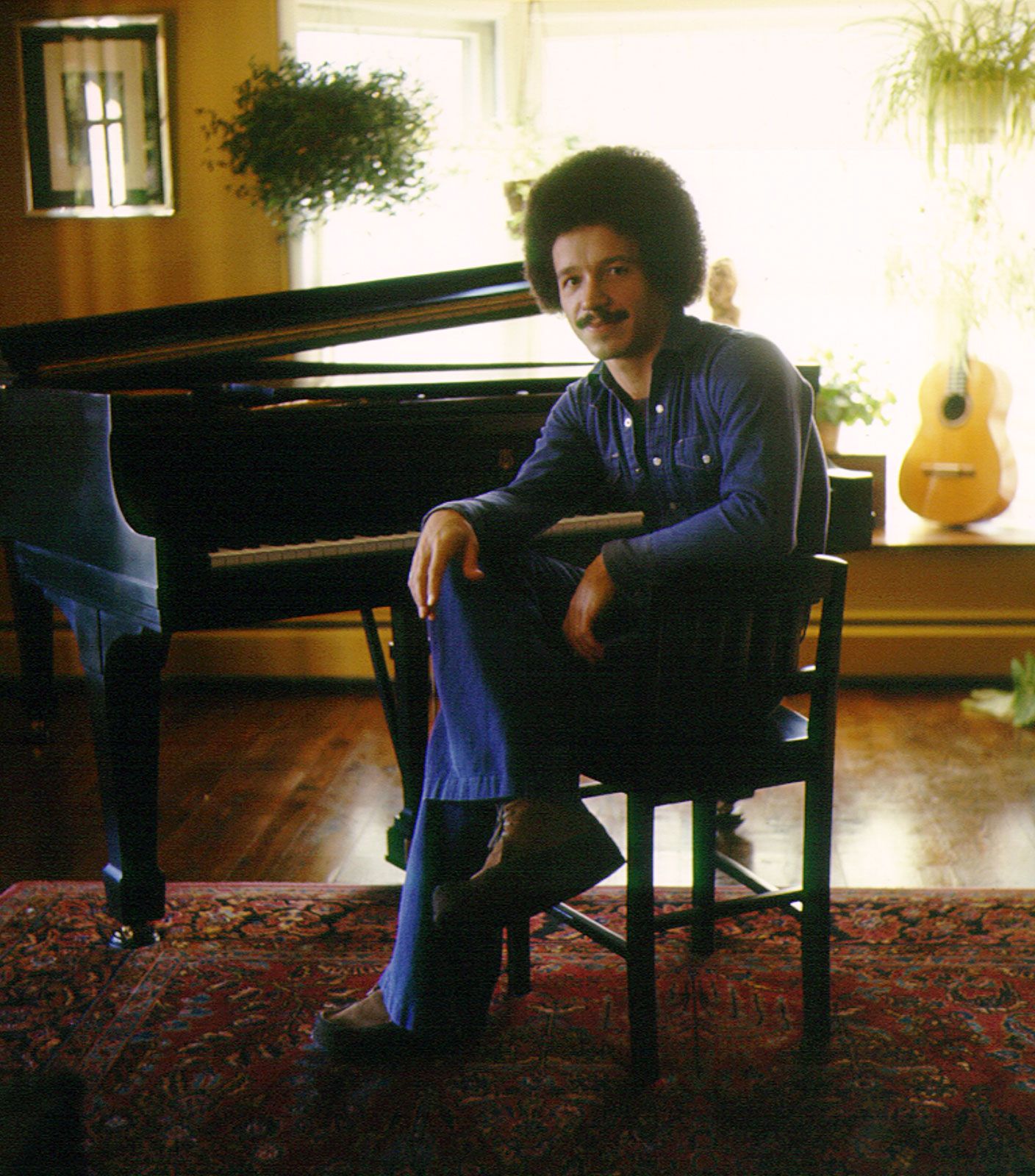
Top Modern Jazz Pianists Active in New York City Today
Brad Mehldau
Brad Mehldau (born 1970) shapes 21st-century jazz piano through his fusion of post-bop traditions, Romantic classical counterpoint, and popular music repertoire. Arriving in New York during the late 1980s to study at The New School, Mehldau developed a personal voice featuring advanced left-hand independence.
His trio recordings showcase intricate metric modulation and sophisticated contrapuntal lines. Mehldau’s imaginative reinterpretations of songs by Radiohead, Nick Drake, and The Beatles prove that jazz harmony can elevate contemporary songwriting into complex harmonic territory. His solo recitals demonstrate fluent polyphonic playing inspired by J.S. Bach and Johannes Brahms.
Aspiring jazz pianists study Mehldau’s finger legato, independent dynamic control between hands, and voice-leading economy. His clinics stress comprehensive ear training, harmonic analysis, and active listening as foundational habits.
Robert Glasper
Robert Glasper (born 1978) leads the contemporary movement connecting modern acoustic jazz with hip-hop, neo-soul, and modern R&B. After moving to New York City to attend The New School, Glasper built a career bridging the historic jazz club circuit with commercial production studios.
His Grammy-winning Black Radio series demonstrates how jazz chord voicings and rhythmic swing enhance contemporary urban music. Glasper’s extensive collaborations with artists like Common, Kendrick Lamar, and Q-Tip show the practical relevance of jazz theory in modern record production, where artists frequently utilize compact digital pianos for streamlined studio arranging.
His acoustic trio work maintains straight-ahead jazz traditions through heavy backbeats, modal vamps, and sophisticated reharmonizations. Glasper has introduced jazz harmony to new generations of listeners worldwide.
Vijay Iyer
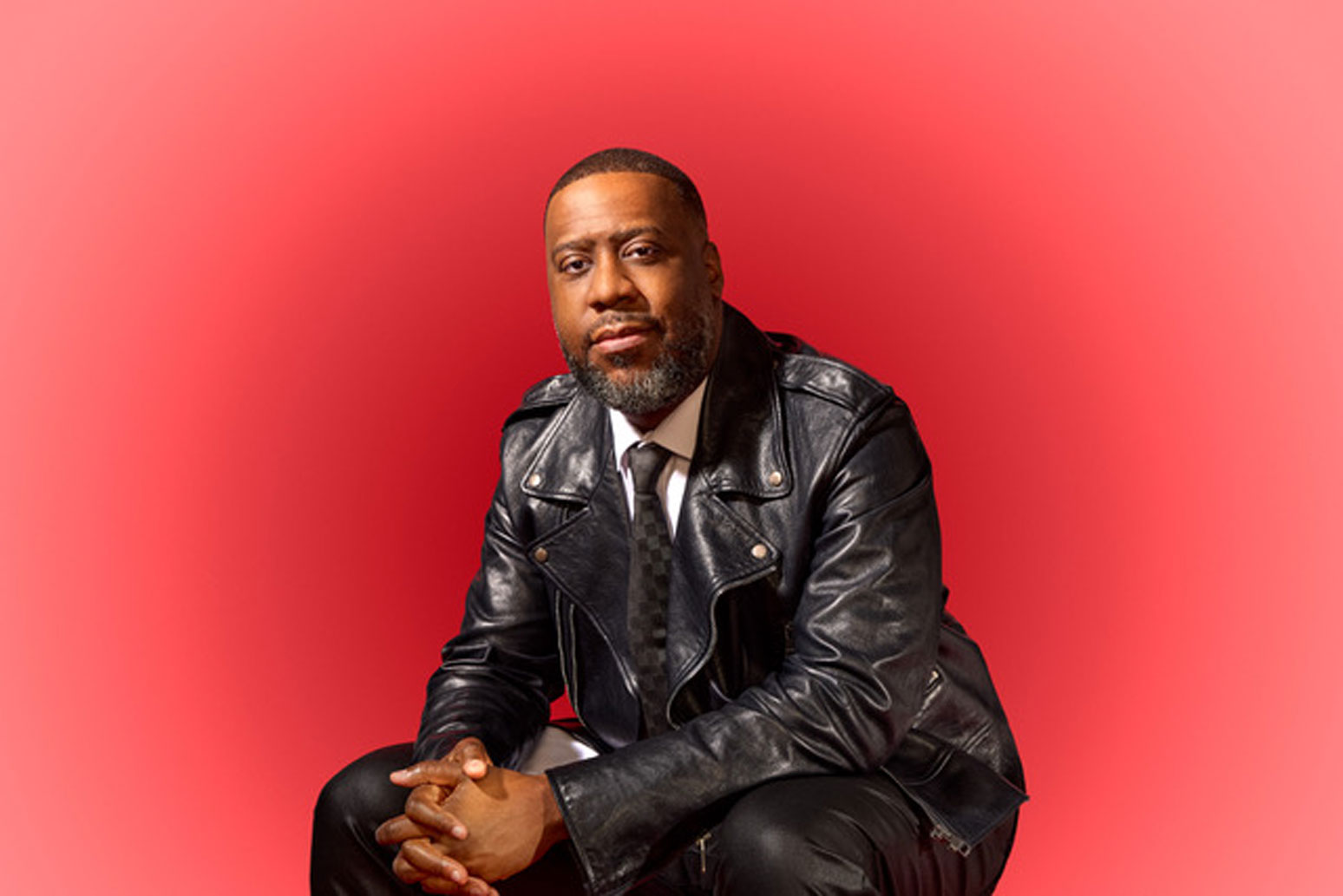
Vijay Iyer (born 1971) brings rigorous academic research and cross-cultural synthesis to contemporary jazz piano. Based in New York and serving as the Franklin D. and Florence Rosenblatt Professor of the Arts at Harvard University, Iyer combines a background in physics and cognitive science with deep study of African, South Asian, and diasporic musical traditions.
Iyer’s trio and orchestral compositions integrate intricate Carnatic rhythmic cycles (talas) with modern jazz improvisation. His playing features asymmetrical grooves, layered micro-rhythms, and polytonal harmonies. Iyer’s academic scholarship in music perception provides clear theoretical frameworks for understanding real-time improvisational decision-making.
Advanced students examine Iyer’s work to understand non-Western rhythmic applications in modern jazz. His compositions demonstrate how cultural traditions expand the expressive boundaries of the piano.
Jason Moran
Jason Moran (born 1975) unites historical African American pianism with contemporary interdisciplinary performance art. A graduate of Manhattan School of Music who studied under jazz luminaries Jaki Byard and Andrew Hill, Moran serves as the Artistic Director for Jazz at The John F. Kennedy Center for the Performing Arts.
Moran’s playing bridges early 20th-century Harlem stride masters like James P. Johnson and Fats Waller with free-form avant-garde exploration. His multimedia projects incorporate visual arts, spoken word, and historical audio samples. Moran’s nuanced footwork illustrates why having piano pedals explained properly allows performers to manipulate acoustic resonance and instrumental color in contemporary settings.
Students study Moran’s touch, dynamic contrasts, and preparation techniques. His performances demonstrate that honoring historic tradition fosters forward-looking artistic expression.
Aaron Parks
Aaron Parks (born 1983) is an influential harmonic voice among modern jazz pianists and composers. After moving to New York City at age 16 to study at Manhattan School of Music, Parks gained early prominence through his work with trumpeter Terence Blanchard before releasing his influential Blue Note debut, Invisible Cinema.
Parks balances accessible cinematic melodies with intricate rhythmic and harmonic development. His compositions blend indie-rock aesthetics, ambient textures, and traditional jazz improvisation, inspiring a generation of modern jazz ensembles.
His active touring schedule, solo recordings, and ensemble projects demonstrate the ongoing vitality of lyrical jazz piano. Students study Parks’s voice-leading choices, subtle pedaling, and spacious melodic phrasing.
Master the New York Jazz Style with PrivatePianoLessons
Specialized Private Piano Lessons at New York City for Jazz Enthusiasts
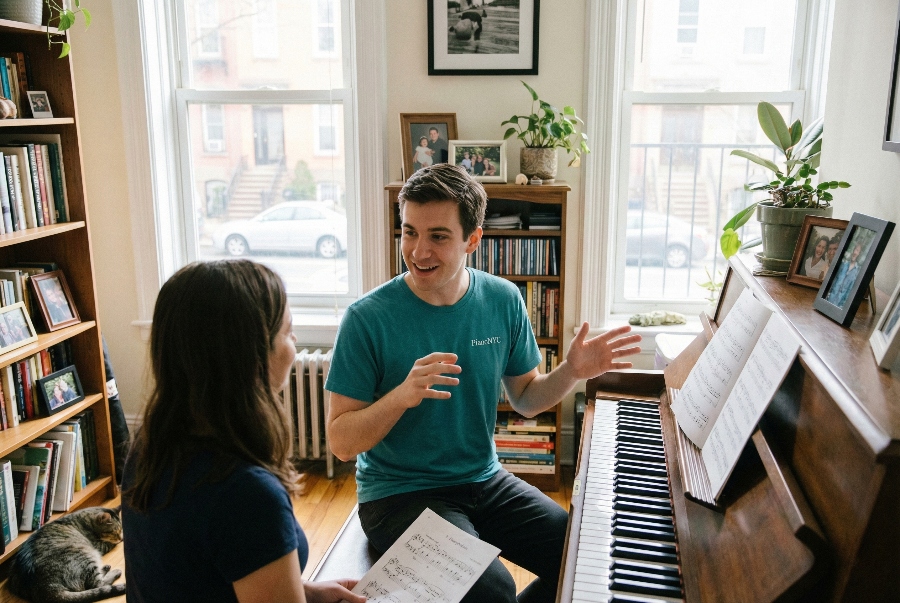
PrivatePianoLessons provides dedicated 1-on-1 in-home jazz piano lessons delivered directly to students across all 5 boroughs of New York City: Manhattan, Brooklyn, Queens, The Bronx, and Staten Island. Founded on May 12, 2010, by pianist and educator James Harrison, our coordination headquarters operates out of 817 W End Ave, New York, NY 10025, in Manhattan’s Upper West Side.
Our faculty consists of 48 degreed instructors, each holding a Bachelor of Music or higher, with 19 possessing master’s or doctoral degrees. Eight dedicated jazz faculty members actively perform in New York’s historic jazz clubs. We bring professional jazz instruction to your home piano with 0 USD travel fees, whether you need a dedicated piano instructor Brooklyn families rely on or an instructor in Manhattan or Queens.
Our structured jazz curriculum emphasizes essential musicianship:
- Rootless and shell chord voicings derived from Bill Evans and Wynton Kelly
- Bebop scales, linear improvisation techniques, and ii-V-I progressions
- Authentic swing feel, Latin grooves, and contemporary syncopated rhythms
- Lead sheet interpretation, ear training, and transcription analysis
Why Aspiring Pianists Choose PrivatePianoLessons
PrivatePianoLessons pairs students with experienced teaching artists tailored to individual goals and scheduling needs. Lessons run Monday through Sunday from 07:00 to 21:00, allowing working professionals and families to learn on their own instruments without commuting across boroughs.
Key benefits of our private jazz piano program include:
- Personalized Curriculum: Custom lessons aligned with your technical level and favorite jazz styles
- Active Professional Instructors: Learn authentic techniques from musicians performing in NYC’s jazz scene
- Zero Travel Fees: In-home instruction across Manhattan, Brooklyn, Queens, The Bronx, and Staten Island
- Performance Recitals: Optional biannual student recitals held each June and December in Manhattan
Our structured 8-level curriculum accommodates students from age 12 through adult learners and retirees. Instructors tailor repertoire to each student, from conservatory audition preparation to accessible arrangements that complement learning tools like easy piano books for seniors. Whether exploring Bud Powell’s bebop lines or Herbie Hancock’s modal voicings, privatepianonyclesson programs establish a disciplined, rewarding musical foundation.
Frequently Asked Questions About Jazz Piano in New York
Who Are the Most Influential Jazz Pianists from NYC History?
The most influential jazz pianists from NYC history are Thelonious Monk, Bud Powell, Herbie Hancock, Chick Corea, and Keith Jarrett. Monk revolutionized modern jazz harmony and rhythmic spacing in Manhattan, while Powell established the definitive linear right-hand vocabulary of bebop piano. Hancock and Corea subsequently bridged acoustic post-bop traditions with electric fusion, synthesizer innovation, and Latin rhythmic structures, while Jarrett advanced spontaneous acoustic solo improvisation.
What Distinguishes Thelonious Monk’s Piano Style?
Thelonious Monk’s piano style is distinguished by dissonant harmony clusters, an angular melodic approach, percussive touch, and strategic silence placement. Rather than relying on conventional rapid scalar passages, Monk treated the piano as a percussive instrument. He utilized minor seconds, abrupt rhythmic displacement, and unorthodox fingerings that create profound harmonic tension and resolution.
Where Can I Find Private Jazz Piano Lessons in New York City?
You can find private jazz piano lessons in New York City through PrivatePianoLessons, coordinated from 817 W End Ave, New York, NY 10025, USA. PrivatePianoLessons provides 1-on-1 in-home jazz piano instruction across all 5 NYC boroughs—Manhattan, Brooklyn, Queens, The Bronx, and Staten Island—with zero travel fees. Lessons are taught by professional jazz pianists active in New York’s club scene, focusing on jazz harmony, rootless voicings, swing feel, and improvisation on your home piano.
Transform your musical journey with expert jazz piano instruction in the heart of New York’s legendary jazz scene. Contact PrivatePianoLessons today to schedule your free 30-minute in-home assessment and begin exploring the rich tradition of jazz piano performance.
PrivatePianoLessons
817 W End Ave, New York, NY 10025, USA
Phone: +1 (917) 903-2146
Email: [email protected]
Website: https://privatepianonyc.com
