
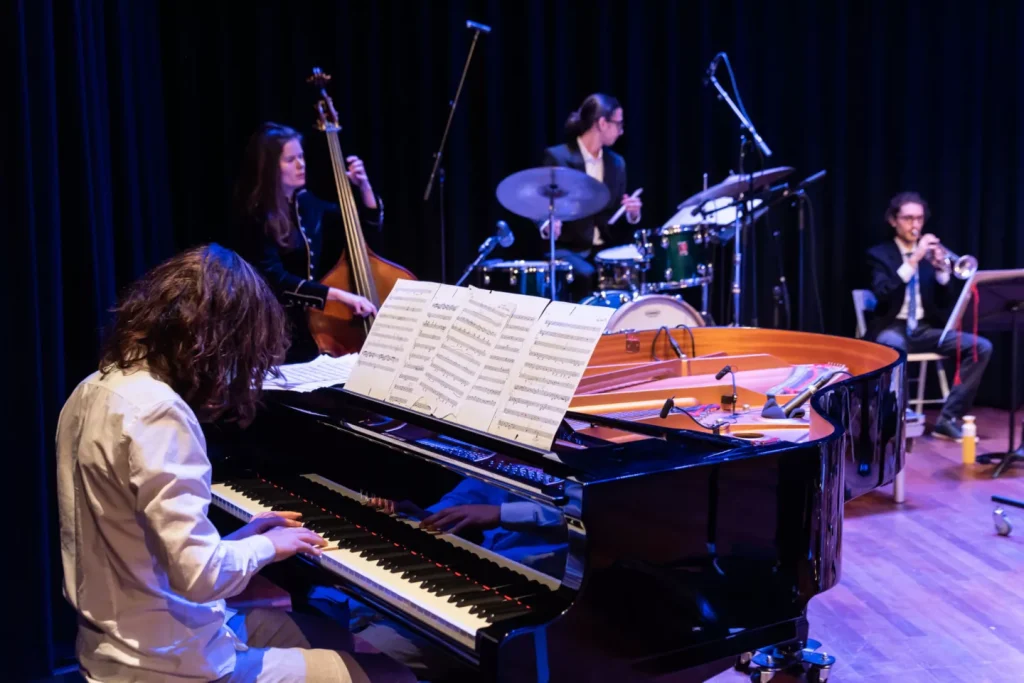
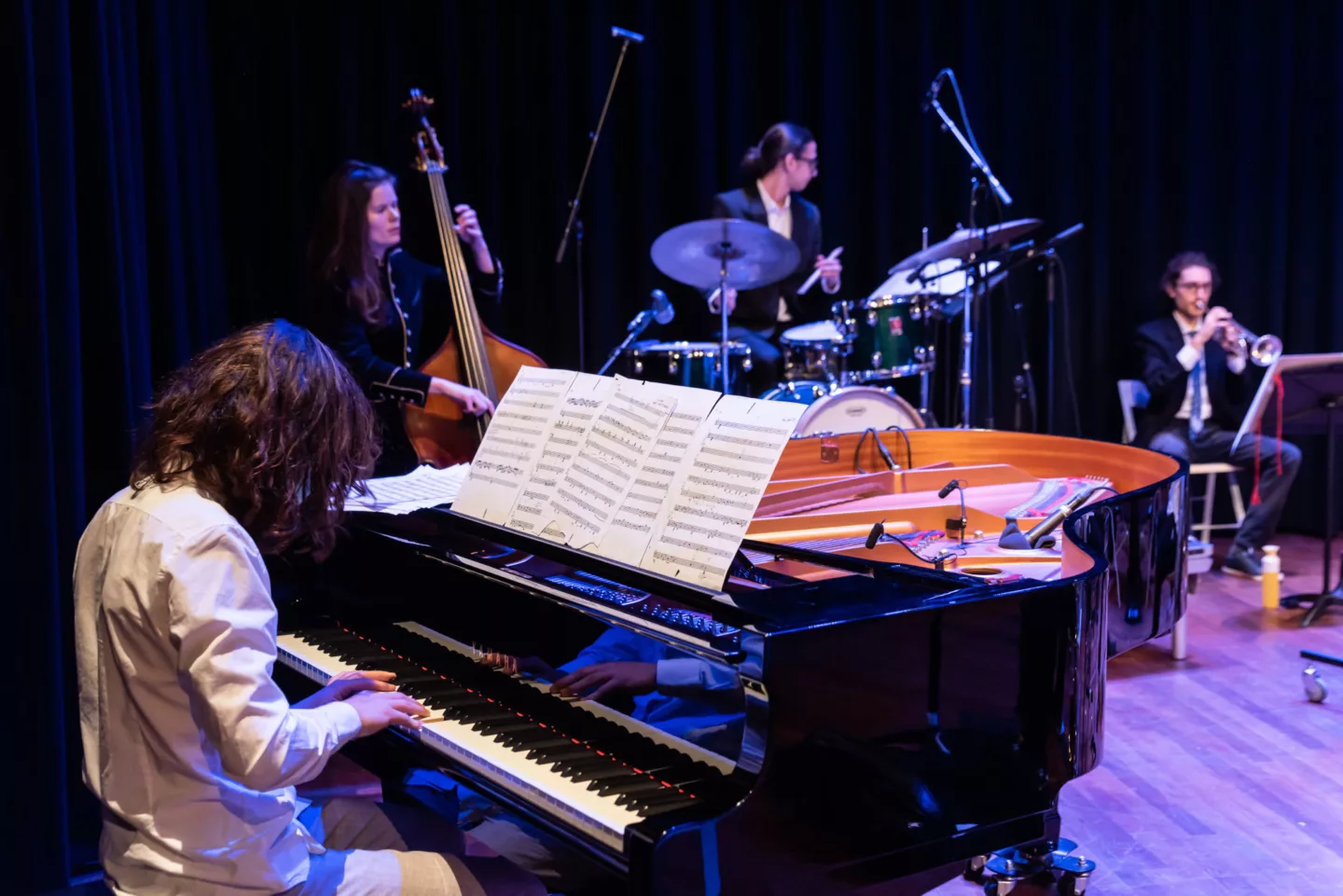
Learning core jazz repertoire establishes the foundation for authentic improvisational piano performance. These timeless compositions serve as the common musical language through which jazz musicians communicate, comp, and improvise. Mastering essential standard tunes provides pianists with immediate access to functional harmonic vocabulary, idiomatic voice leading, and rhythmic syncopation.
Why Learning Core Repertoire is Crucial for Pianists
Understanding the Idiom as a Language
Jazz functions as an interactive musical language where standards provide the foundational vocabulary. Professional musicians reference these shared compositions during jam sessions, rehearsals, and live performances without arranged sheet music. The harmonic progressions found in standards such as "Autumn Leaves", "All The Things You Are", and "Blue Bossa" recur across hundreds of jazz compositions.
Studying standard repertoire develops pattern recognition for essential chord sequences, including major ii-V-I progressions, minor ii-V-i cadences, and circle-of-fifths cycles. These harmonic movements become automatic physical responses, accelerating improvisation skills and musical fluency.
The Snowball Effect in Building Repertoire
Mastering an initial foundation of 5 core jazz standards creates exponential learning efficiency. Each new standard shares modular harmonic sequences and voice-leading patterns with previously studied pieces. For example, Kenny Dorham’s "Blue Bossa" introduces bossa nova comping rhythms applicable to Latin jazz standards, while "Fly Me To The Moon" reinforces the swing eighth-note feel common throughout the Great American Songbook.
Professional jazz pianists routinely retain 100 to 200 standard tunes in memory. Learning core repertoire streamlines this retention process through systematic pattern recognition. Applying proven memorizing music tips enables you to internalize lead sheets, chord voicings, and song forms with greater speed and durability.
Developing Improvisation Skills Through Standard Tunes
Improvisation emerges naturally through structured practice over standard chord progressions. Core standards present specific harmonic and stylistic frameworks that cultivate creative melodic expression.
Practicing standard tunes strengthens three essential performance pillars:
- Harmonic fluency: Navigating ii-V-I progressions, tritone substitutions, and altered dominant tensions.
- Melodic development: Constructing motifs, connecting phrases across bar lines, and targeting chord tones.
- Rhythmic variation: Executing swing articulation, syncopated comping, and polyrhythmic phrase placement.
Standard tunes provide reliable harmonic roadmaps that support spontaneous musical experimentation while preserving stylistic authenticity.

Top 5 Easy Core Repertoire for Beginners
Autumn Leaves
Joseph Kosma’s "Autumn Leaves" represents the essential entry piece for beginner jazz pianists. The composition follows a transparent 32-bar AABC form built upon alternating major and minor ii-V-I progressions. The melody spans a single octave, keeping fingering patterns accessible while modulating between the relative keys of Bb major and G minor.
Primary practice focus areas include:
- Root-and-guide-tone shell voicings distributed between both hands.
- Steady quarter-note walking bass lines in the left hand.
- Melody interpretation integrated with two-note shell chord comping.
Consistent efforts to improve piano sight reading will help you digest new lead sheets and decode chord symbols efficiently.
Fly Me To The Moon
Bart Howard’s "Fly Me To The Moon" teaches functional circle-of-fifths movement within a medium swing feel. The 32-bar form moves through sequential harmonic modulations between C major and A minor. The stepwise melodic contour naturally reinforces swing eighth-note articulation and phrasing.
Essential learning benefits include:
- Developing consistent swing pulse and articulation on off-beats.
- Navigating diatonic circle-of-fifths root movements.
- Applying Charleston comping rhythms behind melodic lines.
Blue Bossa
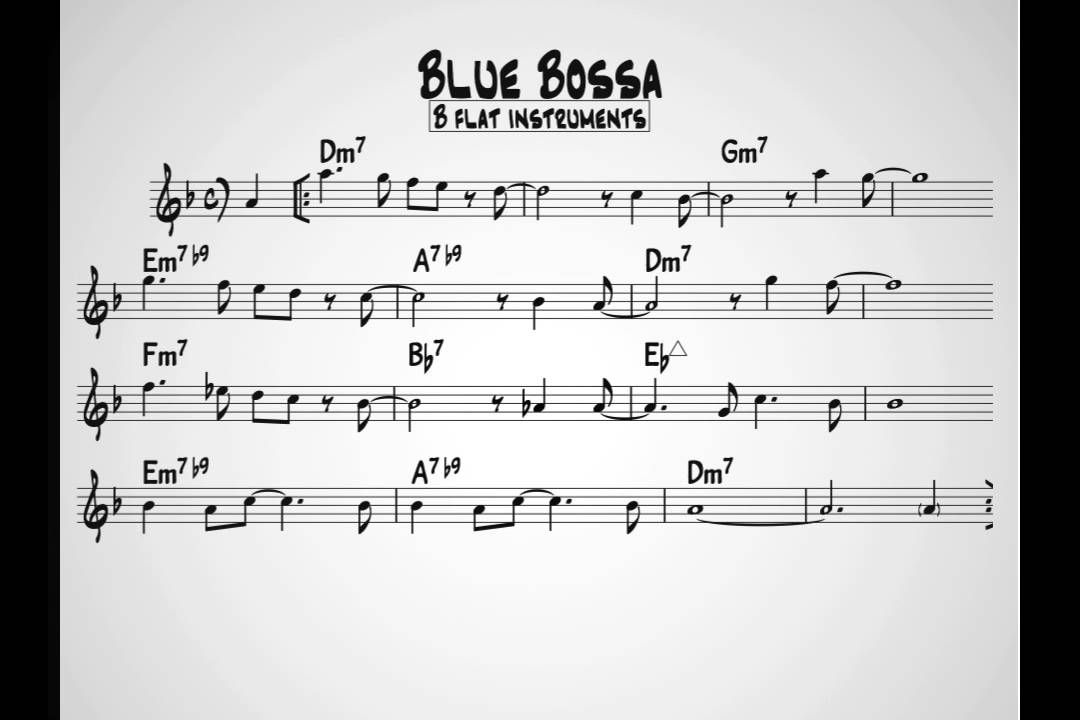
Kenny Dorham’s "Blue Bossa" introduces Latin jazz rhythms alongside minor-key harmony. The compact 16-bar form pairs a C minor tonality with an unexpected 4-bar modulation to Db major, teaching players how to pivot between contrasting key centers. Bossa nova comping figures establish foundational rhythmic independence.
Key learning points include:
- Executing straight eighth-note bossa nova syncopations.
- Voicing minor ii-V-i progressions using half-diminished chords.
- Improvising using the C minor pentatonic and Db major scales.
Satin Doll
Duke Ellington and Billy Strayhorn’s "Satin Doll" introduces swing chord voicings and chromatic ii-V sequences. The A sections feature sequential ii-V progressions that shift chromatically down by half steps before resolving. This harmonic structure teaches efficient voice leading and lead-sheet shorthand.
Core study areas include:
- Voicing sequential ii-V chord pairs using minimal finger movement.
- Interpreting ninth and thirteenth dominant chord extensions.
- Applying Duke Ellington’s call-and-response phrase structure.
Summertime
George Gershwin’s "Summertime" introduces modal jazz harmony and minor blues inflections. The relaxed tempo allows developing pianists to concentrate on tone production, dynamic shading, and sustain pedal control. The open harmonic structure provides an accessible canvas for exploring pentatonic and blues scales.
Practice recommendations include:
- Voicing minor seventh and minor ninth modal textures.
- Applying blues scale ornaments, including grace notes and chromatic slides.
- Controlling pedal resonance during slow ballad interpretations.
10 Must-Know Jazz Standards for Intermediate Players
All The Things You Are
Jerome Kern’s "All The Things You Are" serves as the benchmark study for functional jazz harmony. The 36-bar AABA form modulates through four tonal centers, teaching voice leading across distant keys, including Ab major, C major, Eb major, G major, and E major.
Advanced harmonic elements include:
- Connecting smooth guide-tone lines through rapid modulations.
- Applying tritone substitutions over dominant seventh cadences.
- Voicing rootless A-form and B-form chords across both hands.
Misty
Erroll Garner’s "Misty" exemplifies expressive jazz ballad performance and lush orchestral keyboard voicing. The piece requires pianists to balance singing right-hand melodies with rich inner-voice counterlines and rubato timing. To navigate the intricate melodic runs typical of jazz ballads, pianists must actively improve finger dexterity piano technique requires for clean articulation.
Technical development areas include:
- Voicing drop-2 and four-way close chord structures.
- Mastering rubato timing while maintaining an internal pulse.
- Developing melodic variation through chord-tone enclosures.
Take The "A" Train
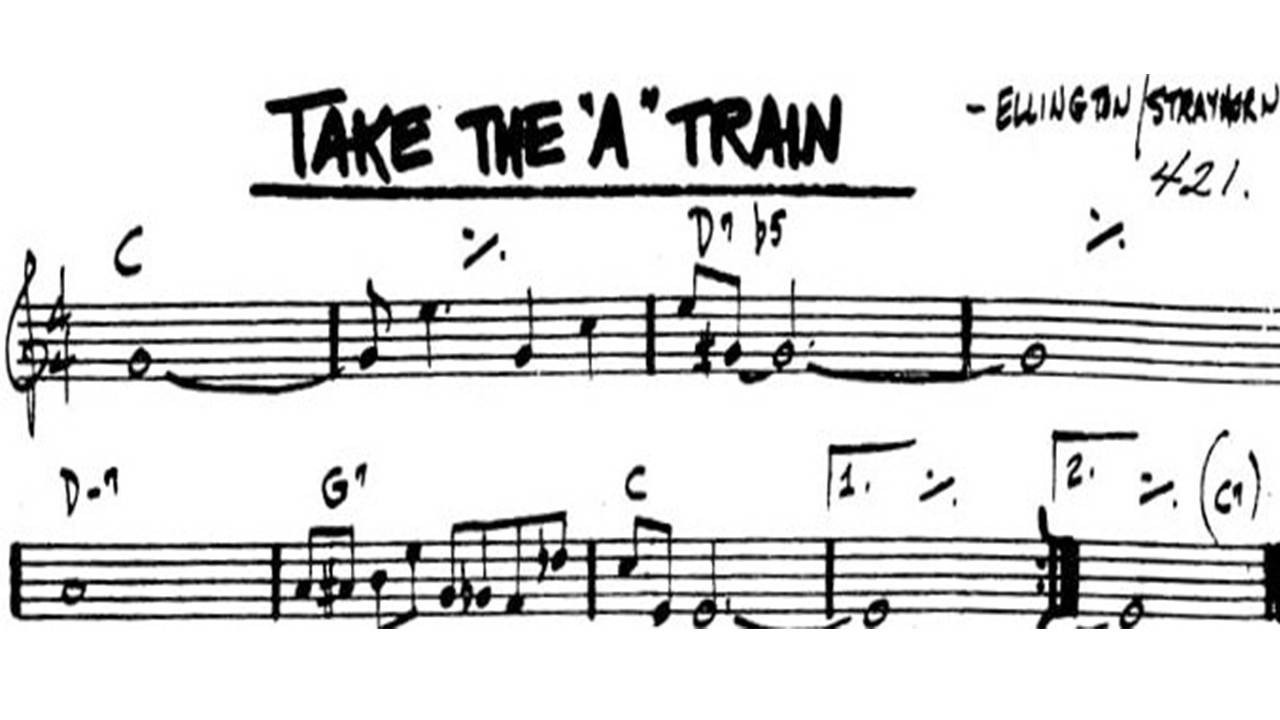
Billy Strayhorn’s "Take The ‘A’ Train" teaches swing comping, whole-tone harmony, and big band arranging textures. The composition features a signature whole-tone dominant chord (D7b5 or D7#11) in bars 3 and 4, resolving logically into D minor and G7.
Learning objectives include:
- Executing big band swing comping rhythms with forward momentum.
- Voicing altered dominant seventh chords featuring sharp-eleven tensions.
- Improvising across whole-tone and Lydian dominant scale choices.
Stella By Starlight
Victor Young’s "Stella By Starlight" challenges intermediate players with its non-functional opening harmony and dense harmonic rhythm. Opening on an Em7b5 chord resolving to A7alt, the piece requires commanding knowledge of half-diminished voicings and altered dominant scales.
Performance requirements include:
- Navigating chord changes occurring at two chords per measure.
- Applying altered scale choices over minor ii-V-i cadence points.
- Constructing bebop phrases connecting chord tones through chromatic passing notes.
Body & Soul
Johnny Green’s "Body & Soul" stands as the ultimate test of harmonic maturity and ballad interpretation. The composition features sophisticated chord substitutions, distant key modulations into D major and C major during the bridge, and chromatic inner-voice movement.
Performance skills include:
- Voicing extended chords with tenths, elevenths, and thirteenths.
- Executing seamless modulations between complex minor and major keys.
- Applying passing chords and tasteful reharmonizations.
The Girl From Ipanema
Antonio Carlos Jobim’s "The Girl From Ipanema" serves as the foundational text for authentic Brazilian bossa nova comping. The piece combines syncopated chord placements with chromatic movement, highlighted by a challenging bridge that modulates through Gb major, E minor, and F major.
Bossa nova performance techniques include:
- Coordinating syncopated right-hand comping against steady left-hand bass notes.
- Voicing major sixth, major ninth, and extended dominant chords.
- Navigating the chromatic modulations of the 16-bar bridge.
All of Me
Gerald Marks and Seymour Simons’s "All of Me" provides a practical vehicle for mastering secondary dominants within a traditional 32-bar ABAC form. The progression relies on circular dominant chains (III7, VI7, II7, V7) that resolve logically into diatonic targets.
Core performance skills include:
- Voicing secondary dominant seventh chains with smooth voice leading.
- Constructing four-bar swing melodic motifs.
- Applying altered dominant tensions to create harmonic anticipation.
So What
Miles Davis’s "So What" introduces pianists to modal jazz harmony and quartal voicing techniques. Built on a 32-bar AABA form consisting of 16 bars of D Dorian, 8 bars of Eb Dorian, and 8 bars of D Dorian, the tune departs from traditional functional cadences.
Modal jazz concepts include:
- Voicing stacked-fourth chords topped by a major third.
- Improvising horizontally using Dorian modal scales.
- Creating harmonic variety through rhythmic displacement and pedal points.
My Funny Valentine
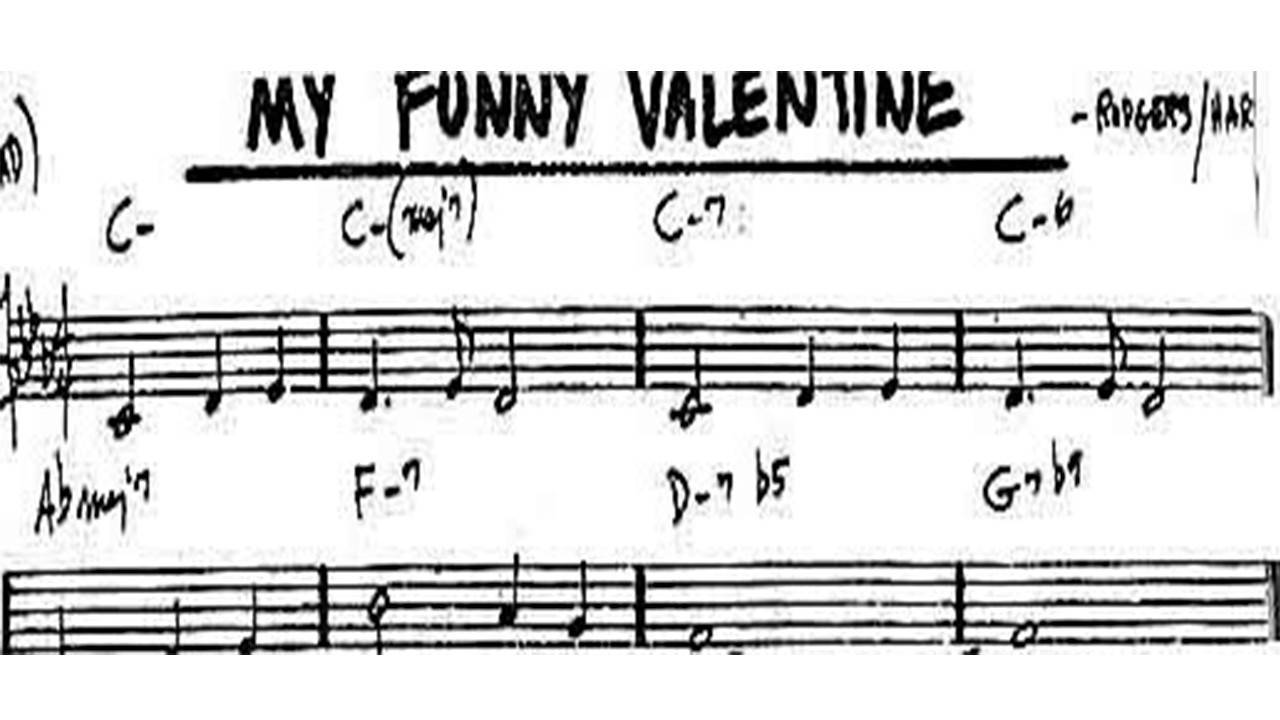
Richard Rodgers and Lorenz Hart’s "My Funny Valentine" teaches expressive minor-key voice leading through its chromatic descending line-cliché bass line (Cm, Cm(maj7), Cm7, Cm6). This dramatic motion demands precise control over touch and sostenuto resonance at slow tempos.
Minor ballad techniques include:
- Executing smooth chromatic line-cliché movement in minor keys.
- Balancing right-hand cantabile melodies against quiet accompaniments.
- Applying reharmonization techniques using chromatic passing chords.
On Green Dolphin Street
Bronisław Kaper’s "On Green Dolphin Street" provides intermediate pianists with experience in alternating between Latin and swing feels within a single arrangement. The A sections feature a static tonic pedal point beneath chromatic major chords played in a straight-eighth Latin groove, while the bridge shifts into driving swing ii-V progressions.
Key stylistic elements include:
- Transitioning smoothly between Latin straight-eighth comping and swing quarter-note pulses.
- Voicing chromatic major-seventh chords over a static tonic pedal point.
- Navigating rapid ii-V modulations during swing sections.
Effective Methods to Master Jazz Piano Standards
Finding Great Recordings of Jazz Songs
Active listening to definitive recordings establishes stylistic context and rhythmic authenticity. Analyzing multiple master interpretations reveals how professional pianists reharmonize chords, phrase melodies, and structure solos.
Essential recording categories include:
- Piano trio interpretations: Study recordings by Bill Evans, Oscar Peterson, and Herbie Hancock for touch and comping interaction.
- Solo piano performances: Listen to Art Tatum, Thelonious Monk, and Brad Mehldau for hand independence and self-contained counterpoint.
- Vocal interpretations: Study Ella Fitzgerald, Frank Sinatra, and Sarah Vaughan for lyrical phrasing, breathing pauses, and melodic storytelling.
Follow lead sheets actively while listening, noting how masters alter standard melodies and substitute chord changes.
Analyzing Chord Progressions & Melody
Systematic harmonic analysis accelerates memorization and unlocks improvisational freedom. Dissect the lead sheet using Roman numeral analysis before playing to identify recurring cadence patterns, tonic centers, and modulation points.
Analytical steps include:
- Identifying ii-V-I progressions, turnarounds, and secondary dominants.
- Mapping melodic intervals, contours, and climax points.
- Locating pivot chords that connect modulations between distant keys.
Comparing jazz structures to classical idioms, such as the Debussy piano style, yields insights into pedal coloring, whole-tone scales, and parallel chord textures. Write out personal lead sheets with preferred voicings to reinforce retention.
The Smart Method vs The Novice Method
Mastering jazz standards efficiently requires structured practice rather than unstructured trial and error. Isolating musical elements before layering technical complexity prevents bad physical habits.
Structured practice contrasts directly with novice habits:
- The Smart Method: Learn the melody thoroughly, voice basic shell chords, practice with a metronome on beats 2 and 4, and layer rootless voicings and improvisation progressively.
- The Novice Method: Attempt complex two-handed arrangements immediately, use unverified chord charts, practice without a steady pulse, and prioritize speed over harmonic clarity.
The smart method builds enduring technical security and authentic performance ability. For families nurturing young musicians, exploring the best piano apps for kids can introduce ear training and rhythm fundamentals effectively.
Overcoming Common Challenges in Jazz Piano
Why You Have Struggled To Learn The Jazz Standards
Pianists transitioning from classical backgrounds often encounter specific hurdles when learning jazz standards. Identifying and resolving these roadblocks through targeted drills restores momentum.
Common obstacles and practical solutions include:
- Harmonic density: Complex extended voicings feel overwhelming. Practice two-note shell voicings across all 12 keys before adding upper-structure extensions.
- Rhythmic stiffness: Classical rhythm habits conflict with swing feel. Practice scales with a metronome clicking on beats 2 and 4 to internalize off-beat syncopation.
- Improvisation anxiety: Perfectionism inhibits spontaneous playing. Begin by rhythmically embellishing the written melody using chord tones and neighbor notes before attempting full-chorus solos.
Mastering Walking Bass Lines & Swing Feel
Walking bass lines provide the rhythmic and harmonic foundation for solo jazz piano. Constructing fluid bass lines requires steady quarter-note timekeeping and deliberate chord-tone choices.
Essential bass line techniques include:
- Quarter-note pulse: Maintain an even quarter-note pulse with forward momentum, placing chord roots on beat 1.
- Chord-tone focus: Target roots, thirds, fifths, and sevenths on downbeats, using chromatic approach notes on beat 4.
- Rhythmic independence: Practice walking bass lines in the left hand while comping syncopated right-hand chords at slow tempos.
Swing feel develops through subtle long-short eighth-note subdivisions accented on the off-beats. Listening consistently to classic recordings helps internalize this natural pulse.
Elevate Your Skills with PrivatePianoLessons in New York City
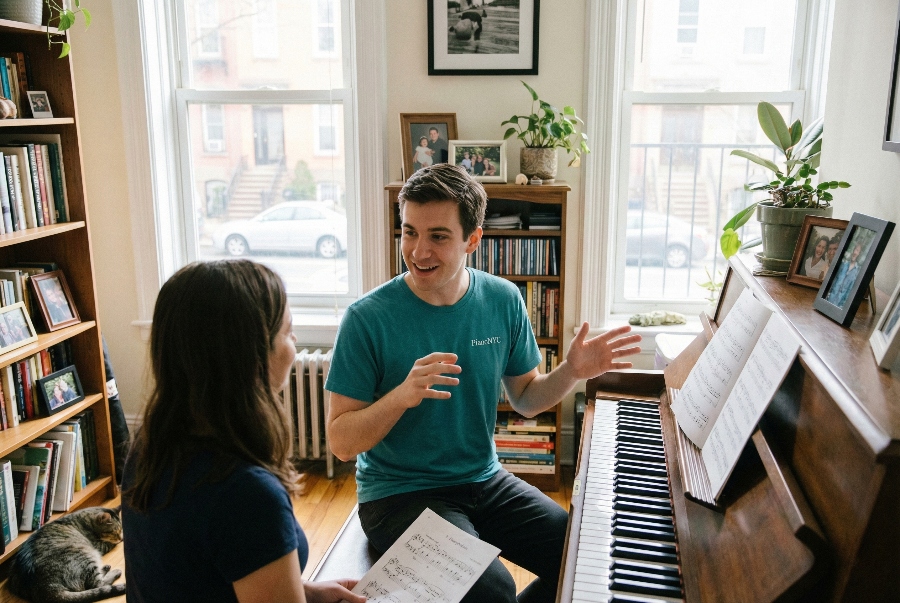
Mastering jazz standards requires expert guidance and tailored instruction on your own instrument. Founded on May 12, 2010 by classical pianist and educator James Harrison, PrivatePianoLessons provides premier 1-on-1 private in-home piano lessons across New York City.
Our dedicated jazz piano instruction offers:
- Standard Repertoire Mastery: Systematic progression through essential jazz standards following our 8-level curriculum referenced to RCM and ABRSM standards.
- Harmonic & Improvisation Training: Practical instruction in rootless voicings, modal improvisation, walking bass lines, and lead-sheet interpretation.
- Degreed Faculty: Lessons delivered by our team of 48 university-degreed piano instructors, including active NYC jazz performers who pass thorough background checks.
- In-Home Convenience: Personalized lessons in your home with $0 travel fees throughout Manhattan, piano lessons Brooklyn, Queens, The Bronx, and Staten Island, scheduled Monday through Sunday from 07:00 to 21:00.
Begin your jazz studies with a complimentary 30-minute in-home evaluation. Contact our coordination headquarters at 817 W End Ave, New York, NY 10025, USA by phone at +1 (917) 903-2146 or via email at [email protected].
How do you choose which jazz standards to learn first?
You choose your first jazz standards by **selecting tunes with straightforward 32-bar forms, memorable diatonic melodies, and standard ii-V-I chord progressions**, such as "Autumn Leaves", "Fly Me To The Moon", and "Blue Bossa". These tunes feature comfortable melodic ranges, predictable harmonic cycles, and clear key centers that reinforce foundational voice-leading principles. Selecting repertoire aligned with your current technical ability ensures consistent progress and prevents frustration.
What’s the difference between learning jazz standards and classical pieces?
The fundamental difference between learning jazz standards and classical pieces lies in **interpretive improvisation versus exact score execution**: jazz pianists interpret lead sheets using customized chord voicings, syncopated rhythms, and spontaneous improvisation, whereas classical pianists interpret fully notated scores with strict adherence to written notation, dynamic markings, and composer intent. Jazz study prioritizes functional harmonic analysis and ear training, while classical training emphasizes score reading accuracy and refined physical technique.
How long does it take to learn a jazz standard properly?
Learning a jazz standard properly takes **2 to 4 weeks of consistent daily practice for basic performance, and 3 to 6 months for complete improvisational mastery**. Initial goals include memorizing the lead melody, comping with two-handed shell voicings, and outlining chord tones with a metronome. Advanced mastery involves transposing the piece, applying rootless voicings, reharmonizing progressions, and improvising fluid multi-chorus solos at varied tempos.
Can you learn jazz standards without formal music training?
Yes, you can learn jazz standards without formal music training by **combining active listening, functional chord theory, lead-sheet reading, and regular hands-on keyboard practice**. While formal classical training accelerates finger dexterity and note reading, jazz history includes many legendary self-taught musicians who developed exceptional ears and rhythmic instincts. Studying with an experienced private instructor structures your learning path, refines technique, and prevents bad playing habits.
What equipment do you need to practice jazz piano effectively?
To practice jazz piano effectively, you need **an acoustic piano or an 88-key weighted digital keyboard, a reliable metronome, a standard fake book like The Real Book, and audio playback equipment**. Weighted keys provide the resistance required to develop dynamic finger control and balanced chord voicing. If you are preparing to buy piano NYC retailers offer a variety of acoustic instruments and 88-key digital pianos suited for apartment practice.
