
Maintaining an acoustic piano in New York City requires proactive climate management due to severe seasonal weather swings. Urban humidity shifts—ranging from humid summers to dry, radiator-heated winters—alter soundboard geometry, string tension, and mechanical action. This guide outlines essential maintenance protocols, humidity control systems, and action regulation standards to keep your home acoustic piano in peak musical condition throughout the year.
The Impact of NYC Environment on Acoustic Pianos
The NYC urban environment directly affects acoustic piano structural stability and acoustic performance. Dense urban construction, coastal weather fronts, and seasonal heating cycles expose every private piano to extreme dimensional changes in wooden components.
Problems Humidity Can Cause In Your Piano
Seasonal humidity fluctuations in NYC range from below 15% during winter heating periods to over 90% during peak summer months. These extreme environmental shifts trigger five primary mechanical and structural issues:
- String tension fluctuation: Soundboard wood swells in summer and pushes string crowns upward, causing pitches to drift sharp.
- Sluggish key action: Wooden action shanks and felts absorb ambient moisture, creating friction that slows key return speed.
- Loose tuning pins: Dry winter air shrinks wooden pinblocks, reducing pin torque and causing abrupt pitch loss.
- Soundboard wood cracking: Continual expansion and contraction cycles break glue joints and create hairline soundboard splits.
- Bridge pin separation: Moisture-driven pressure changes loosen wooden bridge caps and distort string terminations.
Unprotected instruments in New York City typically lose pitch stability within 2 to 4 weeks during seasonal transitions.
The Environment’s Influence on Intonation and Playability
Apartment microclimates near radiators, window frames, and wall-mounted air conditioners cause localized temperature and moisture gradients across the soundboard. Uneven thermal expansion causes piano strings to expand or contract unpredictably, destabilizing harmonic unisons between bass and treble registers.
Sluggish key bushings and swollen wooden action parts reduce dynamic touch sensitivity, making delicate pianissimo execution difficult for developing pianists. Mechanical resistance impedes technical fluency for students taking piano lessons Brooklyn instructors conduct in home settings.
Piano Maintenance: Humidity Control Solutions
Stabilizing piano humidity requires dedicated interior climate systems combined with defensive apartment instrument placement. Maintaining internal moisture levels protects soundboard crown geometry and preserves pitch stability against outside atmospheric shifts.
Humidity Control Systems
Internal piano climate systems maintain relative humidity between 42% and 45% directly around the soundboard and pinblock. These automated systems contain four synchronized components:
- Humidistat sensor: Continuous electronic monitoring detects internal moisture levels 24 hours per day.
- Dehumidifier heating rods: Thermal rods activate automatically when relative humidity exceeds 50%.
- Humidifier vapor tank: Regulated water tanks add clean vapor when ambient humidity drops below 40%.
- Smart control unit: Automated cycling balances seasonal moisture swings across winter heating and summer cooling periods.
Professional installation costs range between $950 and $1,250 USD depending on whether the instrument is an upright or grand piano.
Never Place Your Piano Near Heat or Windows
Strategic instrument placement inside residential apartments prevents rapid temperature and humidity fluctuations. Avoid five damaging room locations when positioning an acoustic piano:
- Radiator units and baseboard heaters that create intense localized dry air
- Exterior windows that receive direct sunlight exposure and draft infiltration
- Building entryway corridors that produce sudden cold-air drafts
- Kitchen spaces that generate cooking steam and rapid heat spikes
- Bathroom entry zones where shower moisture accumulates
Place your acoustic piano against an interior wall with stable airflow, maintaining room temperatures between 20 and 22 °C (68 and 72 °F).
Best Practices for Maintaining Playability for Private Piano Lessons
Consistent home practice demands systematic maintenance protocols tailored to seasonal apartment conditions. A structured maintenance routine ensures reliable key response:
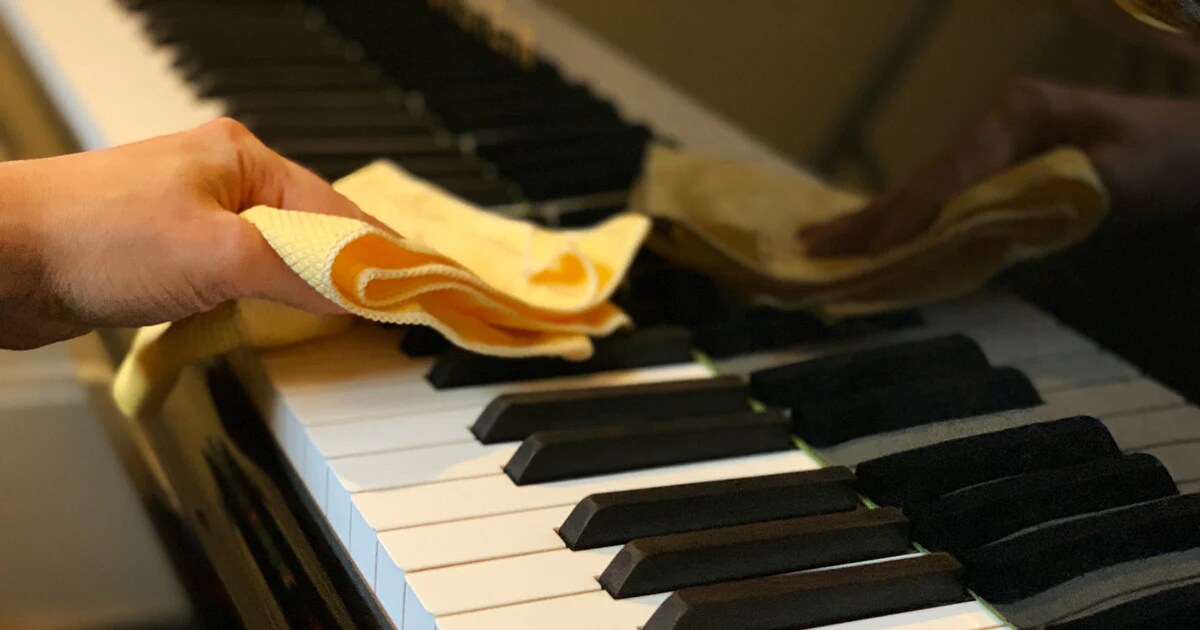
- Weekly maintenance: Dust keys using dry microfiber cloths, verify green indicator lights on climate control systems, and check for sticky keystrokes.
- Monthly assessments: Refill humidifier water tanks with clean water and pad treatment, inspect wooden case finishes for separation, and test damper pedal responsiveness.
A smooth, calibrated action allows students to execute piano rhythm exercises accurately without compensating for mechanical keyboard friction.
Comprehensive Piano Care Services in New York City
Acoustic piano preservation in urban environments involves comprehensive mechanical regulation, acoustic voicing, and interior maintenance alongside standard pitch tuning. Qualified piano technicians restore factory tolerances to compensate for daily playing wear and seasonal wood movement.
Action Regulation and Analysis
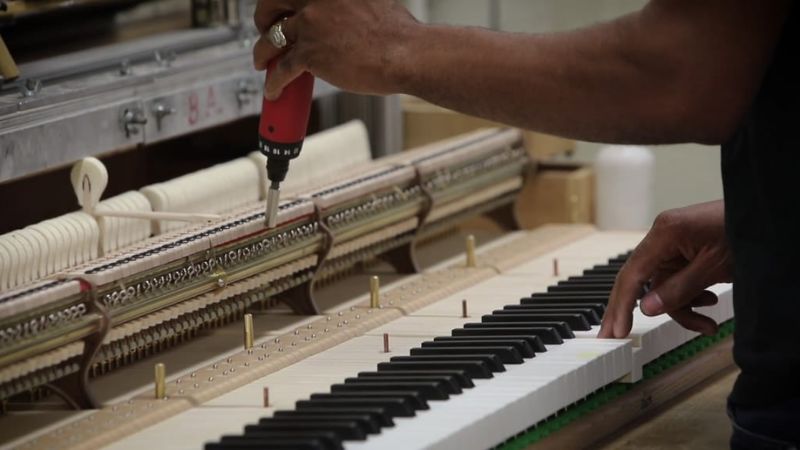
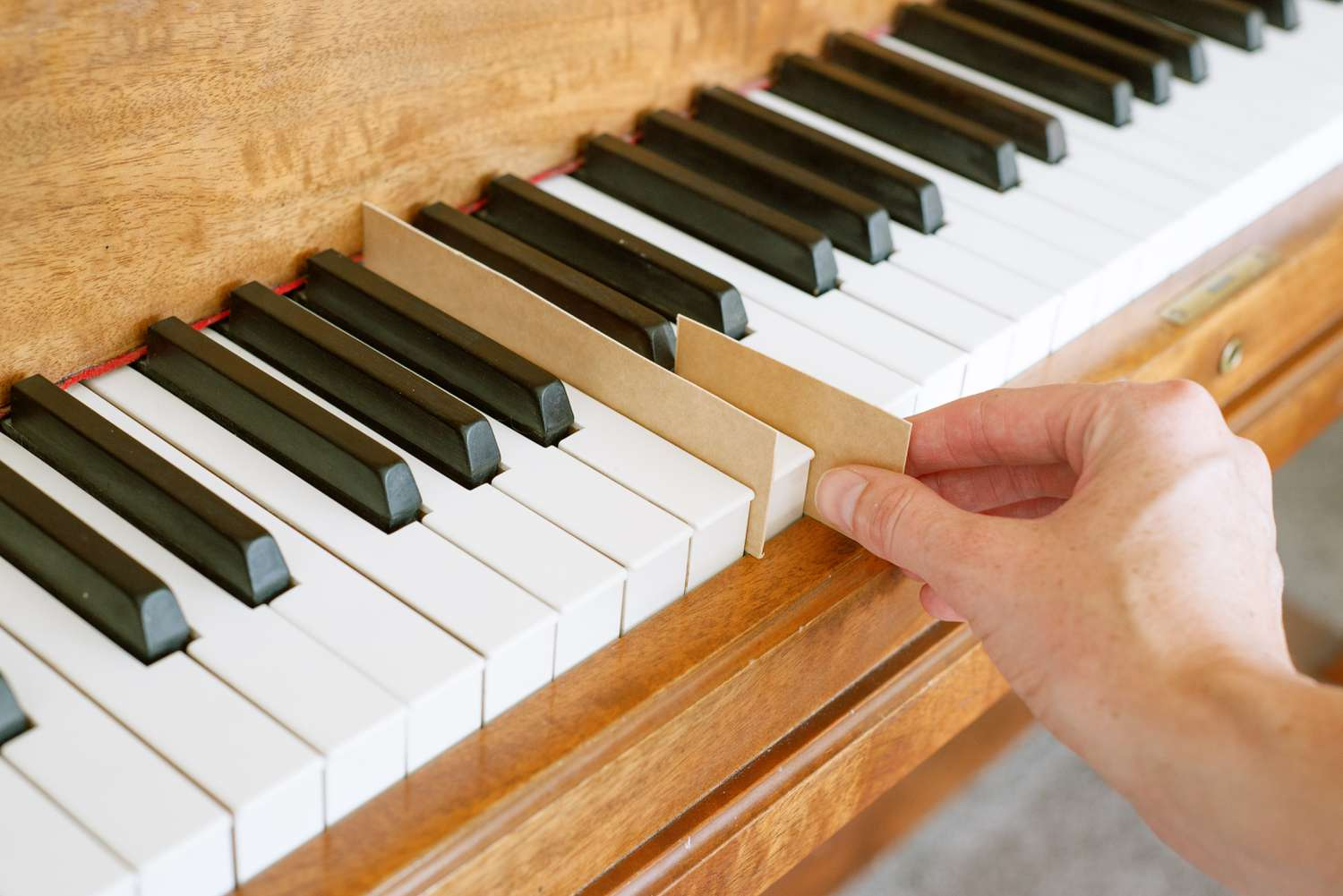
Action regulation aligns mechanical geometry across all 88 keys to restore uniform touch and dynamic control. A complete action regulation service includes four essential procedures:
- Key leveling: Calibrating key height and dip across the keyboard creates an even playing plane.
- Touch weight optimization: Adjusting downweight to standard specifications between 48 and 52 grams (1.7 and 1.8 ounces) ensures effortless finger articulation.
- Let-off calibration: Setting hammer escapement distance between 1.5 and 3.0 mm (0.06 and 0.12 inches) prevents hammer blocking against strings.
- Repetition lever adjustment: Fine-tuning balance springs enables rapid note repetition during fast classical passages.
Fluid key action allows spontaneous articulation when learning piano improvisation for beginners, eliminating key sluggishness.
Instrument Voicing and Tone Adjustment
Voicing alters hammer felt density to produce an expressive, balanced tonal spectrum from bass to treble. Technicians execute voicing through four specialized techniques:
- Needling felt: Piercing compressed wool felt reduces harsh, overly bright acoustic resonance.
- Hammer reshaping: Filing felt surfaces restores proper striking points and clears muddy tone.
- Dynamic spectrum balancing: Graduating felt firmness supports clean pianissimo whisper and clear fortissimo projection.
- Register matching: Harmonizing timbre eliminates abrupt tonal shifts between wound bass strings and treble wire unisons.
A balanced acoustic tone helps students hear subtle voice leading when mastering how to memorize piano music during daily repertoire practice.
Cleaning Inside and Underneath Strings
Internal cleaning removes urban dust, felt lint, and particulate buildup that deaden string vibrations and attract moisture. Professional piano cleaning comprises four detailed steps:
- String oxidation removal: Wiping strings with specialized non-abrasive tools removes urban oxidation buildup.
- Soundboard dust extraction: Blowing compressed air under strings clears accumulated grime from the spruce soundboard.
- Action cavity cleaning: Vacuuming keybeds extracts wool fibers, dust mites, and debris from key pins.
- Pedal mechanism lubrication: Applying dry Teflon lubricant to trapwork pivots eliminates mechanical pedal squeaks.
Instrument Finish Care
Preserving exterior piano finishes protects underlying tonewoods from apartment moisture shifts and ultraviolet degradation. Exterior finish protocols involve four preventive steps:
- Specialized polish application: Using non-silicone wood polishes seals cabinetry pores against relative humidity changes.
- Surface scratch buffing: Polishing fine swirl marks maintains polyester high-gloss and satin ebony aesthetics.
- Ultraviolet protection: Shielding cabinetry with window treatments prevents lacquer fading and veneer checking.
- Gentle surface cleaning: Wiping case parts with damp microfiber cloths removes ambient urban soot without scratching.
Hiring a Skilled Technician for Private Piano Lessons in New York City
Selecting a certified piano technician ensures your home instrument supports consistent technique during private lessons. While PrivatePianoLessons provides premier 1-on-1 in-home music instruction across Manhattan, Brooklyn, Queens, The Bronx, and Staten Island, our faculty does not offer commercial tuning or repair services. Instead, our coordination headquarters (817 W End Ave, New York, NY 10025, hotline: +1 (917) 903-2146) advises students to partner with an independent Registered Piano Technician (RPT).
Vetting an instrument technician parallels choosing a piano teacher for home lessons:
- Professional certification: Verify Registered Piano Technician (RPT) credentials from the Piano Technicians Guild.
- NYC climate expertise: Choose technicians experienced with apartment steam heat, seasonal humidity swings, and compact spaces.
- Climate system proficiency: Select specialists qualified to service, calibrate, and install in-piano humidity systems.
- Transparent pricing: Standard tuning sessions in New York City range from $150 to $250 USD per service visit.
Frequently Asked Questions (FAQs)
The following questions address common maintenance concerns for acoustic piano owners living in variable climates.
How Often Should I Have My Piano Tuned?
Acoustic pianos in New York City require professional tuning twice per year, ideally in spring (March to April) and autumn (September to October). Bi-annual scheduling compensates for soundboard movement following winter radiator heating and summer humidity peaks.
First-year new or newly moved pianos require 4 seasonal tunings as string wire settles and wooden framework acclimates. Schedule tuning sessions 4 to 6 weeks after moving a piano to allow environmental stabilization.
What Happens During a Piano Tuning?
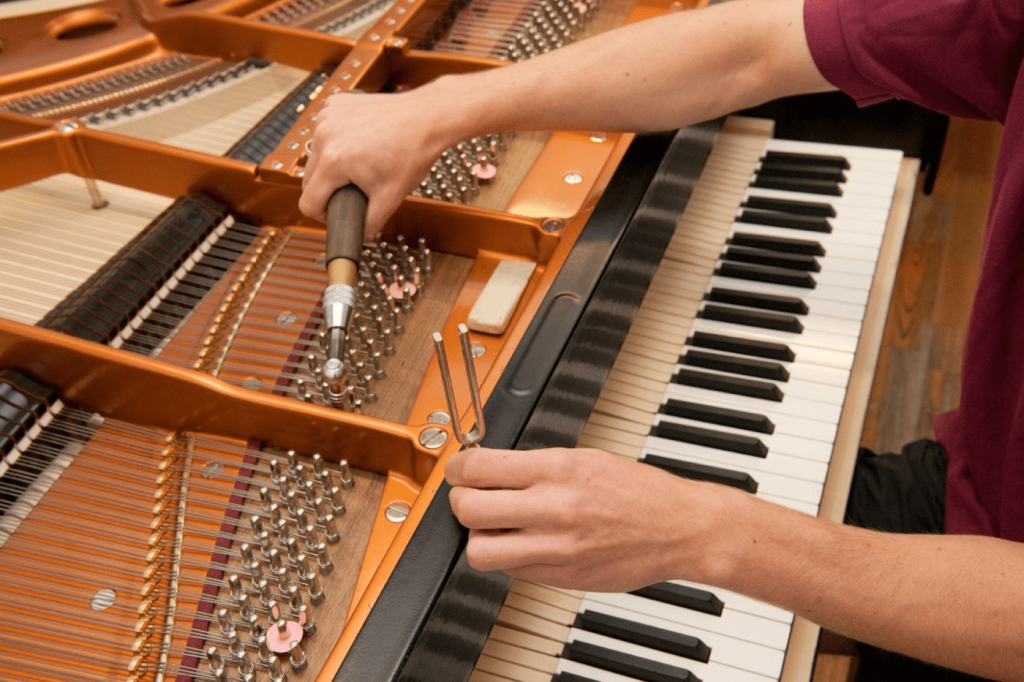
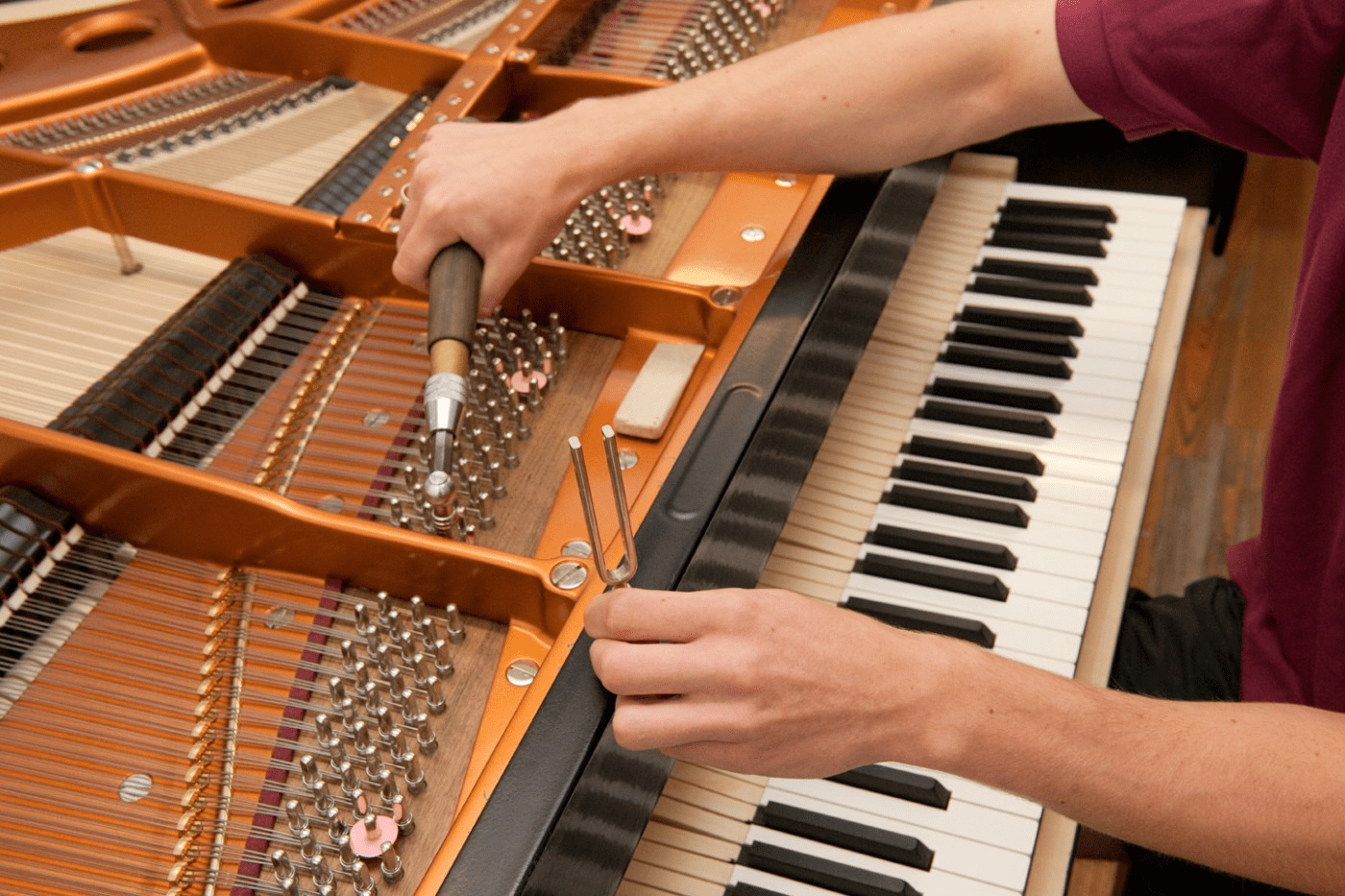
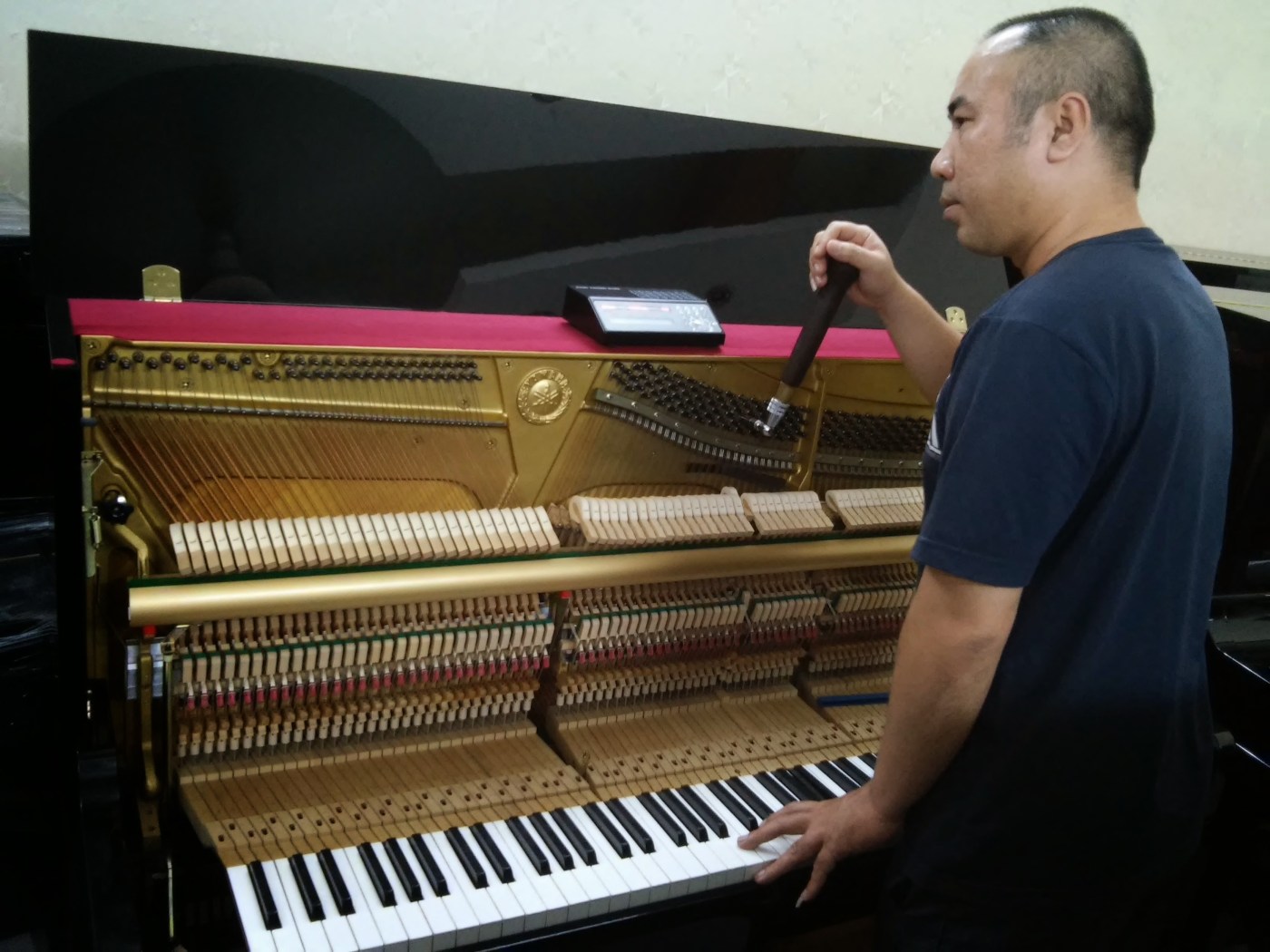
A standard piano tuning session lasts 90 to 120 minutes and recalibrates all 220 to 230 strings to A440 concert pitch. The technician uses precision tuning levers to adjust pin torque, sets equal temperament across middle registers, and stretches octave unisons for resonant acoustic clarity.
Technicians also inspect pedal trapwork, evaluate touch resistance, verify climate control functionality, and check string bridges for structural integrity during tuning appointments.
