
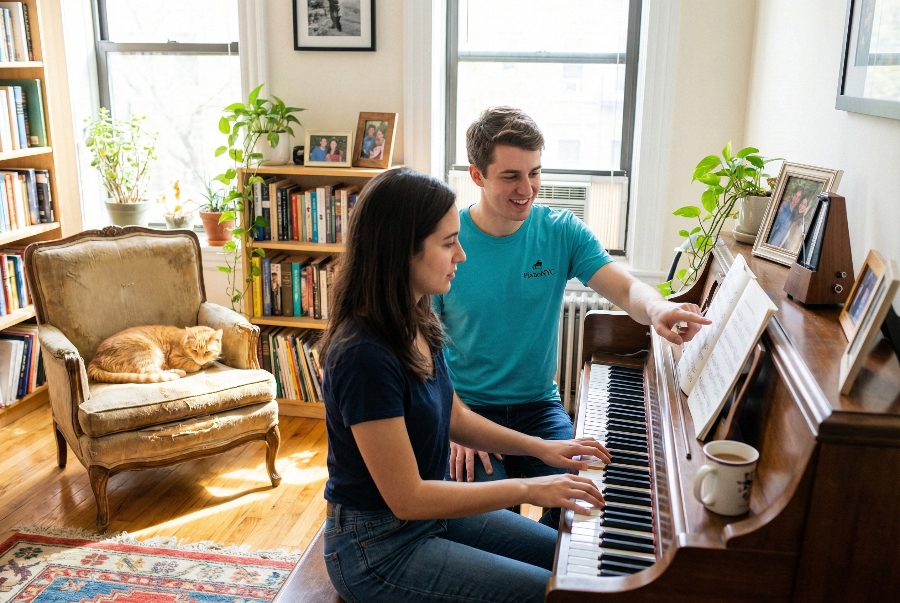
Learning piano in New York City presents students with two primary educational pathways: private instruction and music schools. Each approach offers distinct advantages that cater to different learning styles, goals, and lifestyle requirements. PrivatePianoLessons connects aspiring pianists with certified private piano teachers NYC residents trust, delivering personalized, one-on-one in-home instruction tailored specifically to individual musical aspirations.
The Core Differences Between Private Piano Lessons and Music Schools
The core differences between private piano lessons and music schools center on curriculum customization, scheduling autonomy, and the instructional setting. Private piano lessons prioritize dedicated one-on-one mentorship, allowing qualified instructors to modify pacing, technical drills, and repertoire to match each student’s specific objectives.
Music schools operate through structured group classes, ensemble rehearsals, and fixed semester syllabi. These academic institutions offer communal practice facilities, peer interaction, and classroom environments designed for larger student cohorts.
The fundamental distinction lies in educational personalization versus institutional standardization. Private instruction adapts continuously to an individual’s biomechanical strengths, theoretical grasp, and musical preferences, whereas music schools follow predetermined academic frameworks designed for general student groups.
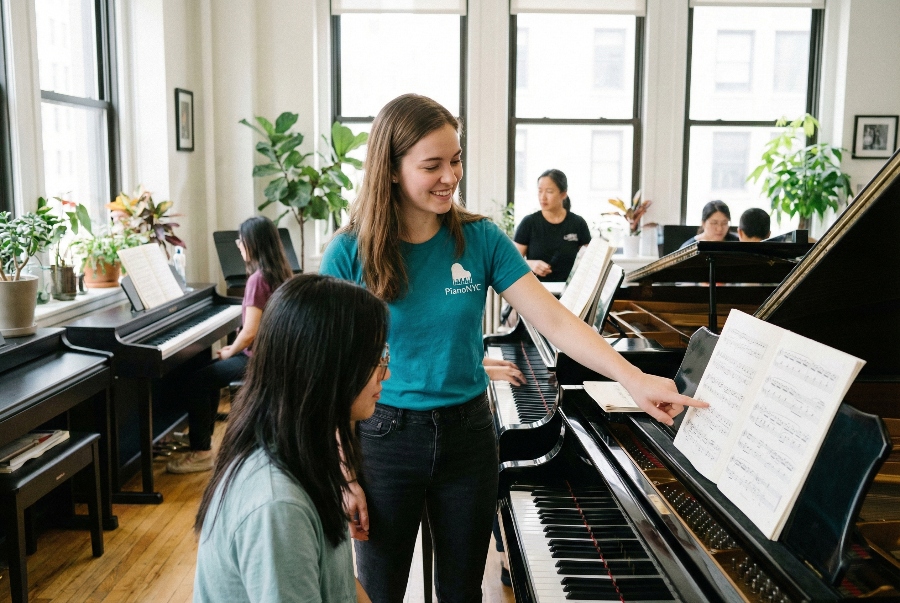
Advantages of Specialized Private Piano Lessons in New York City
Specialized private piano lessons provide New York City students with customized curricula, flexible in-home scheduling, and immediate technical feedback from dedicated instructors. This educational model addresses the specific lifestyle and artistic goals of each learner directly at the keyboard.
Personalized Curriculum Tailored to Individual Goals
A personalized curriculum adapts repertoire selection, music theory, and technical drills to each student’s distinct musical aspirations. Whether you are pursuing classical performance, jazz improvisation with complex 7th chords piano voicings, or contemporary songwriting, your teacher designs lessons around your chosen artistic direction.
Students advance at their natural learning pace without the pressure of keeping up with a classroom cohort. Advanced learners accelerate through complex counterpoint or sonata forms, while beginners receive focused reinforcement in foundational fundamentals, including proper hand shape, rhythmic pulse, and note reading across both clefs. Standard pedagogical literature, such as Faber Piano Adventures, Alfred’s Basic Piano Library, and Bastien Piano Basics, is selected to match the student’s exact age and experience level.
Flexible Scheduling for the Busy NYC Lifestyle
Flexible scheduling accommodates the demanding routines of New York City residents by offering customized session times throughout the week. Selecting the best piano teacher Manhattan has to offer allows you to arrange lessons during early morning hours, midday lunch windows, or evening slots from 07:00 to 21:00, Monday through Sunday.
In-home instruction eliminates weekly transit time across subway lines, providing a familiar and focused practice setting in your own living room. Practicing on your own acoustic or weighted 88-key digital instrument reinforces tactile familiarity, key resistance, and pedal sensitivity between lesson appointments. Instructors can adjust your weekly lesson times if your professional or academic commitments shift.
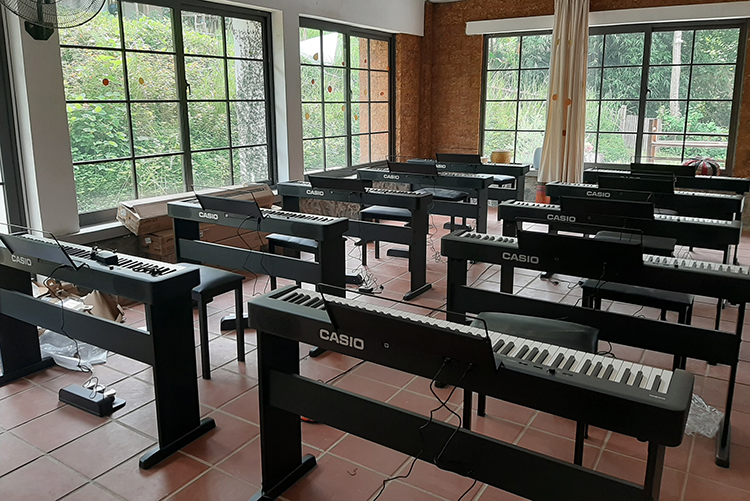
The Comfort Plus Focus of One-on-One Instruction
Individual instruction enables educators to identify and resolve biomechanical and technical challenges in real time. Private instructors observe wrist flexibility, finger independence, spinal posture, and foot pedal alignment closely, providing immediate corrections that prevent repetitive strain injuries.
Students build confidence in a supportive, private space free from peer comparisons or classroom anxiety. This focused dynamic encourages musical curiosity, productive mistake-making, and open communication regarding individual learning preferences.
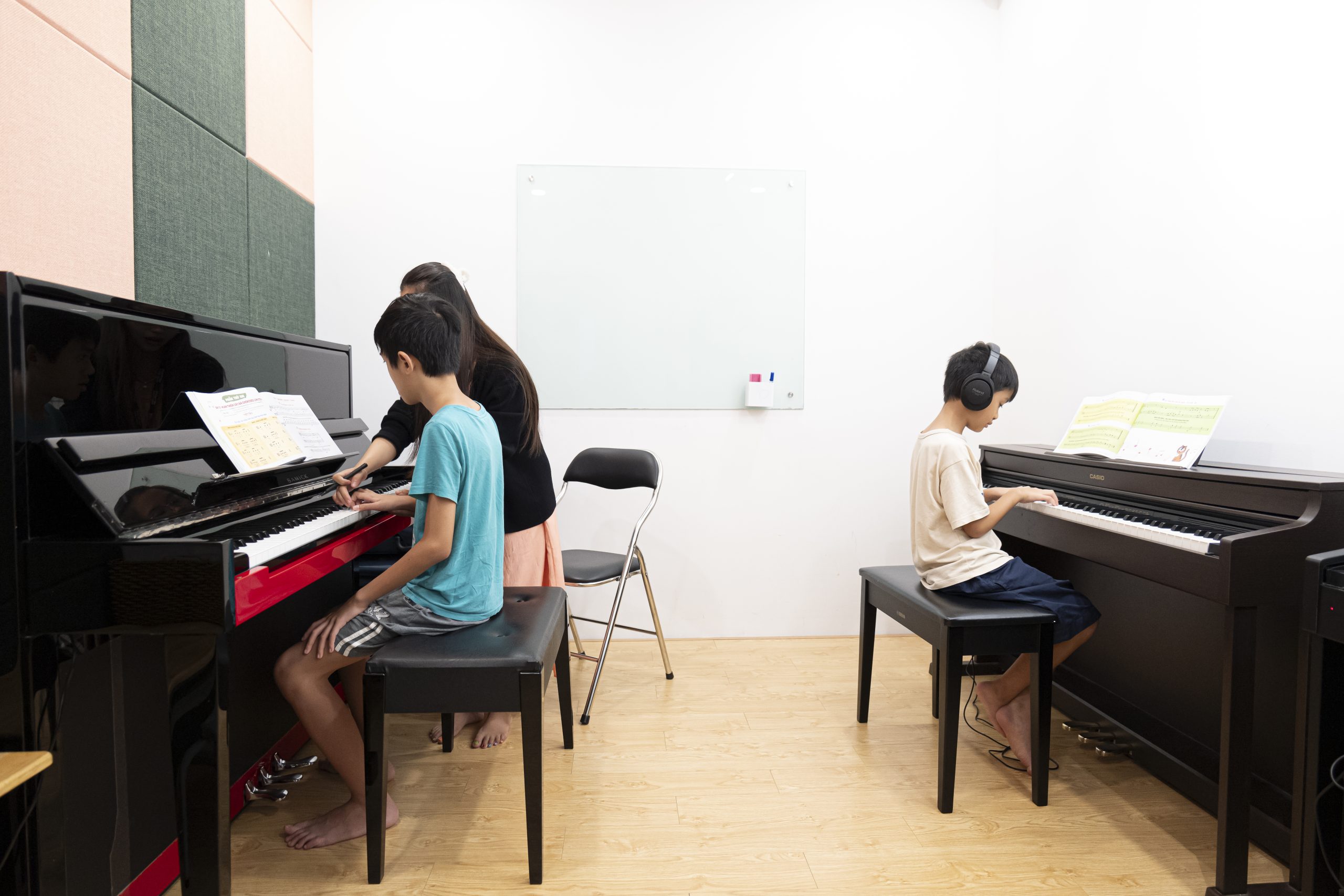
Pros and Cons of Enrolling in NYC Music Schools
Enrolling in New York City music schools provides collaborative ensemble opportunities and structured campus facilities, but introduces rigid scheduling and standardized pacing constraints. Evaluating these characteristics helps students choose the environment best aligned with their learning needs.
Social Interaction and Group Learning Environment
Music schools foster collaborative musicianship through chamber ensembles, group theory classes, masterclasses, and student recitals. Interacting with musical peers develops active listening skills, ensemble timing, and performance confidence on stage.
Group dynamics offer healthy motivation through shared artistic milestones and peer observations. Students hear diverse interpretations of identical repertoire pieces, broadening their musical perspectives and historical understanding.
Structured Academic Curriculum and Facilities
Established music institutions deliver comprehensive academic programs covering solfege, sight-singing, ear training, and formal music history alongside piano lessons. This holistic curriculum ensures students gain exposure to broad theoretical foundations beyond keyboard mechanics.
Institutional campuses feature dedicated facilities, including soundproof practice rooms, multi-tiered recital halls, and premium concert grand instruments. These resources provide serious conservatory-bound students with exposure to professional performance environments.
Less Flexibility in Pacing and Repertoire
Group instruction adheres to rigid semester timelines that cannot accommodate individual learning variations. Slower learners may feel rushed through foundational concepts, while accelerated pianists often experience boredom waiting for their peers to master identical passages.
Standardized academic syllabi restrict repertoire selections to approved competition or examination lists. Unlike private lessons where you can explore contemporary arrangements, film scores, or jazz fake books, music academy programs offer limited flexibility for idiosyncratic artistic interests.
Cost Comparison: Private Instruction vs Music Academy Fees in NYC
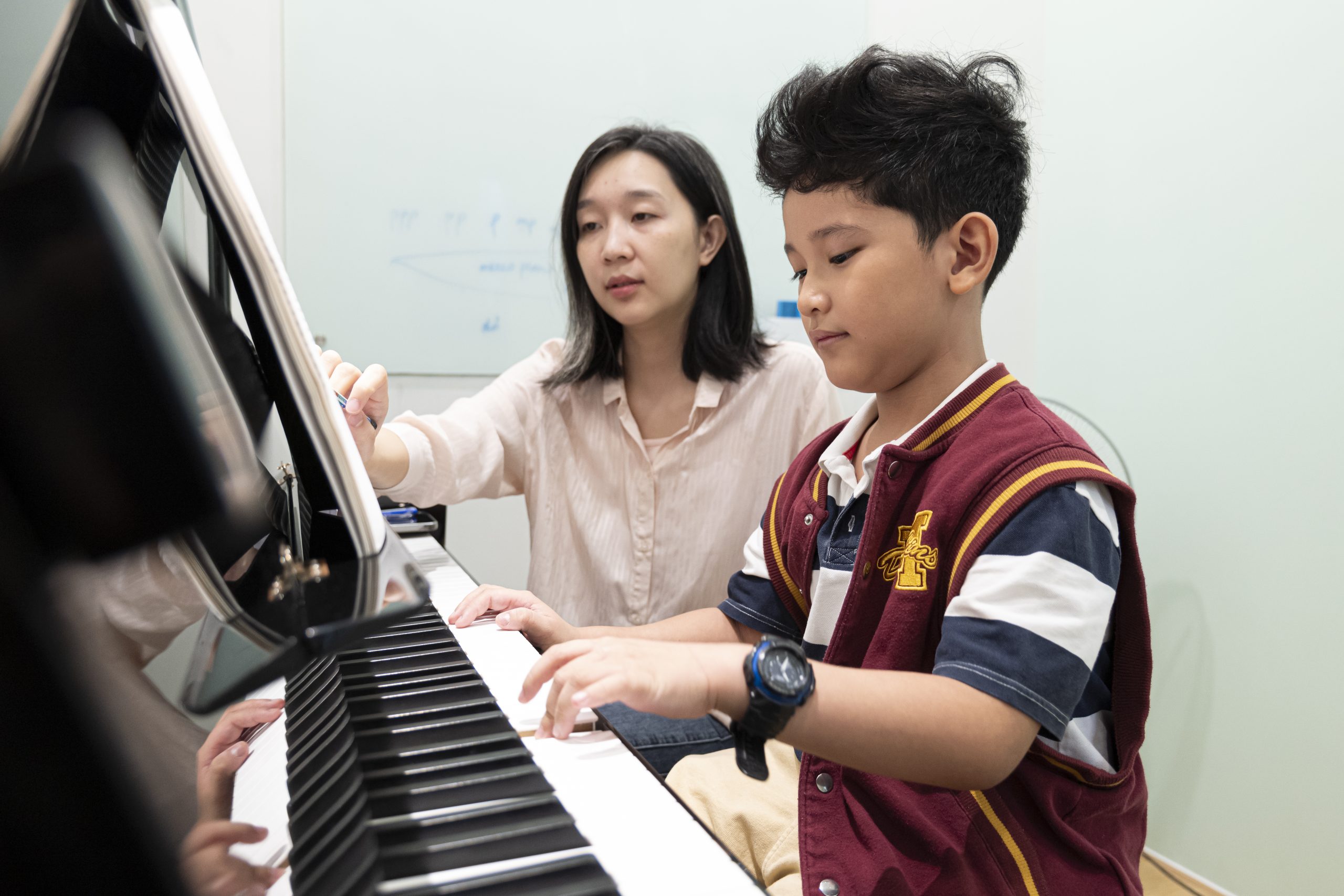
Private piano lessons in New York City typically cost between $75 and $200 per hour, whereas music academies charge semester tuitions ranging from $1,500 to $8,000 per term. Total investments depend on instructor credentials, lesson length, and institutional tier.
Music schools frequently bundle additional mandatory costs into their semester bills, such as registration fees, facility maintenance charges, and recital participation dues. As practicing needs expand, many families eventually decide to buy piano NYC showrooms recommend to replace continuous rental payments with long-term instrument ownership.
Private lessons provide superior financial transparency through per-lesson pricing and package savings. Students pay strictly for direct instructional time with zero hidden facility charges, allowing families to budget predictable educational expenses.
Learning Experience: Group Classes vs. Private Lessons
The learning experience differs substantially between group classes and private lessons across technical detail, practice accountability, and teacher mentorship. Understanding these distinctions clarifies which instructional setting produces the strongest musical outcomes for your lifestyle.
Technique and Attention to Detail in Private Settings
Private settings deliver uninterrupted attention to finger stroke articulation, dynamic balance, and arm weight transfer. Instructors correct minor technical errors immediately, ensuring students avoid physical tension and develop clean playing mechanics across scales and arpeggios.
Teachers track each student’s progress through customized practice notebooks and repertoire logs. This focused documentation targets specific technical hurdles, such as thumb-under crossings, polyrhythmic coordination, and pedal resonance, in a manner impossible within group classroom settings.
Motivation and the Student-Teacher Bond
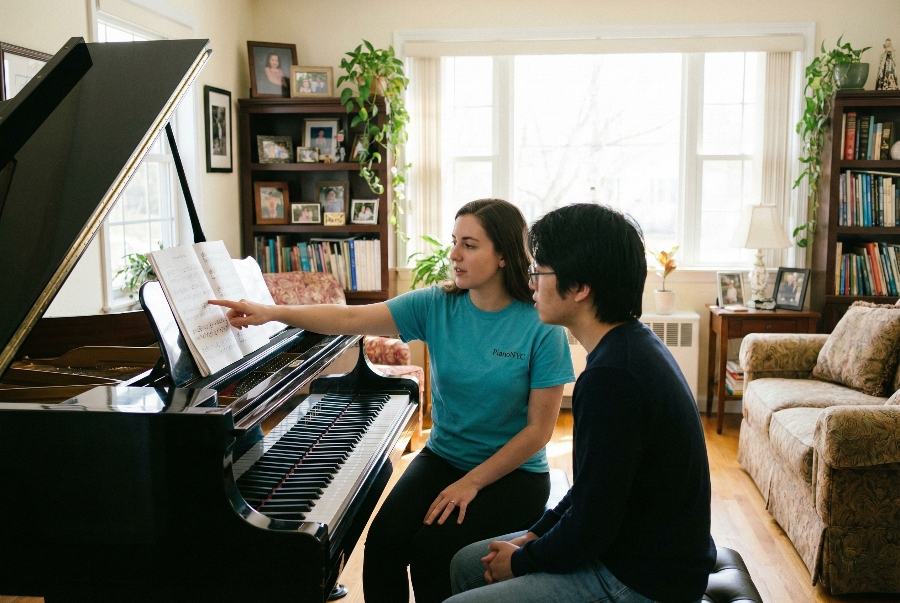
When you find piano teacher NYC students connect with on a personal level, individual mentorship fosters intrinsic motivation and artistic discipline. Instructors adapt their communication style to each learner’s temperament, celebrating personal milestones and supporting difficult challenges.
One-on-one accountability establishes consistent practice habits between sessions. Students develop an enduring commitment to their musical development when receiving dedicated guidance tailored specifically to their aspirations.
Why PrivatePianoLessons is the Premier Choice for NYC Students
Founded on May 12, 2010, by pianist and educator James Harrison, PrivatePianoLessons delivers premier 1-on-1 in-home piano instruction across all 5 New York City boroughs: Manhattan, Brooklyn, Queens, The Bronx, and Staten Island. Headquartered for operations at 817 W End Ave, New York, NY 10025, USA, our service brings degreed piano instructors directly to your living room with a $0 travel fee.
Key advantages include:
- Verified Faculty: 48 background-checked instructors holding a Bachelor of Music degree or higher, with 19 possessing master’s or doctoral degrees from top institutions such as The Juilliard School and Manhattan School of Music.
- Comprehensive Courses: 7 structured offerings, including Piano Lessons for Kids, Beginner Piano Lessons, Adult Piano Lessons, Piano Lessons for Seniors, Classical Piano Lessons, Jazz Piano Lessons, and Professional Coaching Lessons.
- Structured 8-Level Pathway: An established curriculum benchmarked against RCM and ABRSM certification standards, backed by written progress reports every 12 weeks.
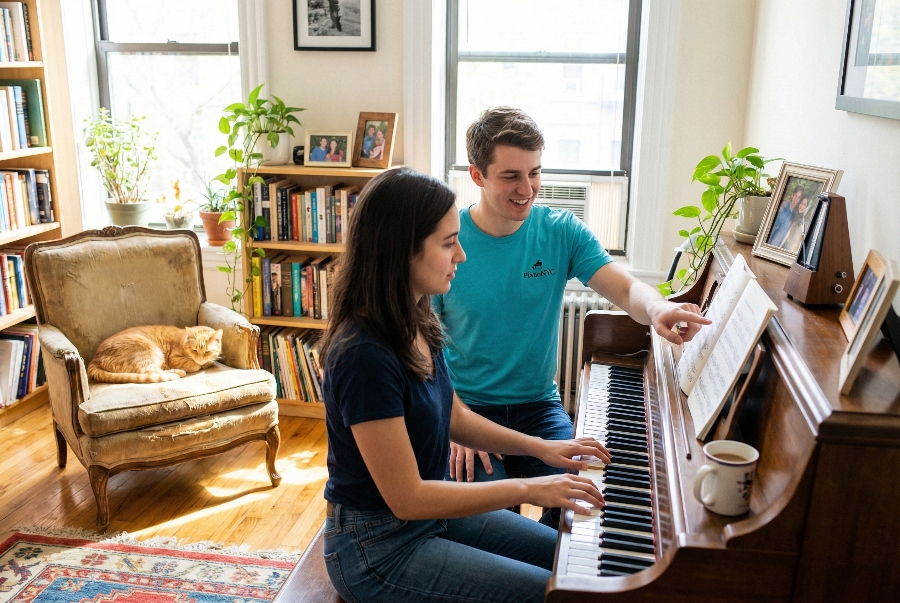
- Flexible In-Home Scheduling: Lessons conducted in your home 7 days a week from 07:00 to 21:00, paired with a complimentary 30-minute in-home assessment.
- Biannual Recitals: Free, non-competitive performance opportunities held every June and December in Manhattan concert halls.
Our faculty assists students across classical, jazz, and contemporary repertoire, even guiding you on where to buy sheet music Manhattan retailers carry. PrivatePianoLessons provides world-class keyboard education on your home instrument without the commute or rigid constraints of institutional music schools.
FAQ
What qualifications do PrivatePianoLessons instructors possess?
All 48 instructors at PrivatePianoLessons hold a Bachelor of Music degree or higher from accredited institutions, with 19 possessing master’s or doctoral degrees. Every faculty member completes a rigorous pedagogical audition, has at least 5 years of professional teaching experience, and passes a comprehensive background check renewed every 24 months.
How much do private piano lessons cost compared to music schools?
Private lessons at PrivatePianoLessons range from $75 to $350 per session depending on duration and specialization, featuring $0 travel fees across all 5 boroughs. Music academies charge between $1,500 and $8,000 per semester plus separate registration and recital fees. Private lessons offer greater cost control, individualized pacing, and no facility surcharges.
Can private lessons prepare students for conservatory auditions?
Yes, PrivatePianoLessons prepares students for conservatory and performing arts auditions through specialized Professional Coaching Lessons. Faculty members with extensive audition experience guide students through repertoire selection, technical precision, sight-reading, and timed mock auditions for institutions such as Fiorello H. LaGuardia High School, The Juilliard School, and Manhattan School of Music.
